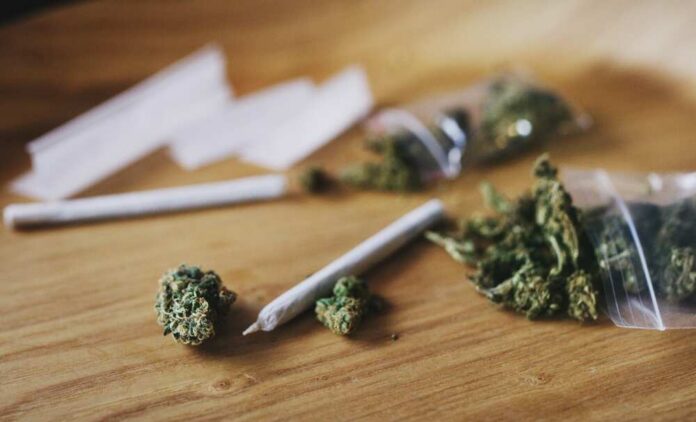
The Supreme Court just drew a hard line: marijuana use alone does not automatically erase gun rights.
Quick Take
- The Court ruled for a Texas man who challenged a federal gun ban for marijuana users.[15]
- Justice Neil Gorsuch said the government went too far with a broad, status-based ban.[1][17]
- The ruling is narrow and does not protect addicts, people who are intoxicated, or other dangerous users.[15][17]
- The case leaves federal marijuana law in place, but it limits how prosecutors can use it against casual users.[16][17]
The Court Rejected a Blanket Rule
The justices unanimously sided with Ali Danial Hemani, a Texas resident who argued that the federal ban on guns for unlawful drug users violated the Second Amendment.[2][15]
The Court said the government cannot treat every occasional marijuana user as dangerous without more proof.[1][17] That is the core of the ruling, and it matters because it cuts against the idea that a person loses constitutional rights just for using marijuana.
Justice Gorsuch wrote that the government’s theory failed because it swept too broadly. The opinion said millions of marijuana users cannot all be labeled violent or unusual threats.[1][17] That is a direct rebuke to a simple status test. In plain terms, the Court said the government needs a better reason than “you use marijuana” before it can take away gun rights.
What the Decision Does, and Does Not, Do
The ruling did not wipe out the federal law on unlawful users and firearms. It narrowed how the law can be used against people whose marijuana use is casual or occasional.[15][17]
The opinion left room for prosecutions where the government can show real danger, addiction, or present intoxication.[15][17] That limited scope may sound dry, but it is the whole story. The Court opened a door while leaving the lock on most of the house.
The federal statute at the center of the case is 18 United States Code section 922(g)(3), which bars firearm possession by unlawful users of controlled substances.[16]
Bureau of Alcohol, Tobacco, Firearms and Explosives policy also tells licensed dealers not to sell guns to known marijuana users, and the agency warns on Form 4473 that marijuana remains unlawful under federal law even where states have legalized it.[1][16] So the law did not disappear. It just got harder to apply in a broad, automatic way.
Why the Historical Test Mattered
The modern Second Amendment fight turned on history, not slogans. After New York State Rifle and Pistol Association v. Bruen, courts have asked whether a gun restriction fits the nation’s historical tradition.
Here, the Supreme Court found no solid historical pattern for punishing non-addicted, non-felon marijuana users the way the government wanted.[4][16][18] That mattered more than politics. It meant the government had to show a real historical match, not just a public safety claim.
Gorsuch also pushed back on the idea that marijuana users as a class are dangerous. That point lands especially hard because marijuana use is widespread, legal in many states, and often treated more like alcohol use than hard-drug abuse.[1][17]
The Court did not say drug use is harmless. It said the Constitution does not let the government erase rights by making a broad guess about character.
Why This Ruling Will Keep Echoing
This case leaves prosecutors with a narrower path. They can still act when they have evidence of addiction, intoxication, or actual danger.[15][17] What they cannot do, after this ruling, is rely on a simple one-size-fits-all ban for every marijuana user.
That change could matter far beyond this one Texas defendant, because it pushes the government toward case-by-case proof instead of broad suspicion. That is the kind of shift that reshapes whole categories of cases.
For gun owners, the decision is a win for the idea that rights should not vanish by stereotype. For opponents, it is a warning that public-safety rules must be tied to evidence, not assumptions.
The disagreement will not end here, because federal marijuana law and state legalization still clash in daily life.[16][17] But the Supreme Court has now made one point plain: casual marijuana use, by itself, is not enough to justify automatic disarmament.
🚨 BOMBSHELL SCOTUS DECISION JUST DROPPED! 🚨
In a UNANIMOUS ruling, the Supreme Court just STRIPPED the federal government’s power to disarm millions of Americans for marijuana use!
The 1968 law that banned gun ownership for “unlawful users” of controlled substances? Ruled… pic.twitter.com/xQ1MgkQNbp— CONSTITUTIONAL PATRIOT🇺🇸 (@ConstitustionX) June 19, 2026
Sources:
[1] Web – Supreme Court sides with a Texas man who says it’s not a crime for …
[2] Web – This morning the Supreme Court ruled in favor of our client …
[4] Web – The Supreme Court on Thursday ruled in favor of a Texas …
[15] Web – The Supreme Court ruled Thursday against a broad federal ban on …
[16] Web – In a unanimous decision, the Supreme Court ruled that a … – Facebook
[17] Web – Gun Rights And Marijuana Act – Congressman Brian Mast – House.gov
[18] Web – Supreme Court rules government can’t restrict gun rights for casual …