
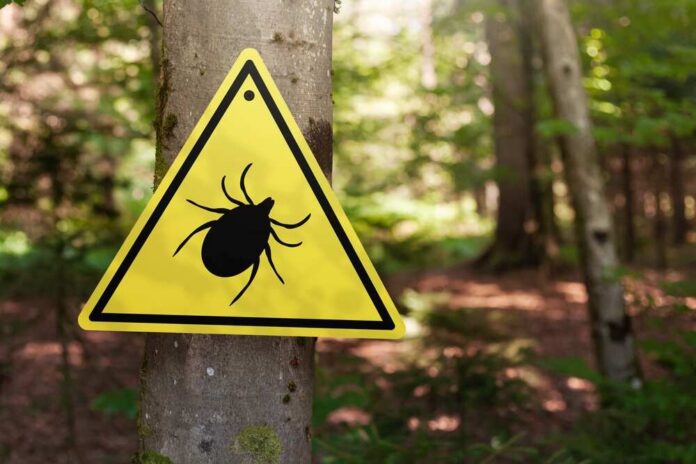
America just hit decade-high emergency room visits for tick bites, and the real danger isn’t only the bugs—it’s how fast fear, costs, and climate politics are creeping in behind them.
Story Snapshot
- Weekly tick-bite ER visits in April were more than double the usual rate, the highest since at least 2017.
- The Northeast is getting hammered, with regional visit rates several times higher than other parts of the country.
- Media and social feeds blast the surge as a “worst season,” even while federal data is still marked preliminary.
- Conservatives see a familiar pattern: real risk, but hyped in ways that ignore costs, common sense, and personal responsibility.
Tick bites are surging, and the numbers are not subtle
Centers for Disease Control and Prevention data show that weekly emergency room visits for tick bites jumped to 71 per 100,000 visits in April 2026, compared with a typical seasonal average of about 30 for this time of year.
That is more than double the usual rate and the highest early-season level reported since at least 2017. Emergency room visits for tick bites are higher than normal across most of the country, with every region except the South Central United States showing record rates for this point in the season.
Regional patterns tell a clear story. The Northeast is leading the surge, with the highest emergency room visit rates for tick bites, followed by the Midwest, Southeast, West, and then South Central. Past federal tracking already showed that tick-bite visits are usually highest in the Northeast, where Lyme disease is common and people are more aware of tick dangers.
Now that same region is once again carrying much of the burden, which aligns with what doctors and local media are seeing on the ground.
Why this season feels worse than “just another bad summer”
Experts link the spike to a mix of more ticks, longer tick seasons, and more people heading straight to the hospital when they find one on their skin.
Milder winters allow more ticks to survive, emerge earlier, and stay active longer through the year, stretching what used to be a tight April-through-September window into something closer to a year-round concern in some areas.
Warmer, more humid spring and summer conditions also help tick populations thrive, making backyard work and kids’ campouts riskier than older generations remember.
Tick season is expected to be worse than normal as ER visits rise in much of the U.S. https://t.co/EH7dln8g2E
— CBS News (@CBSNews) July 3, 2026
That physical reality sits atop changing behavior. Rising awareness of Lyme disease and other tick-borne infections pushes more people into emergency rooms for bites that used to be handled at home or in urgent care.
One study of prior years found that young children and older adults are the most likely to seek emergency care for tick bites, especially in the Northeast.
Spooked parents and cautious seniors are not irrational; they are reacting to real disease risks. But this behavioral shift also inflates emergency visit counts, which headline writers then treat as proof of a uniquely “terrible” season.
Media, messaging, and the familiar “worst season” pattern
The Centers for Disease Control and Prevention clearly labels the 2026 tick data as preliminary, meaning the numbers can change when full-year records are finalized. It is also too early to know whether the April surge will carry through May and June, which are usually the peak months for tick-bite emergency visits.
Yet major outlets rapidly framed the early counts as the highest in nearly a decade and hinted that this season may be worse than usual. That pattern has appeared in past years, when early peaks led to “record” headlines that softened once the season ended.
Social media posts from health systems and local stations amplify the data slices that sound most dramatic, such as “highest since 2019” or “highest in nearly a decade,” often without equal space for the preliminary label or the narrow window those claims cover.
From this view, this looks like another case where real risk gets merged with attention-driven messaging. Agencies want people to be cautious, the media wants clicks, and platforms reward the scariest frame. What rarely gets equal attention are questions about method, uncertainty, and cost.
Climate change, personal responsibility, and competing narratives
Many researchers now argue that climate change, through milder winters and shifting habitats, plays a major role in rising tick populations and emergency visits. They point to ticks moving into new regions and to longer seasons that keep people exposed even during months that once felt “safe.”
From a scientific angle, that is a serious question worth study and debate over the long term. But some coverage jumps straight from early tick data to sweeping climate claims that go beyond what this year’s preliminary numbers alone can prove.
🔴 CDC reports highest tick-bite ER visits since 2017 as season worsens
The Centers for Disease Control and Prevention logged the highest rate of emergency room visits from tick bites since 2017 across most of the country this summer.
Rebecca Osborn, epidemiologist at the… pic.twitter.com/QJiaeAj2ZL— NewsTongue (@NewsTongueX) July 2, 2026
This approach does not deny weather trends or disease risk. It asks whether officials and media are also giving equal space to practical, low-cost personal choices.
Federal guidance already stresses simple steps: avoid brushy areas, use Environmental Protection Agency-approved repellents, treat clothing with permethrin, and do daily tick checks after outdoor activity.
Early removal of a tick, often within 24 hours, sharply cuts the chance of Lyme disease. These basics empower families without waiting for new mandates, new funding, or new fear campaigns.
The missing conversation about cost, access, and overreaction
While government alerts focus on prevention and awareness, there is far less open talk from federal agencies about the economic impact of more testing, clinic visits, and long-term care for tick-borne illness. Local coverage has already noted “sticker shock” when people see the price of tick testing and related lab work.
That matters in a country where many households still struggle with high deductibles and surprise bills. Fear-heavy messaging that pushes everyone with a minor bite into the emergency room can clash with the reality of limited budgets.
Take the surge seriously; 476,000 Americans a year already receive treatment for Lyme disease. Respect regional warnings, especially in the Northeast and Midwest. But also demand honest communication about data limits, avoid turning every uptick into a branded crisis, and keep the focus on steps families can take themselves. Ticks are having a strong year. That does not mean panic has to have one too.
Sources:
tickmitt.com, cdc.gov, abcnews.com, axios.com, instagram.com, facebook.com, foxnews.com, healthline.com, unmc.edu