
Washington gave Iran a rare economic lifeline, then yanked it back overnight after three tankers were hit in the world’s most sensitive waterway.
Story Snapshot
- The United States revoked a temporary waiver that had allowed Iranian oil sales as part of a ceasefire deal.
- Officials say Iranian forces attacked three commercial vessels near the Strait of Hormuz, violating the agreement.
- The Treasury replaced “General License X” with a narrower license that blocks any new Iranian oil sales after July 7.
- Oil prices jumped and the fragile peace between Washington and Tehran is now back on life support.
How a short-lived peace deal turned into fresh punishment for Iran
Just weeks ago, the United States and Iran had a deal that looked like the first real step toward ending their war. As part of a memorandum of understanding, the United States Treasury issued what it called “General License X,” a temporary waiver that let Iran sell crude oil and petrochemical products until late August.
For Tehran, this was the main prize: hard cash from oil exports, after years of sanctions pressure. In exchange, Iran agreed to stop attacks and respect a ceasefire in and around the Strait of Hormuz.
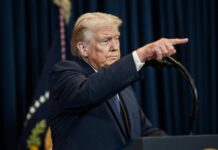
BREAKING: President Trump confirmed the U.S. launched what he called “very powerful” retaliatory strikes against Iran after the regime fired rockets at ships, warning that any future attacks would be met with overwhelming force.
“We attacked very powerfully last night,” Trump… pic.twitter.com/xmGDV1IUlw
— Breaking911 (@Breaking911) July 8, 2026
On Tuesday, that lifeline snapped. After three tankers, including a giant Qatari liquefied natural gas vessel, were struck by missiles or drones near the Strait of Hormuz, the Trump administration revoked the waiver.
United States officials say the Islamic Revolutionary Guard Corps carried out the attacks, calling them “wholly unacceptable” and a “clear violation of the ceasefire.” The message was blunt: Iran’s oil money depended on “good behavior,” and firing on commercial ships was the opposite of that.
What the new sanctions rules actually do on the ground
The key change sits inside the fine print of sanctions law, but it has very real teeth. Treasury officials announced that General License X was revoked and replaced with a new, narrower “General License X1.” This new license allows no fresh Iranian oil sales at all after the revocation date.
Companies that were already moving Iranian crude under the old waiver get a short grace period until July 17 to finish those deals and park the proceeds in blocked, interest-bearing accounts. That means Iran cannot freely access the money, and buyers cannot start new shipments without breaking United States sanctions rules enforced by the Office of Foreign Assets Control.
For traders, this is a sharp U-turn. The June waiver had been “narrowly tailored,” allowing a specific stream of at-sea Iranian oil to move lawfully through markets until August 21. M
any saw it as a trial run for a larger thaw. Now they have ten days to unwind contracts, reroute cargoes, and scrub Iranian barrels from their books or risk United States penalties. For Iran, the practical result is simple and painful: the main economic benefit of the ceasefire is gone overnight, while its military assets are being hit from the air.
Strikes, blame, and a dispute over evidence
United States Central Command did more than send lawyers and Treasury officials into action. It also launched strikes on Iranian targets, hitting air defense systems, command-and-control networks, coastal radar sites, anti-ship missile platforms, and dozens of Islamic Revolutionary Guard Corps small boats in and near the Strait.
Central Command described Iran’s aggression as “unwarranted, dangerous, and a clear violation of the ceasefire,” framing the strikes and the sanctions squeeze as part of the same response.
Iran, for its part, rejects the story. Iranian officials and state media deny responsibility and claim the attacks were either carried out by other actors or linked to ships using United States-backed corridors without coordinating with Iranian authorities. They also argue that revoking the oil waiver violates the memorandum of understanding and proves Washington was never serious about peace.
So far, though, neither side has put detailed forensic evidence into public view. The United States cites intelligence and military assessments, while Iran offers blanket denials without naming alternative attackers or sharing data. For many, that matters: strong claims deserve strong proof, and classified briefings do not count as public accountability.
Markets, allies, and what this says about U.S. leverage
Energy markets did not wait for a courtroom-style debate. Brent crude jumped more than five percent after news broke that the waiver was revoked and three vessels were hit near the Strait. Traders have seen this movie before: trouble in Hormuz usually means higher prices, more risk, and a scramble for safe assets.
Analysts linked the spike not only to the attacks themselves but also to what they called a “maximalist” tone from Washington and the lack of a clear long-term strategy for dealing with Iran beyond pressure.
US reinstates sanctions on Iranian oil sales after LNG, oil tanker attacks
WASHINGTON, July 7 (Reuters) – The United States on Tuesday re-imposed sanctions on Iranian oil, as a U.S. official warned that Iran's attacks on vessels in the Strait of Hormuz were "wholly… pic.twitter.com/7yixo2bstE
— Divine Oreoluwa (@Divine_Oreoluwa) July 8, 2026
Allies are watching closely. Reports say Qatar blamed Iran for the attacks on the vessels, including its own damaged gas tanker, lining up with the United States narrative that Tehran broke the ceasefire. At the same time, some European leaders have grown uneasy with the broader way Washington uses economic and military tools, including threats to cut weapons for Ukraine to push partners into line.
Yet when it comes to tanker attacks in this region, the base rate is hard to ignore: over the past two decades, most serious strikes on shipping near Hormuz have been linked back to Iran or its forces in intelligence assessments, even when full evidence stays classified.
From a common-sense, rule-of-law perspective, the pattern looks less like random blaming and more like a repeat offender losing the benefit of the doubt.
Sources:
cnbc.com, thehill.com, bloomberg.com, wsj.com, instagram.com, facebook.com, nytimes.com, ofac.treasury.gov, abcnews.com, bbc.com, youtube.com, aljazeera.com