A middle-aged security guard walked out of a Venezuelan basement eight days after the earth tried to bury him alive.
Story Snapshot
- A 43-year-old guard survived eight days trapped under a collapsed shopping center in coastal Venezuela
- Teams from seven nations worked 70–100 hours through concrete and twisted steel to reach him
- A tiny basement security booth formed a “survival pocket” where rescuers fed him water and oxygen through tubes
- His rescue exposes both the skill of foreign crews and the painful gaps in Venezuela’s disaster response
The moment a guard became the face of survival
When the twin earthquakes hit Venezuela’s La Guaira state, the Galerias Playa Grande shopping center did what brittle concrete always does under violent shaking: it pancaked. Floors piled on floors.
Somewhere deep in the basement, security guard Hernán Alberto Gil Flores stayed alive as thousands above him died or vanished in the chaos. Reporters would later call his rescue a “miracle,” but that word hides something more interesting and more human.
Gil, about 43 years old, was working his usual shift in a small cabin security booth tucked into the mall’s basement when the quakes struck. That cramped station, normally just a boring workplace, turned into a life-saving pocket.
The booth’s rigid frame kept heavy debris from crushing him outright and created a small air pocket. Disaster experts call this a survivable void space, and it is the thin line between life and a name on a casualty list.
Eight days under concrete and the science of staying alive
Medical studies of earthquake disasters show that people can survive trapped under rubble for over a week when they have air and limited injuries, with some cases stretching to nearly two weeks. Gil’s survival fits that pattern, but with an important twist.
Rescuers did not simply stumble upon a barely conscious body. They found a man who was awake and talking, then kept him alive where he lay by turning the rubble itself into a makeshift intensive care unit.
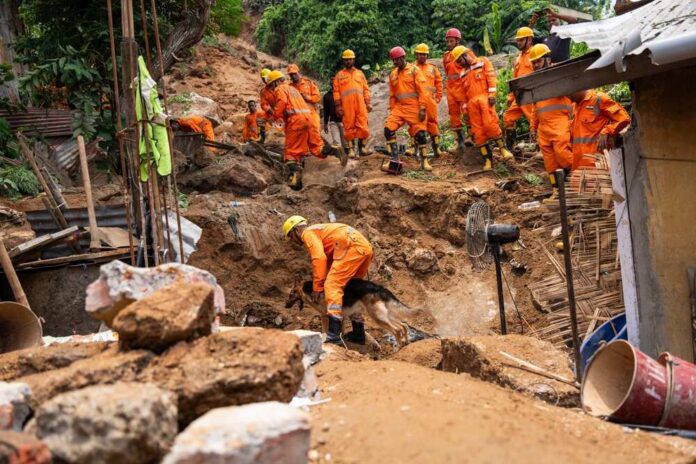
Urban search teams drilled narrow paths through the wreckage, snaked a telescopic camera down to find him, and used the tube not only to see but to speak. Once they located his face, crews pushed a hose through to deliver water and slid a tube to feed him oxygen.
One rescuer recalled asking him to move his arm on camera to prove he could still respond. Gil followed the order, a simple gesture that signaled something huge: after days in the dark, his body and mind were still fighting.
A rescue measured in hours, nations, and political friction
The mission that freed Gil lasted somewhere between 70 and 100 hours, depending on which team’s clock you read. A specialized crew from Chile coordinated the effort, working with teams from the United States, Portugal, Mexico, Costa Rica, El Salvador, and Venezuela itself.
This was not a handful of local firefighters with shovels; it was a tight, multinational machine cutting through concrete with heavy tools and technical know-how while the rest of the country strained to meet basic needs.
The guard lay at the bottom of a collapsed commercial symbol in a state now known worldwide for its misery. Rescue teams from El Salvador flew in despite political tensions with Venezuela’s government. American and other foreign crews arrived to fill gaps in gear, fuel, and coordination.
While some social media voices blasted the government for a slow start and lack of supplies, foreign responders focused on one clear mission: get Gil out alive, no matter how long it took.
Miracle language, hard numbers, and conservative common sense
Every outlet from CNN to Christian Post leaned hard on the word “miracle” to describe Gil’s rescue. That language fits our need to find hope in horror, but this disaster pushes us to look at the facts underneath the emotion.
There is no public record that disputes the core event: a middle-aged security guard was pulled from that basement alive eight days after the quakes. No doctor, coroner, or rescue log has surfaced to say otherwise.
What wavers are the smaller details. Some reports say he was 43, others 44. One calls the building seven stories, another nine. Some crews claim the rescue took more than 70 hours, others more than 100.
These gaps are not signs of a cover-up; they are the messy edges of breaking news in a disaster zone. In any serious review of the facts, the core truth stands firm while peripheral numbers wobble.
One man’s rescue in a country still buried
Gil left the rubble on a stretcher and was moved to a medical facility described as treating him in “good condition.” Outside his story, the numbers are brutal. The earthquakes killed well over 1,400 people and left tens of thousands missing or displaced across La Guaira and nearby regions.
Some heavy machinery sat idle because fuel supplies dried up in a petro-state that still boasts some of the world’s largest oil reserves. That mismatch is hard to square with any idea of competent national stewardship.
A Venezuelan security guard has been rescued alive after spending eight days trapped under the rubble of a collapsed shopping mall following twin earthquakes. Rescue teams managed to pull him out from the basement in La Guaira, where he was found conscious and taken to… pic.twitter.com/ic9uqpbOHr
— FOLIN TV NEWS (@FOLINTV) July 2, 2026
International researchers warn that most rescues happen within 24 hours of a major quake. Gil was pulled out on day eight. His survival does not erase the lost time or weak systems that left many others beyond reach. It does something quieter and more lasting.
It proves that when skilled teams, basic physics, and human stubbornness line up, life can hang on longer than our fear and our critics expect. In the end, the “miracle” was not magic. It was a man, a booth, and a group of professionals who refused to quit.
Sources:
apnews.com, ndtv.com, timesofindia.indiatimes.com, instagram.com, dw.com, reuters.com, aljazeera.com, news.un.org, youtube.com