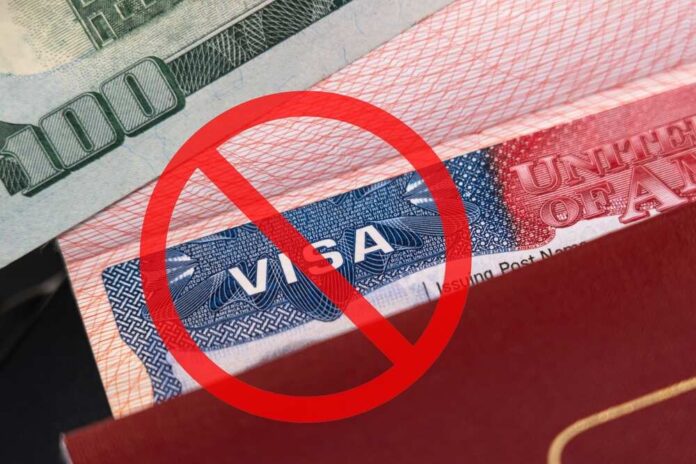
Ending the days when these foreign nationals could freely come and go on multiple visas, the US is tightening its borders against Nigerian visitors, dramatically restricting temporary visas for Nigerian citizens to just three months with single entry.
The U.S. Diplomatic Mission announced that effective immediately, most non-immigrant and non-diplomatic visas for Nigerian nationals will now be limited to single-entry with a three-month validity period.
This significant change represents a sharp departure from previous policies that allowed Nigerian travelers extended stays and multiple entries based on their visit purpose.
While visa holders who received their documents before July 8, 2025, will maintain their original terms, all new applicants face these stricter limitations.
The embassy cited updates to the United States’ reciprocal visa policies as the primary reason for the change.
This emphasizes the need to align with global security standards to protect the integrity of our immigration system.
The policy shift comes as part of a broader effort by the administration to strengthen border security and better manage immigration.
Under President Trump’s leadership, similar measures targeted several African nations with travel restrictions, demonstrating a consistent approach to prioritizing American interests.
The focus on proper identity verification and secure documentation reinforces the nation’s commitment to preventing visa overstays and unauthorized immigration.
Despite these restrictions, U.S. officials maintain that they are committed to a strong bilateral relationship with Nigeria, with a focus on security cooperation and economic development.
Nigeria has yet to respond officially to these new restrictions, but its silence speaks volumes.
Unlike Chad, which retaliated against similar U.S. measures by suspending visa issuance for American citizens, Nigerian officials appear to recognize America’s sovereign right to control its borders.
The broader context matters too. President Trump had previously imposed travel bans on nationals from 12 countries, mostly in Africa, citing legitimate national security and vetting concerns.
Seven African countries, including Chad and Libya, currently face complete entry bans to the United States, making Nigeria’s three-month restriction seem relatively moderate by comparison.
For patriotic Americans concerned about border security, this policy represents a welcome step toward ensuring that foreign visitors respect the immigration laws.
The emphasis on information sharing and cooperation with foreign governments creates accountability while still allowing legitimate travelers to visit the nation under appropriate supervision.
These measured restrictions demonstrate how America can maintain necessary international relationships while prioritizing its citizens’ security.
As visa reciprocity remains under ongoing review, additional countries may face similar restrictions.