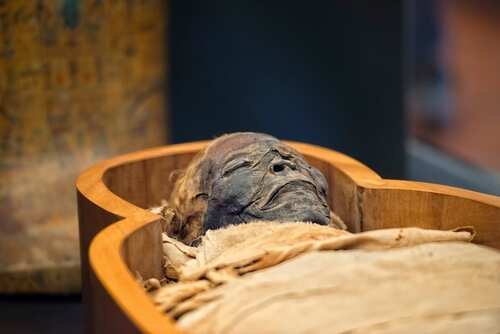
Archaeologists have discovered evidence that Asian societies were practicing sophisticated smoke-dried mummification more than 10,000 years ago, completely rewriting the established timeline that positioned Egypt as the birthplace of intentional body preservation.
Story Highlights
- Asian mummification practices predate Egyptian techniques by several millennia.
- The smoke-drying method preserved bodies in tightly bound, crouched positions.
- Discovery challenges Western-centric archaeological narratives about ancient civilizations.
- Findings were published in the prestigious Proceedings of the National Academy of Sciences journal.
Ancient Asia Leads Global Mummification Timeline
New research published in 2025 reveals that ancient societies in southern China and Southeast Asia developed complex mummification techniques thousands of years before Egypt’s famous pharaohs were ever wrapped in linen. The smoke-dried preservation method discovered by archaeologists represents the oldest known evidence of intentional human mummification worldwide. These findings fundamentally challenge the Egypt-centric narrative that has dominated archaeological textbooks for generations, proving once again that Western academia has underestimated the sophistication of ancient Asian civilizations.
The discovery came from excavations in humid, subtropical environments where natural preservation would be nearly impossible without deliberate intervention. Researchers found well-preserved human remains positioned in tightly bound, crouched postures, indicating a systematic and ritualistic approach to death preparation. The technical expertise required to preserve bodies in such challenging climates successfully demonstrates remarkable innovation by these ancient peoples.
Revolutionary Preservation Techniques Uncovered
Unlike Egyptian mummification, which relied on natron salt and elaborate wrapping procedures, these Asian societies employed smoke-drying methods that effectively desiccated bodies while maintaining structural integrity. The process required a sophisticated understanding of decomposition prevention and atmospheric control, technologies that modern science is only beginning to fully appreciate. Forensic analysis confirms that the preservation was entirely intentional, not the result of favorable environmental conditions.
The burial postures found at these sites are distinctly different from Egyptian practices, with bodies placed in tightly bound, crouched positions rather than the extended supine arrangements familiar from pharaonic tombs. This unique positioning suggests entirely independent development of mummification traditions, countering theories about cultural diffusion from a single source. The evidence points to multiple centers of mortuary innovation developing simultaneously across different continents.
Academic Establishment Forced to Revise Historical Narratives
The peer-reviewed study published in the Proceedings of the National Academy of Sciences represents a paradigm shift for archaeology and anthropology. For decades, academic institutions have promoted theories positioning Egypt as the premier ancient civilization for mortuary practices, but radiocarbon dating and forensic analysis now prove Asian societies were far ahead of their time. This pattern of underestimating non-Western achievements has become frustratingly common in mainstream academia.
Experts describe these findings as requiring a complete revision of existing timelines and theoretical frameworks. The discovery forces acknowledgment that complex ritual behaviors and technological innovations developed independently across multiple ancient societies, rather than spreading from a single Egyptian source as previously assumed. International research teams are now scrambling to update decades of established archaeological doctrine.
Implications for Understanding Ancient Civilizations
These discoveries highlight the importance of supporting archaeological research that challenges conventional wisdom rather than confirming predetermined narratives. The sophistication demonstrated by these 10,000-year-old Asian societies should remind us that human ingenuity and cultural complexity have deep roots across all continents. Too often, Western-dominated institutions have dismissed or overlooked achievements from other regions of the world.
The findings also raise questions about what other advanced practices these ancient Asian societies may have developed that remain undiscovered. If they mastered complex preservation techniques millennia before Egypt, what other innovations might be waiting to be uncovered? This research represents exactly the kind of objective, evidence-based science that deserves continued funding and support, especially when it reveals truths that contradict established academic orthodoxy.