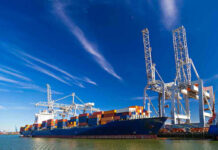

The fight over a narrow strip of water has now blown the lid off a fragile Middle East truce.
Story Snapshot
- The United States reopened strikes on Iran after attacks on ships near the Strait of Hormuz
- Trump says Iran broke a ceasefire; Tehran says Washington broke its word first
- Both sides now use force and law to claim control of one of the world’s key oil chokepoints
- Regional allies and global shippers are stuck between shrinking options and rising risks
How a ceasefire turned back into a shooting war
The latest round of fighting did not start from nowhere. The United States and Iran had agreed to a short, performance-based ceasefire meant to cool the 2026 Strait of Hormuz crisis and keep oil moving through the narrow waterway. That deal focused on one simple idea: stop hitting commercial ships.
When a cargo ship and later three tankers were hit in and near the Strait, Washington said Iran had failed the “test” and tore up the truce. Tehran answered that it was only reacting to American blockade tactics and escort operations that it saw as threats to its sovereignty.
Central Command framed its new strikes as “a powerful response” to “unwarranted aggression” against commercial shipping, saying Iranian forces violated the ceasefire by drone and missile attacks on vessels transiting the Strait.
Trump publicly labeled the tanker and cargo strikes “terrorism” and “a foolish violation” of the deal, telling allies the United States would again hit Iran’s coastal military sites and small boats used to lay mines and harass traffic. In simple terms, Washington’s case is that you cannot have real peace while armed Iranian units are firing on ships in what the United States views as an international passage.
Iran’s counter-story: reprisal, not aggression
Iran tells a very different story. Its leaders insist they are “in charge of security of the Strait of Hormuz” and have the right to control routes and inspect or stop ships they deem part of a hostile blockade. Iranian state outlets and officials have claimed that some of the attacks on vessels were reprisal for American strikes on mine-laying ships and for a United States naval blockade that choked Iranian ports.
In that telling, Tehran is punishing foreign tankers using United States Navy lanes while its own forces are portrayed as rescuers or escorts, not pirates. This narrative appeals to regimes and activists who already see America as the overbearing power in Gulf waters.
US and Iranian forces exchanged heavy missile and drone assaults, with Tehran targeting US facilities in states across the Gulf and saying it had again closed the vital Strait of Hormuz, sending oil prices higher https://t.co/VDrfSYhSGd
— Reuters (@Reuters) July 13, 2026
The problem for Iran’s defense is the lack of hard, shared evidence. Tehran blasts United States claims as “baseless” but offers mostly statements, not verifiable forensic data. At the same time, some Iranian media have hinted that its forces did strike at least one tanker after “disregarding warnings,” which undercuts the blanket denials.
When one side both says “we did not do it” and “we had reason to do it,” it weakens trust in its story. That is one reason regional actors like Qatar moved to hold Iran “fully legally responsible” for specific tanker attacks.
The battle for the Strait is about power, not just ships
Control of the Strait of Hormuz means leverage over a huge share of global oil and gas flows. The United States has pushed freedom of navigation as a core principle for decades, using its Navy to keep sea lanes open and punish those who target civilian shipping.
In this crisis, Trump went further, talking openly about “reinstating” a blockade on Iran while at the same time hinting that other countries might pay America for safe passage through the Strait. That shift toward charging tolls for protection clashes with the old idea of neutral sea lanes and raises both legal and moral questions about turning security into a revenue stream.
Iran, for its part, has used the Strait as both shield and sword. Its Islamic Revolutionary Guard Corps relies on drones, cruise missiles, and swarms of small fast boats to menace shipping and test how far the United States will go to defend commercial traffic and allied navies. Each new strike or seizure lets Tehran show it can hurt world markets if pushed too far.
This tit-for-tat pattern makes it easy for both sides to say, “We are only responding,” yet from the outside, investors and shippers mostly see a dangerous game that drives up prices and risk without clear gain.
Economic shock and political stakes for America and its allies
The real losers so far are not the admirals and ayatollahs but the crews and companies that depend on the Strait. Traffic through Hormuz has plunged from dozens of ships per day to a handful as word of attacks and retaliatory strikes spread. Insurance costs spike, cargoes are delayed, and every new flame on the water can spook markets worldwide.
From a rule-of-law perspective, there is a clear logic in punishing deliberate attacks on civilian trade. At the same time, broad blockade tactics and constant bombing can look to nervous partners like Washington is willing to risk regional chaos to prove a point.
Politically, Trump’s harsh language about Iran being “cuckoo,” “sleazebags,” or a “bully” reinforces his tough-on-Tehran brand but also makes it easier for critics to paint United States actions as personal vendetta rather than measured defense. Iran’s leaders respond with their own fiery talk about American “adventurism” and broken promises.
The more both sides lean into insults, the harder it becomes to sell any future deal to voters who now expect total victory. That is the hidden danger of this fight for the Strait: once you pitch every tanker skirmish as a test of national honor, backing down starts to look like defeat.
Sources:
apnews.com, bbc.com, nytimes.com, thehill.com, reuters.com, foxnews.com, youtube.com, washingtonpost.com, pbs.org, dw.com, wcnc.com, abcnews.com, theguardian.com, cnn.com, aljazeera.com, tandfonline.com, en.wikipedia.org, iranprimer.usip.org, npr.org, cfr.org, maritime.dot.gov