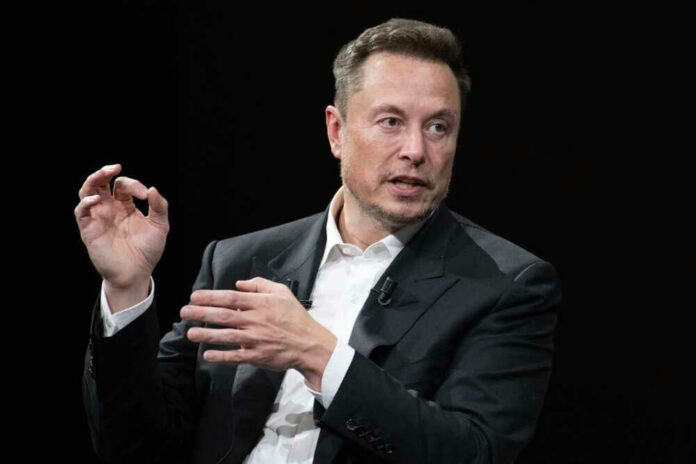
Elon Musk labeled Waymo’s driverless cars “pet destroyers,” turning a tech rivalry into a safety fight that cuts to what matters most: who keeps people, and yes pets, out of harm’s way.
Story Snapshot
- Musk touted Tesla’s city-by-city hazard screening, with special focus on railroad crossings.
- Waymo cites big-mileage data showing fewer serious-injury crashes than human drivers.
- An Austin incident where a Waymo hit a cat fuels the public emotion behind the stats.
- Federal guidance warns that cross-company crash comparisons can mislead without shared baselines.
What Musk Claimed And Why It Stuck
Musk did not just toss an insult. He paired it with a claim that Tesla screens each new city for risky spots before deploying, calling out dangerous intersections and railroad crossings as focus areas. That message lands because it is easy to picture and hard to argue with. People grasp a blocked sightline or a bad crossing faster than an abstract safety rate. The framing suggests a simple promise: find the traps first, then set the robots loose.
Critics counter that a checklist is not the same as results. They ask whether the process scales and whether it prevents the edge cases that cause real harm. Still, the practice signals an operational mindset that Americans expect: scout, train, verify. That aligns with common sense. Protect the school crossing, mark the blind corner, and treat a railroad crossing like it can bite. The question is not whether that is good. The question is whether it is enough to move the crash needle.
Waymo’s Rebuttal: Show Me The Miles
Waymo answered with volume and severity. The company says its fully driverless system logged over 270 million miles through June 2026 and was involved in 94 to 95 percent fewer serious-injury or worse crashes than human drivers in the same areas and time frames. That cuts through the noise. People value freedom, but they value survival more. Fewer serious injuries means fewer families facing life-altering news. The Swiss Re analysis supports this direction on claims outcomes as well.
Waymo also highlights fewer injury crashes across pedestrians, cyclists, and motorcyclists. That point matters because real streets are messy. Vulnerable users step off curbs. Cyclists swerve around doors. A fleet that better protects the least protected builds trust faster. On these measures, Waymo’s reported reductions look strong against human drivers. Again, the pitch is simple: compare outcomes people feel, not features people cannot see.
The Cat, The Claims, And The Limits Of The Data
The Austin cat incident keeps resurfacing because it is visceral. Waymo said the vehicle braked but could not avoid the collision and expressed condolences. Anyone who has slammed the brakes for a darting animal knows that not every impact is preventable. The Center for Auto Safety’s view that animal data is too thin to judge performance on pets supports caution on sweeping claims either way. That undercuts broad labels and points back to what we can measure well: injury severity and exposure.
The National Highway Traffic Safety Administration’s Standing General Order reminds us why social-media scoreboard watching fails. Federal guidance notes that crash data and telemetry vary widely by company, so raw counts are not apples to apples. Without shared denominators like miles, operating hours, and common conditions, headline numbers can mislead. Serious policy should rest on comparable exposure and outcomes, not the loudest clip.
Two Models, Two Stories, One Standard
Waymo designs for full driverless service with cameras, radar, lidar, detailed maps, and remote assistance. Tesla leans on cameras with learned perception and aims to generalize across cities with software and targeted screening. Each path reflects a philosophy. Waymo’s case hangs on outcomes versus human drivers where it operates. Tesla’s case leans on scalability and city readiness checks that promise rapid growth with care. The market does not reward slogans. It rewards fewer people getting hurt.
ELON MUSK CALLS WAYMOS 'PET DESTROYERS' 🐾🤖@elonmusk is taking aim at robotaxi rival @Waymo, claiming its driverless cars "run over a lot of pets" while touting Tesla technology designed to detect animals — even gray kittens on gray pavement at night.
Waymo reported multiple…
— Erik Hoffmann (@TheErikHoffmann) October 13, 2026
Conservative common sense says judge by results you can defend. Waymo’s published injury and severity reductions, tied to areas it serves, give a tangible yardstick. Tesla’s inspection-first deployment plan reflects responsible fieldcraft that any road builder or rail worker would respect. Both should welcome third-party audits using shared baselines. That is how you earn permission to scale in American communities that value safety, property rights, and accountability more than hype.
What Matters Next For Riders And Regulators
Regulators should push for standardized exposure metrics across all fleets. Require miles, hours, weather, road types, and system state. Publish injury severity detail with consistent bins. Make every company, not just the loudest one, clear the same bar. That levels the field for innovators and protects families who never opted into a beta. Riders will not track sensor stacks, but they will track whether their kid gets home on time and in one piece.
For consumers, the smart filter is simple. Ask: how many miles, how many riders, how many serious injuries compared with humans on the same streets. Demand proof, not promises. Cheer the teams that find and fix the worst intersections before you ever hail a ride. And ignore the insult wars. The machine that wins is the one that bends the injury curve down and keeps it there, mile after mile.
Sources:
foxbusiness.com, cbsnews.com, yahoo.com, govtech.com, techcrunch.com, businessinsider.com, ground.news