
Before sunrise in Washington, federal agents with a judge’s warrant searched Rep. Ilhan Omar’s home.
Story Snapshot
- Justice Department said Homeland Security Investigations executed a court-approved search in the D.C. area.
- Officials described it as part of an ongoing federal criminal investigation.
- Reports tied the search to possible immigration-document fraud and related offenses.
- The operation took place 22 days before Election Day, drawing focus to timing.
What Happened And What Officials Confirmed
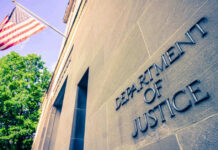
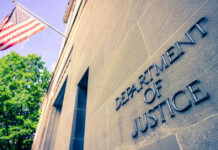
The Department of Justice said Homeland Security Investigations carried out a judicially authorized search warrant in the Washington, D.C., area on October 12, 2026. Reporting placed the operation at Rep. Ilhan Omar’s Washington-area residence that morning. The department called it part of an ongoing federal criminal investigation and declined further detail on statutes, targets, or evidence. The Associated Press, citing people familiar with the matter, identified the agents as from Homeland Security Investigations and located the search at Omar’s home.
🚨 UPDATE: After over 5 HOURS, DHS has JUST NOW completed their raid at Ilhan Omar's DC house
SEVERAL vans and SUVs were loaded up with boxes upon boxes from inside the home 🔥
NO WORD on where Omar is. But it's about team we see her in cuffs! pic.twitter.com/SuCoKnW7L6
— Nick Sortor (@nicksortor) October 12, 2026
The New York Times reported that a person familiar with the warrant said it referenced false statements, fraud in immigration paperwork, and a general conspiracy count. The government did not release the warrant, the affidavit, or the docket number in public materials cited by news outlets. No charges against Omar were announced at the time of the search, and public reporting did not publish the underlying forms or forensic findings at issue. These facts frame what is known and what remains outside official disclosure.
How A Judicial Warrant Sets The Legal Ground
A judicially authorized warrant signals that a federal judge found probable cause that evidence of a crime could be found at the listed location. That threshold is not a finding of guilt; it is a legal gateway to search and seize specified items. The Department of Justice confirmed that threshold was met here, and that the action fit within an ongoing criminal probe. The department did not identify which judge signed the warrant or which precise statutes agents are pursuing in this phase.
When searches involve members of Congress, agents must follow strict rules to avoid sweeping in privileged legislative materials. Courts have held that the Speech or Debate Clause protects legislative work product but does not shield non-privileged records from lawful seizure. Those rules have shaped searches of congressional spaces in prior cases and inform filter procedures to protect legislative functions while allowing criminal evidence gathering to proceed.
Election-Season Timing And Department Guidance
The search happened 22 days before Election Day, a fact that ensures political attention regardless of the underlying case details. Department of Justice guidance on election-year sensitivities says law enforcement steps should never be timed to influence an election. The policy does not create a hard blackout window; it directs prosecutors and agents to base timing on investigative needs, not politics. The question is not the calendar alone, but whether investigators had a neutral, case-driven reason to act when they did.
That balance—pursuing suspected crimes while avoiding political effects—defines the department’s duty in high-profile cases. Common sense and conservative principles align here: laws must apply evenly, and the public deserves confidence that prosecutors act for evidence, not optics. The department’s brief statement, paired with a signed warrant, meets the baseline for action. More detail, when appropriate, would help the public judge the process without harming the investigation.
What Comes Next And Why It Matters
Several steps could clarify the picture. If the court later unseals the warrant, affidavit, and property inventory, the public would see the statutes at issue, the probable-cause basis, and what agents sought. If items seized include immigration records or related communications, that would align with the reported focus on false statements and document fraud. If prosecutors bring charges, they must prove material falsehoods and intent, and must show the link between any alleged acts and the searched location.
𝐓𝐑𝐔𝐌𝐏 𝐎𝐍 𝐈𝐋𝐇𝐀𝐍 𝐎𝐌𝐀𝐑 𝐀𝐅𝐓𝐄𝐑 𝐃𝐇𝐒 𝐑𝐀𝐈𝐃𝐒 𝐇𝐄𝐑 𝐇𝐎𝐌𝐄: “𝐓𝐎𝐓𝐀𝐋𝐋𝐘 𝐂𝐑𝐎𝐎𝐊𝐄𝐃”, 𝐀 𝐓𝐄𝐑𝐑𝐈𝐁𝐋𝐄 𝐏𝐄𝐑𝐒𝐎𝐍
Hours after federal agents executed a court-authorized search warrant at Rep. 𝐈𝐥𝐡𝐚𝐧 𝐎𝐦𝐚𝐫’𝐬 Washington home, the Justice… pic.twitter.com/ResGtoIEdN
— M.A. Rothman (@MichaelARothman) October 13, 2026
Until then, the firm facts are straightforward: a judge approved a search; Homeland Security Investigations executed it; the Department of Justice says it is part of a criminal investigation; and reports connect it to immigration-document fraud and conspiracy. That is enough to take the event seriously without jumping to verdicts. The rule of law works best when facts drive outcomes, oversight checks power, and evidence—not volume—wins the day.
Sources:
youtube.com, nytimes.com, thespec.com, dhs.gov, chron.com