
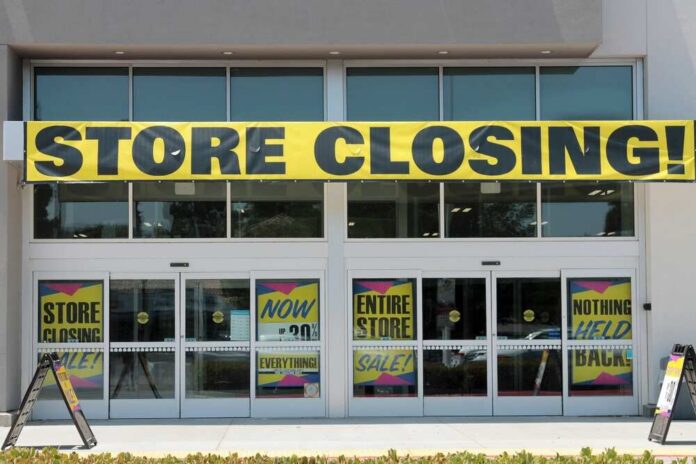
America’s most famous corner store is about to vanish from hundreds of corners, and the reason says more about our changing country than most politicians ever will.
Story Snapshot
- 7-Eleven’s parent company plans to close or convert 645 North American stores in fiscal 2026.
- The chain is shifting toward larger, food-focused “Food Forward” locations and wholesale fuel sites.
- Falling cigarette sales, rising costs, and weaker traffic from working-class shoppers are driving the shake-up.
- Critics see corporate greed; the numbers show a brutal effort to fix unit economics before an eventual stock offering.
What 645 store closures really mean for everyday Americans
Seven & i Holdings, the Japanese parent company of 7-Eleven, has confirmed that 645 North American stores will be removed from the convenience network during its 2026 fiscal year, which runs from March 1, 2026 through February 28, 2027. This is not just a trimming around the edges.
It marks the fifth straight year where the company closes more locations than it opens, and it will push the total U.S. store count down to about 12,272 by year’s end. That is a net loss of roughly 440 sites after 205 new openings.
7-ELEVEN TO CLOSE HUNDREDS OF U.S. STORES: Convenience store giant 7-Eleven plans to close hundreds of locations across the United States as part of a sweeping restructuring effort.
Full Story: https://t.co/MHACg6KY6t pic.twitter.com/KSbftxLiKD
— The Dallas Express News (@DallasExpress) July 19, 2026
The closures do not all look the same on the ground. Company filings and follow-up reporting show that about 200 stores are labeled “underperforming” and will shut completely, while hundreds more locations are set to be converted into wholesale fuel operations run by outside operators.
In everyday terms, that means some corners lose their entire convenience store, while others keep gas pumps but lose the familiar bright aisle of snacks, lottery tickets, and late-night coffee that once defined the brand.
The Food Forward pivot and the war over convenience
7-Eleven is not shrinking because people stopped buying Slurpees. The company is racing to catch up with rivals like Wawa, Sheetz, and Buc-ee’s, which built large, food-heavy stores that look more like mini fast-food restaurants than old-school corner shops.
Seven & i has openly tied the 645 closures to a “food-centric convenience store” strategy, with new sites focused on prepared meals and broader menus, and with remodels planned for thousands of existing stores.
This Food Forward model reportedly boosts sales in test stores by double-digit percentages, which is why corporate executives want fewer, bigger, more profitable boxes.
For many readers, this looks like basic economic reality: you keep the locations that pull their weight and you invest in formats customers actually use. That view fits the facts. The chain already closed about 444 North American stores in 2024, citing inflation, slower traffic, and changing habits.
In that sense, 2026 is not a shocking new policy; it is the next stage in a long-running move to clean up the portfolio and shift capital into higher-margin formats that can withstand rising wages and rents.
The quiet collapse of the old gas-and-cigarette model
Underneath the headline number, the more important story is what stopped working. Cigarette sales, once a major anchor for convenience stores, have fallen sharply since 2019, with some reports showing declines of more than 20 percent over the last few years. Fewer smokers means less high-margin impulse buying at the counter.
At the same time, foot traffic from lower- and middle-income shoppers has softened as inflation chews up paychecks, something Seven & i itself noted in its earnings report, which pointed to weaker personal spending among these households.
CEO Steven Deckas has been blunt about the problem. He has said that North American stores carry “higher costs than our competitors” and that the old model is not sustainable in its current form.
That is classic unit economics talk: when rent, labor, and supplies rise faster than sales, marginal sites turn into cash drains. The company has responded not just with closures but with sale-and-leaseback deals that raised about $520 million to fund modernized formats and remodels.
That move will worry some readers who distrust financial engineering, but from a business point of view, it is a way to unlock property value to fund a new generation of stores.
Franchise pain, corporate power, and the fairness question
Where critics gain traction is not on the accounting but on the human impact. The company has not disclosed how many workers will lose jobs from the 645 closures, and no detailed breakdown exists for how many sites will become franchises versus fuel-only operations. That silence creates a vacuum, and in that vacuum the loudest voices often belong to angry franchisees.
In Australia, televised reports have shown devastated operators describing forced evictions and blocked sales as “theft” and an “absolute rip-off,” accusing the company of stripping them of businesses they built.
Seven & i Holdings (parent of 7‑Eleven North America) is executing a major reshaping of its U.S. store footprint in fiscal year 2026. An earlier filing said 645 7‑Eleven stores would be closed; the company’s latest quarterly presentation broke that down: plans to permanently c…
— MarketMoodz Sentinel (@MM_Sentinel) July 20, 2026
Consumer advocates and franchise lawyers in those cases call the pattern “systematic and widespread.” Those are serious charges, and they resonate with Americans who are tired of global corporations squeezing small business owners. But here is the key distinction: in the United States, no court ruling has found Seven & i’s North American restructuring plan illegal or fraudulent.
In major cases like Patel v. 7-Eleven, the Massachusetts Supreme Judicial Court upheld the company’s franchise system and rejected claims that franchisees were misclassified as employees.
That does not make every corporate choice moral, but it does mean the current closure plan rests on lawful contracts and real profit data, not on proven theft.
What this wave of closures says about the future of the corner store
The 7-Eleven shake-up fits a wider trend. Research shows that stores with stronger sales volumes survive, while those in struggling areas, especially high-poverty neighborhoods, close more often.
Coresight Research expects about 7,900 U.S. store closures across all retail in 2026, and brands from GameStop to Wendy’s are pruning weak locations and chasing new formats. 7-Eleven is simply doing it at a scale we feel because their logo sits on so many corners.
Working-class communities will lose some easy access to cheap fuel and late-night basics, and in some towns less competition could mean higher gas prices.
It must cut where the numbers fail and build where customers still spend. The real debate is not whether 645 closures are “evil,” but whether communities and lawmakers want to rely on giant global chains for daily essentials at all.
As 7-Eleven trades old fluorescent boxes for sleek food halls and wholesale fuel sites, Americans are left to decide if that future matches the country they thought they were building.
Sources:
finance.yahoo.com, nypost.com, cstoredive.com, restaurantbusinessonline.com, foxbusiness.com, govinfo.gov, abc.net.au, bostonbar.org, seyfarth.com, dallasexpress.com, thestreet.com, grocerants.blogspot.com, vettedbiz.com, academic.oup.com, linkedin.com