America just hit a point where one in five federal student loan borrowers is in default, and the real shock is how fast it happened after Washington turned the payment switch back on.
Story Snapshot
- Defaults jumped from about 5.3 million to roughly 9.5 million in under a year after the COVID pause ended, the highest level on record.
- About 1 million borrowers fell into default in late 2025 and another 2.6 million in early 2026 once the 270-day clock for missed payments ran out.
- Delinquency on student loans exploded in one quarter, then spread to credit cards, auto loans, and other bills for the same struggling households.
- Experts say this is not just about the pause ending; it is a bigger “default cliff” built by years of policy choices, rising prices, and weak wage growth.
The Biggest Default Spike In Modern Student Loan History
Federal data shows that by June 30, 2025, about 5.3 million borrowers were in default on Education Department–held loans. That number had been heavily suppressed during the COVID payment pause because loans in “administrative forbearance” were not counted as default, even when borrowers were not paying. Once payments restarted and the grace “on-ramp” ended, the old rules snapped back into place.
Defaults on student loans have surged across the United States, reaching record levels as borrowers struggle to keep up with payments. https://t.co/68OTdt4vhP
— CBS News (@CBSNews) July 20, 2026
A federal student loan is officially in default after 270 days of missed payments. That delay is key. Borrowers who stopped paying in fall 2024 did not show up as new defaults until late 2025.
New York Federal Reserve researchers report about 1 million borrowers defaulted in the final quarter of 2025, with another 2.6 million in the first quarter of 2026. That is 3.6 million people crossing the line in just six months.
From Pause To “Default Cliff” Almost Overnight
During the pause, the share of borrowers with recent delinquency fell to around 3 percent as reporting stopped or was softened. In August 2025, nearly one year after protections lifted, the Urban Institute finds about 21 percent of borrowers had a recent delinquency, the highest since 2017.
Separate analysis shows the 90-plus-day delinquency rate jumped from about 0.5 percent to 7.7 percent in a single quarter, the largest spike ever recorded in New York Fed consumer credit data.
Congressional researchers warned this was coming. As of June 30, 2025, they saw 4.3 million borrowers stuck 181 to 270 days delinquent, meaning they had not made a single payment since the “on-ramp” policy ended.
They projected that, without a fix, defaults and defaulted loan amounts could almost double by fall 2025. That is exactly the shape of the surge we now see, with totals climbing toward 9.5 million and beyond.
One In Five Borrowers In Default, But Not All For The Same Reason
By mid-2026, news reports and Federal Student Aid data show roughly 9.5 million people in default, or about one in five federal student loan borrowers. That number breaks the prior record of around 8 million before the pandemic.
Yet delinquency rates as a share of total student loan debt are only slightly above or near pre-pandemic levels, which sat around 10 to 12 percent for years. So we have more people in default, but the overall pattern of strain looks familiar.
Debt researchers argue this surge is less a new crisis and more a “default cliff” baked into the design of the pause. When you freeze payments, interest, and collections for four years, millions of shaky borrowers are shielded but not cured.
Fresh Start and other programs helped some people resolve old defaults, yet surveys show nearly one in five borrowers has defaulted at some point in their lives, even before the pause. The pause hid the problem. Restarting payments exposed it all at once.
The Perfect Storm Beyond Student Loans
The New York Fed finds that borrowers who fall behind on student loans are now very likely to be behind on other debts too. Among this group, nearly 40 percent with auto loans are past due, 56 percent with at least one credit card are past due, and 20 percent with a mortgage are past due.
That is not just bad student loan policy; that is full household stress. It matches broader data on rising late payments across credit cards and auto loans in 2025 and 2026.
Inflation has outpaced wage growth in recent years for many workers, forcing families to lean on credit and slow-pay older debts. Urban Institute research finds borrowers are paying down student loan balances more slowly now than before the pause.
Policy Choices, Personal Responsibility, And What Comes Next
The Department of Education and the Federal Student Aid office face intense pressure to collect, and defaults can generate fees and recovered interest that “could extract billions from consumers.”
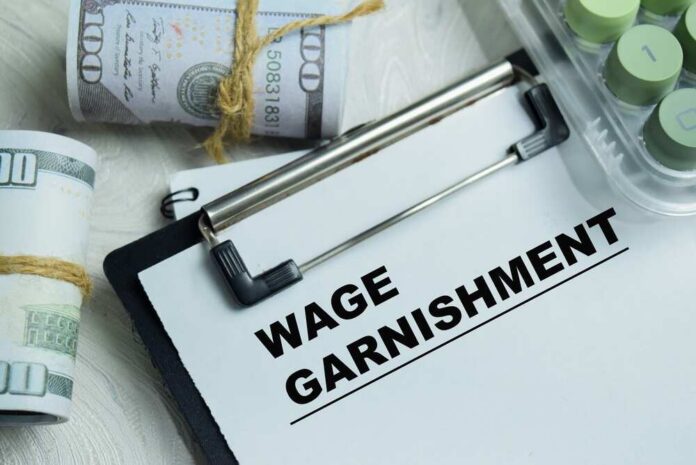
A Bloomberg report frames the current wave as partly driven by a post-pause “crackdown” that restarted aggressive collection tools such as wage garnishment for defaulters.
At the same time, new income-driven plans like SAVE are complex, hard to navigate, and not widely adopted among those already in default.
From this angle, the core failure is twofold. First, Washington used the COVID pause as a bandage instead of fixing the wound: runaway tuition, easy federal lending, and low-standards programs that leave borrowers with debt but no real earnings boost.
Second, leaders built a repayment restart that pushed millions off a cliff at the same time, instead of phasing in full payments and enforcing personal responsibility earlier.
The result is a record default count, a strained middle-aged borrower pool, and a government now threatening garnished paychecks to clean up its own mess.
Sources:
cbsnews.com, libertystreeteconomics.newyorkfed.org, consumerfinance.gov, cnbc.com, foxbusiness.com, apnews.com, washingtonpost.com, bloomberg.com, finance.yahoo.com, pbs.org, urban.org, ncua.gov, npr.org, creditandcollectionnews.com, ainvest.com, americandefault.org, wooclap.com, debtcollectionlab.org, acenet.edu