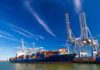

When tankers went up in flames off Saudi Arabia and oil roared past $90 a barrel, the Strait of Hormuz stopped being a faraway headline and turned into a live wire for your wallet, your retirement, and your country’s security.
Story Snapshot
- U.S. crude jumped above $90 and Brent neared $100 after new tanker attacks and strikes on Iran.
- Washington blames Iran for hitting commercial ships and says repeated airstrikes are needed to protect civilian mariners.
- The Strait of Hormuz, a narrow waterway off Iran and Saudi Arabia, now sits at the center of both war plans and oil prices.
- For American households, this is about more than geopolitics – it is about gas, inflation, and energy dependence colliding with hard power.
Oil Spikes As War Moves From Maps To Markets
Traders watched screens flash red as U.S. benchmark crude blasted through $90 a barrel and kept climbing after attacks on oil tankers off Saudi Arabia, near the Strait of Hormuz. In a single week, U.S. crude jumped more than a third, the biggest surge since records began in the early 1980s.
Brent crude, the global standard, pushed into the mid‑90s and flirted with $98 and beyond as fears grew that the conflict would choke off vital energy flows. Gasoline prices at home followed fast, adding more than 30 cents a gallon in days.
Oil nears $100 a barrel after Houthis claim strikes on Saudi Arabian tankers https://t.co/Mrdb0AKjZZ
— MarketWatch (@MarketWatch) July 23, 2026
These were not slow, gentle moves. One day saw an 8 to 12 percent jump in crude prices, the kind usually linked to wars or sudden embargoes. Analysts began to talk out loud about $100 oil again, not as a wild guess but as a realistic next stop if fighting spread or shipping stayed blocked.
Behind every headline price was the same fear: when the world’s energy artery is under fire, every refinery, truck fleet, airline, and household feels it soon enough.
Strait Of Hormuz: Narrow Waterway, Huge Leverage
The Strait of Hormuz is a narrow sea lane between Iran and the Arabian Peninsula that carries a huge share of the world’s seaborne oil and gas. Every modern economy depends on it, including the United States, even after America’s shale boom.
When tankers are struck there, as they were in the latest round of attacks, markets read a simple message: supply is at risk, and insurance and shipping costs are going up. That message alone can push prices higher before a single barrel is actually lost.
In this crisis, the United States Central Command said attacks on three oil tankers and other commercial ships in and near the strait were carried out by Iran or forces it controls. Iran, for its part, insists it has a right to police the area and denies unlawful attacks.
What is not in dispute is the result. Traffic through Hormuz has dropped, some vessels now sit offshore waiting for safer passage, and a waterway that should be boring and predictable has become a battlefield mixed with a toll booth.
Washington’s Case: Strikes To Protect Civilians And Commerce
In response, the United States has launched night after night of airstrikes inside Iran, hitting missile sites, drone bases, coastal radar, and small fast boats that U.S. commanders say are used to harass or strike commercial shipping.
Central Command’s own statements describe one steady goal: “degrade Iran’s ability to attack civilian mariners and commercial vessels” in and around the Strait of Hormuz. This is the public backbone of the U.S. position – that Iran is the aggressor at sea and that American power is shielding innocent crews.
Major news outlets across the spectrum report the same basic sequence. A cargo ship or tanker is hit by drones or naval fire linked to Iran. The White House accuses Tehran of breaking a ceasefire or threatening free navigation.
Within hours, U.S. aircraft and missiles strike dozens of Iranian targets tied to maritime warfare. Officials frame every round as defensive and necessary to keep a key waterway open for global trade and for American allies who rely on Gulf energy.
Conservative Lens: Deterrence, Proof, And Energy Dependence
For many right‑leaning Americans, the case for hitting back at Iran looks strong on its face. A regime that chants “Death to America,” backs armed groups across the region, and openly threatens shipping lanes does not earn automatic benefit of the doubt.
Protecting civilian crews and global trade lines fits both common sense and traditional conservative views of a strong navy securing the seas for commerce. Failing to respond could invite more attacks and higher long‑term costs.
But serious conservatives also ask hard questions about evidence and endgames. So far, the public record leans heavily on U.S. military statements and rapid intelligence assessments, with little independent proof released about each specific attack.
That pattern is not unique to this conflict, yet recent history has taught painful lessons about rushing from “high confidence” claims to long wars. A cautious approach demands strong and verifiable proof before open‑ended escalation.
What This Means For Your Wallet And America’s Strategy
This drama on the far side of the world hits the American middle class in two direct ways. First, higher oil means higher prices for gas, groceries, and goods shipped by truck, all while many families already feel squeezed by previous inflation.
Second, every new round of strikes pulls U.S. forces and tax dollars deeper into a region where the country said it wanted less military involvement, not more. Military strength is vital, but so is a clear sense of mission and exit.
The deeper question is why one narrow strait holds so much leverage over the United States in the first place. An energy policy that keeps America dependent on fragile sea lanes, while holding back domestic production and infrastructure, leaves U.S. voters paying for both higher pump prices and costly deployments.
A strategy that combines real naval power, firm red lines on attacks at sea, and aggressive use of America’s own energy resources would better match conservative values and basic common sense.
Sources:
cnbc.com, aljazeera.com, nytimes.com, en.wikipedia.org, bbc.com, npr.org, pbs.org, cnn.com, theguardian.com, centcom.mil, facebook.com