
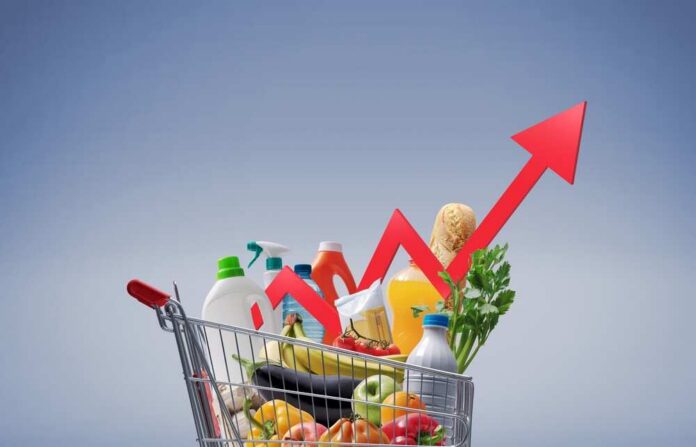
Americans are still buying groceries, but they are buying them with a tighter grip on the wallet and a smaller handbasket.
Quick Take
- Grocery sales rose in dollars in 2025, but unit volume fell, which means shoppers bought fewer items.
- Major industry reports say consumers are trading down, using promotions, and cutting impulse buys.
- Food-at-home prices remain high enough to keep pressure on families, even as monthly inflation cools.
- The story is not simple collapse; food spending overall remains large, and some data still show resilience.
What the Grocery Slowdown Really Means
The sharpest point in the new grocery data is not that Americans stopped spending. It is that they are getting less food for each dollar. McKinsey says grocery sales rose 1.2 percent in 2025, but volume fell 1.0 percent as price increases carried the market. That is the classic squeeze: nominal sales hold up while the cart gets lighter.
CoBank says the strain is now broad enough to change everyday behavior. Its July report says consumers are trading down, cutting discretionary purchases, and buying fewer groceries in response to higher food prices.
That fits what shoppers have been doing for years. They compare prices more often, use promotions, buy more private label goods, and trim impulse purchases before they trim essentials.
The pressure shows up in the weekly data too. Circana figures cited in the University of Michigan consumer report show total weekly food and beverage unit sales fell 0.9 percent for the week ending May 31, 2026, from a year earlier.
The same report says food-at-home prices rose 2.7 percent in May, close to a recent high. Even a modest price rise can matter when households already feel stretched.
U.S. grocery slowdown deepens as shoppers buy fewer items, raising pressure on food companies https://t.co/F1jS89oACL
— CNBC (@CNBC) July 16, 2026
Why Food Companies Feel the Heat
Food companies do not live on sales dollars alone. They live on volume, mix, and margin. When shoppers buy fewer units, trade down to cheaper brands, or skip extras, the whole chain feels it.
McKinsey says growth is coming more from shopping frequency than basket size, which means more trips but smaller baskets. That helps explain why executives sound uneasy even when top-line sales still rise.
Food Dive reports that manufacturers warn of a prolonged spending downturn and say consumers appear tapped out after years of inflation-driven price increases. That language is blunt, but it matches the pattern in the data.
Families are not acting like free-spending shoppers. They are acting like people who have learned to watch every cart total, every checkout screen, and every store tag.
Consumer Edge adds a wider lens. It says overall grocery spend declined roughly 3 percent year over year as consumers rethink where they buy food. That does not mean every household is spending less in every month.
It does mean the market is changing under pressure. Some shoppers move to discount stores. Others choose private label brands. Many simply buy less than they did before.
The Counter-Argument Has Real Weight
The slowdown story is real, but it is not the whole grocery picture. The United States Department of Agriculture says total U.S. food spending reached $2.51 trillion in 2025, and food-at-home spending reached $1.10 trillion.
That is a huge number, and it shows that Americans are still spending heavily on food. So the question is not whether the food economy is big. It is whether growth is softening at the store shelf.
There is also evidence that some consumers still feel steady enough to spend. McKinsey says consumer intent to spend remained stable or increased modestly across core categories, including groceries.
Purdue University’s Consumer Food Insights report also found households reporting average weekly grocery spending of $133 in December 2025. Those numbers complicate any simple claim that grocery spending is collapsing across the board.
What Matters Most Going Forward
The cleanest reading is also the most useful one: grocery demand is not vanishing, but shoppers are changing their habits in ways that make life harder for food companies. They are buying fewer units, seeking lower prices, and avoiding anything that feels optional. That is why a market can still grow in dollars and still feel weak to the firms trying to sell into it.
The deeper lesson is that headline spending totals can hide stress at the household level. A family can spend more in dollars and still take home less food. That gap is where the pain lives. It is also why grocery pricing has become such a political issue, with Americans arguing not just about inflation, but about whether their paycheck still buys a normal cart.
Sources:
cnbc.com, bls.gov, consumeredge.com, finance.yahoo.com, ers.usda.gov, mckinsey.com, ncoa.org, indexbox.io, makemyreceipt.com, facebook.com