A teen’s Bluetooth fitness gadget named “BOMB” was enough to turn a transatlantic jet around and unleash a full federal security response.
Story Snapshot
- A United Airlines flight to Spain returned to Newark after crew saw a Bluetooth device name that looked like a bomb threat [2][1]
- The “threat” turned out to be a teenager’s Fitbit jokingly renamed “bomb,” not an actual weapon or explosive [1]
- Passengers were evacuated, the jet was swept, and everyone was re-screened by police and federal security agencies before a new flight left [2][1]
- The event shows how overcautious aviation protocols collide with juvenile “jokes” in a zero-tolerance security culture [1][2]
How a Bluetooth Name Turned a Routine Flight Into a Security Operation
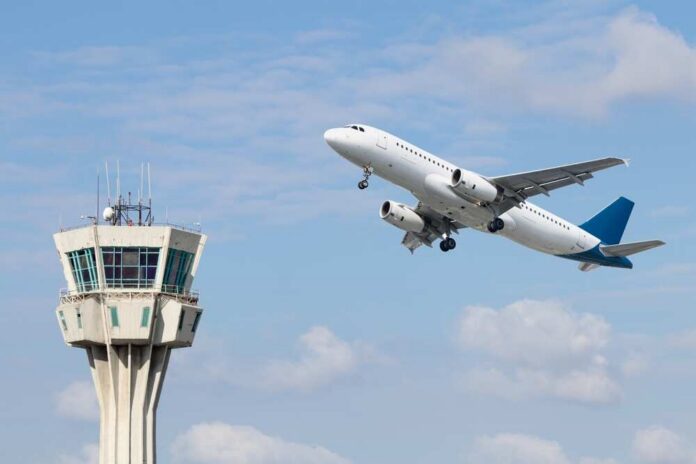
United Airlines Flight 236 took off from Newark Liberty International Airport on a Saturday evening, bound for Palma de Mallorca with 190 passengers and 12 crew on a Boeing 767, when the routine crossed an invisible tripwire in the cabin electronics.[2]
Crew members using onboard systems picked up a Bluetooth device name that included a four-letter word closely associated with explosives, triggering concern that someone was openly labeling a device as a bomb on a packed international flight.[2][1]
The crew did not shrug and move on; they escalated fast and formally. Reports describe repeated announcements demanding all passengers turn off their Bluetooth devices as the crew attempted to isolate the suspicious signal.[2][1]
When two devices remained visible, the situation shifted from annoyance to perceived threat. After consultation with United headquarters in Chicago, the pilots turned the aircraft back toward Newark rather than continue over the Atlantic with an unresolved security question hanging over the flight.[2]
What Happened After The Jet Returned To Newark
Once Flight 236 landed back at Newark around 9:37 p.m., the aircraft did not taxi to a normal gate for casual disembarkation.[2] Air traffic control audio captured tower instructions that security would have to inspect the entire plane, including the cargo area, before anyone treated this as a false alarm.[2]
Port Authority police boarded; passengers were escorted off by crew and officers onto buses on the tarmac; and the aircraft underwent a full sweep for any dangerous devices.[2][1]
Passengers did not simply re-board and carry on. Every traveler went back through Transportation Security Administration screening and Customs and Border Protection processing before re-clearing for departure.[2]
The original jet did not resume the journey that night. United brought in a replacement aircraft and a new crew, which finally departed early Sunday morning and reached Palma later that day, underscoring how a single digital name choice burned hours, fuel, and manpower.[2][1]
From Fitbit Joke To Federal Investigation
Follow-up reporting and broadcast coverage filled in the most revealing detail: investigators traced the suspicious Bluetooth signal to a Fitbit owned by a 16-year-old passenger.[1]
According to those reports, the teenager had renamed the device “bomb,” a juvenile joke that looked very different when projected into the hyper-sensitive environment of an international flight.[1]
Officials later determined that no explosive, weapon, or malicious device existed; the problem was pure labeling, not hardware.[1]
✈️ United Airlines Flight Returns to Newark After Bluetooth Device Triggers Security Alert
A United Airlines Boeing 767 operating Flight 236 from Newark to Palma de Mallorca, Spain, was forced to return to Newark Liberty International Airport after a passenger's Bluetooth device… pic.twitter.com/O0yFnOqUki— Kevin /.ink🟦 (@Icemoniey) June 1, 2026
Despite the harmless reality, federal authorities did not treat this as a harmless prank. Coverage indicates that the Federal Bureau of Investigation opened an inquiry into the circumstances of the incident, even though no local charges had been filed at the time of reporting.[1]
That response aligns with post‑September 11 norms: anything resembling a bomb reference on an airplane, even as text on a screen, can trigger criminal scrutiny, because federal law treats threats and hoaxes involving aviation extremely seriously.[1][2]
Why Authorities Overreact On Purpose — And What Common Sense Says
Aviation security protocols now deliberately favor overreaction when there is any ambiguity about a potential threat inflight.[2][1] From a risk perspective, the cost of a needless diversion, extra fuel burn, and hours of delay is trivial compared with the catastrophic downside of ignoring the one real signal.
That logic, grounded in experience, explains why air traffic control demanded a full inspection of the aircraft and cargo once the suspicious Bluetooth name was reported.[2]
From this perspective, the public expects airlines, pilots, and law enforcement to err on the side of protecting lives rather than convenience, especially in the air.
At the same time, many Americans look at a teenager’s badly named Fitbit and see a cultural problem: young people so habituated to edgy jokes online that they do not grasp real-world consequences.
The facts support both: authorities acted within a tough but rational security framework, while the root cause was irresponsible behavior rather than any genuine terror plot.[1][2]
What This Incident Reveals About Modern Air Travel
The Flight 236 episode highlights how everyday technology, from fitness trackers to earbuds, now intersects with rigid security systems that were never designed with prankish device names in mind.[1][2]
A cabin full of personal electronics, each bearing whimsical or provocative labels, becomes a minefield when even one device name contains a word like “bomb.”
In that context, a single teenager’s choice forced nearly 200 people, a major airline, and multiple security agencies into an expensive, time‑consuming response.[2][1]
Travelers who want to avoid starring in the next viral “plane diverted” story can draw a simple lesson: treat digital labels the way previous generations treated words spoken at the ticket counter or on the jet bridge.
Free speech does not mean freedom from consequences at 35,000 feet. Airline crews will continue to call audibles like this because Americans demand safe skies. The least passengers can do is not name their gadgets after weapons and then act surprised when the system takes them seriously.[1][2]
Sources:
[1] Web – United flight returns midair after Bluetooth device name reportedly …
[2] Web – United Airlines flight to Spain returns to U.S. after Bluetooth device …