The Trump administration is asking the Supreme Court to move fast and unlock a sweeping mail‑in voting order that could reshape how millions of Americans cast ballots in this year’s midterms.
Story Snapshot
- President Trump’s executive order ties mail‑in voting to new federal citizenship lists and Postal Service controls.
- Lower courts have partially blocked the order in many states, but allowed pieces to move forward elsewhere.
- The administration now wants the Supreme Court to lift those blocks before November and bless its legal theory.
- Supporters call it election integrity; critics say it is federal overreach that risks throwing out valid voters.
Trump’s order: turning federal data into a gatekeeper for mail ballots
On March 31, 2026, President Trump signed an executive order titled “Ensuring Citizenship Verification and Integrity in Federal Elections.”
The order tells the Department of Homeland Security and the Social Security Administration to build state‑by‑state lists of adult United States citizens who live in each state and are old enough to vote. States are then supposed to compare those lists to their voter rolls and treat the federal data as a benchmark for who is eligible to vote by mail.
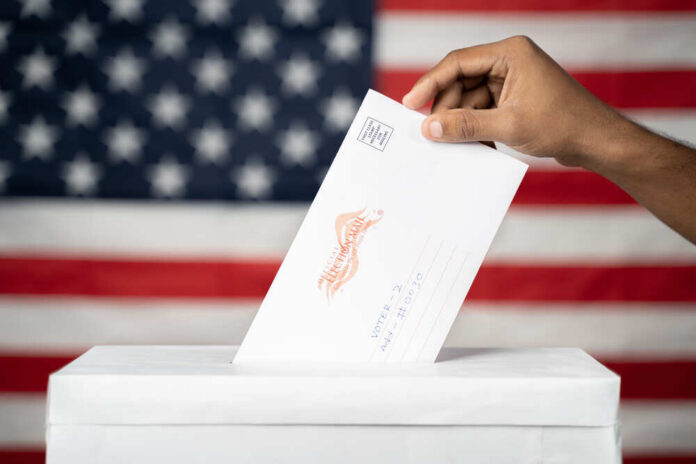
The order gives the United States Postal Service a new role that goes far beyond carrying envelopes. It directs the Postal Service to send or process mail ballots only for voters on approved state lists linked to the federal citizenship data, and only if states deliver those lists well before Election Day.
If a voter is not on the list, the Postal Service would not deliver a ballot to that person. The order also requires states to keep election‑related records for five years, which the administration frames as a way to improve audits and fight fraud.
Why Trump is asking the Supreme Court to step in now
The Justice Department has asked the Supreme Court to clear the way for full enforcement of the order ahead of November’s midterm elections.
The administration argues that Congress gave Washington broad power over federal elections and mail service, and that using federal databases to verify citizenship is common‑sense protection against non‑citizen voting. Officials also say courts should not block an order before agencies finish writing rules, because judges would be guessing about harms that might never occur.
The Trump administration on Monday asked the Supreme Court to allow it to fully implement an executive order signed by President Donald Trump that seeks to impose additional restrictions on mail-in voting.https://t.co/ZKlX2ZorM5
— SCOTUSblog (@SCOTUSblog) July 27, 2026
At least one federal judge agreed in part with that timing argument and refused early demands to freeze the entire order nationwide. But as implementation moved ahead, voting‑rights groups and states showed that the administration and the Postal Service were actively preparing to restrict some mail ballots.
That persuaded other courts to step in, especially in states that run heavy vote‑by‑mail systems, and to block key pieces of the Postal Service rules for now.
States and advocates see a power grab that could drop valid voters
Twenty‑three states and the District of Columbia have gone to court arguing that the Constitution gives states, not the president, the core power to decide who can vote and how ballots are cast and counted.
Their lawsuits say the executive order tries to override state mail‑in voting laws by turning the Postal Service from a neutral carrier into a gatekeeper that decides who gets a ballot. From a constitutional view, that is a serious claim, because it goes straight to the balance of power between Washington and the states.
Nonpartisan voting‑rights groups add a more practical warning. They point out that Homeland Security and Social Security databases were built to keep track of immigration status and benefits, not to run elections.
Justice Department lawyers have already admitted in court that the planned “citizenship lists” will be incomplete. If federal lists are missing real citizens, and the Postal Service relies on those lists to decide who gets a ballot, then eligible voters could be locked out through no fault of their own.
Election integrity versus voter access in a polarized media fight
Supporters of the order argue that citizenship checks and tighter mail‑ballot controls reflect basic common sense: only citizens should vote, and states should know exactly who is receiving ballots at home.
That argument resonates with many who watched the rapid growth of mail‑in voting and worry that loose systems are easier to abuse. They see federal data as a way to make sure states do not look the other way if non‑citizens wind up on voter rolls.
Major media outlets and advocacy groups frame the same order very differently. ABC News and CNN describe the directive as a crackdown on mail‑in voting that could disenfranchise voters if federal data is wrong or outdated.
The Brennan Center for Justice calls it an “illegal and dangerous attempt” to seize control of election machinery, while the American Civil Liberties Union brands it an attack on democracy and voters’ rights. Those descriptions shape public opinion long before the Supreme Court rules or any full election‑day data comes in.
What happens if the Supreme Court sides with Trump
If the Supreme Court removes the injunctions and backs the administration’s legal theory, federal agencies would press ahead with building and sharing citizenship lists, and the Postal Service would move closer to enforcing its new ballot rules in states that cooperate.
That could create a two‑track election system this fall, with tighter federal‑driven mail rules in some states and traditional state‑run mail systems in others, depending on ongoing litigation and local choices.
If the Court instead leaves the blocks in place or questions the president’s claimed powers, it would send a clear signal that sweeping changes to mail‑in voting must come from Congress and state legislatures, not from the Oval Office alone.
Either way, this fight is bigger than one midterm. It tests how far a president can go in the name of election integrity, and how much risk to voter access Americans are willing to accept to police the line between citizen and non‑citizen voters.
Sources:
apnews.com, abcnews.com, politico.com, aclum.org, scotusblog.com, reuters.com, brennancenter.org, votingaccessforall.org, nytimes.com, npr.org, washingtonpost.com, youtube.com, issueone.org, archive.org, whitehouse.gov