
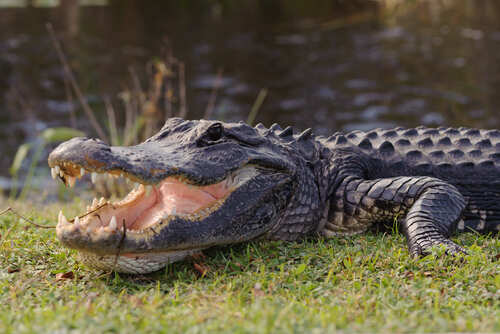
A 71-year-old fisherman was pulled from the shore into a Florida pond by an alligator and died at the scene.
Story Snapshot
- State wildlife officials said Steven Hamilton, 71, was bitten while fishing from shore.
- Police and fire crews responded after a 5 p.m. 911 call; Hamilton died at the scene.
- A contracted trapper later removed an alligator about 11 feet 8 inches long.
- The attack happened at Dr. Bradford Memorial Park in Winter Garden, near Lake Apopka.
A quiet evening of fishing turned into a fatal ambush
Florida Fish and Wildlife Conservation Commission officials reported that Steven Hamilton was fishing at a pond in Dr. Bradford Memorial Park in Winter Garden when an alligator bit him and pulled him into the water. Winter Garden Police identified the victim and said he was on the shore at the time of the attack. First responders reached the scene after a 911 call around 5 p.m., but Hamilton was pronounced dead there, according to state and local reports.
Authorities described a rapid, coordinated response. Police secured the park, and fire-rescue crews worked from the bank and on the water. Florida Fish and Wildlife Conservation Commission investigators called a contracted nuisance-alligator trapper through the Statewide Nuisance Alligator Program. The trapper removed a large alligator, measured at about 11 feet 8 inches, from the area soon after the incident. Officials continued investigating the exact sequence on the shoreline and in the water.
Where and how it happened matters for every Floridian who fishes
Reports place the attack at a pond tied to the Lake Apopka system, a place where people often fish from shore. That setting raises familiar risks that locals know but visitors can miss. Alligators key on splashes and the motion of fish at the water’s edge. A hooked fish near shore, or a person standing close to the bank at dusk, can draw a fast strike from below. That pattern fits what officials described in this case.
Florida history shows this kind of attack is rare but real. Since 1948, the Florida Fish and Wildlife Conservation Commission has logged about 500 unprovoked bites, with a long-run average near eight serious bites per year, and a few deaths in some years. Florida’s alligator population sits near 1.3 million, so the base rate of danger for the average person is low. The risk, however, climbs when people wade, walk pets close to the edge, or fish from soft banks at dawn or dusk.
What officials did next and why it aligns with public safety
Florida’s program for nuisance alligators removes specific animals that threaten people, pets, or property. Contracted trappers respond on short notice and often euthanize large animals that have lost fear of humans or are tied to an attack. That is what happened here, with the removal of an alligator nearly 12 feet long from the immediate area. Some reports said the animal involved was killed, while the investigation continued to document the full record.
"He was out there almost every single night fishing." | For those who knew Steven Hamilton, seeing him at a pond near a popular Florida lake had become routine. Now they're remembering the 71-year-old man who was killed in an alligator attack | LINK IN BIO pic.twitter.com/yUmkT3ZOoG
— WMTW TV (@WMTWTV) October 19, 2026
Practical steps can cut risk without emptying Florida’s ponds. Stay six feet back from the water’s edge when possible. Keep pets on a short leash and away from the bank. Do not feed wildlife. Move a hooked fish quickly and avoid letting it thrash at your feet. Call the Florida Fish and Wildlife Conservation Commission’s Nuisance Alligator Hotline if you see an aggressive gator near a public area. These are simple habits that respect nature and protect families.
Sources:
nbcnews.com, people.com, wfla.com, cbsnews.com, news-journalonline.com, wpbf.com, hindustantimes.com, wftv.com, floridatoday.com, fox13seattle.com