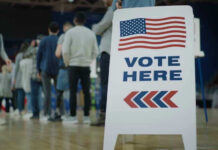
A federal appeals court just told the Trump administration to go back and try again, after the Justice Department tried to stop California from counting more than 20,000 mail ballots tied to voters it suspected were noncitizens.
Quick Take
- The Justice Department sued California and asked courts to block counting of over 20,000 mail ballots linked to suspected noncitizen voters.
- A three-judge Ninth Circuit panel held an emergency Zoom hearing on a Sunday before dismissing the department’s appeal.
- The 2-1 ruling was procedural, saying the district court never got a fair chance to rule first, not a verdict on the ballots themselves.
- Trump-appointed Judge Patrick Bumatay dissented, while California Attorney General Rob Bonta called the outcome an early win.
What The Justice Department Wanted And Why It Went To Court
The Justice Department filed suit against California, demanding officials set aside more than 20,000 mail-in ballots connected to people the federal government flagged as likely noncitizens. The agency wanted those ballots segregated and left uncounted while the dispute played out. That is a sweeping request, since it targets voters before anyone verifies, one by one, whether each person was actually ineligible to cast a ballot.
Federal law already bars noncitizens from voting in federal elections, and the Justice Department argued California’s process for sending and counting mail ballots clashed with that rule. The government’s complaint framed this as a sovereign interest in protecting election integrity, not a routine disagreement over paperwork. Whatever the merits, the size of the list and the speed of the request made this far from a quiet legal filing.
The Emergency Hearing And The Ninth Circuit’s Answer
Because ballots were being returned daily, the Justice Department sought emergency relief, pushing the case straight to the Ninth Circuit Court of Appeals. A three-judge panel took the unusual step of holding a Sunday hearing over Zoom, a sign the court treated the request as urgent and real, not a throwaway motion. That alone shows the dispute had genuine legal weight behind it.
Still, the panel split 2-1 and sent the case back down, ruling it lacked jurisdiction because the district court never had a real chance to weigh in first. Judges Mark Bennett, a Trump appointee, and Gabriel Sanchez, a Biden appointee, formed the majority. Judge Patrick Bumatay, also a Trump appointee, dissented, arguing the appeal deserved immediate attention rather than a bounce back to the lower court.
Why Dismissed Doesn’t Mean The DOJ Was Wrong
Headlines calling this a rejection can mislead readers into thinking judges ruled on the actual noncitizen-voting claims. They did not. The majority found the government’s own timing worked against it, saying the claimed emergency was, in part, self-created because the Justice Department filed too late for the district court to properly consider it. That is a scheduling problem, not a finding that the underlying ballot concerns are baseless.
This distinction matters. A procedural dismissal leaves the core question open: were tens of thousands of ballots sent to people who should not have been voting in the first place? Nobody has answered that yet. The district court now gets another shot at the merits, meaning this fight is paused, not finished.
California’s Response And A Familiar Legal Pattern
California Attorney General Rob Bonta publicly framed the ruling as an early legal victory, arguing the Justice Department tried to bypass the normal court process. Los Angeles County’s top elections official also moved to dismiss the federal effort, showing resistance from state and local officials runs deep. That pushback is worth watching, since it signals how hard California intends to fight any federal attempt to touch its ballot procedures.
𝟗𝐓𝐇 𝐂𝐈𝐑𝐂𝐔𝐈𝐓 𝐓𝐎𝐒𝐒𝐄𝐒 𝐃𝐎𝐉 𝐁𝐈𝐃 𝐓𝐎 𝐅𝐋𝐀𝐆 𝟐𝟎,𝟎𝟎𝟎 𝐒𝐔𝐒𝐏𝐄𝐂𝐓𝐄𝐃 𝐍𝐎𝐍𝐂𝐈𝐓𝐈𝐙𝐄𝐍 𝐁𝐀𝐋𝐋𝐎𝐓𝐒 𝐈𝐍 𝐂𝐀𝐋𝐈𝐅𝐎𝐑𝐍𝐈𝐀—𝐍𝐄𝐖𝐒𝐎𝐌 𝐂𝐇𝐄𝐄𝐑𝐒
The Trump Justice Department wanted a federal appeals court to force California to set aside… pic.twitter.com/KSvdBpt9lw
— M.A. Rothman (@MichaelARothman) October 27, 2026
Courts have long leaned on what’s called the Purcell principle, a rule that says judges should avoid changing election procedures right before voting wraps up, because last-minute orders confuse voters and officials alike. That principle likely shaped how fast, or how reluctantly, this appeals court was willing to act. It also explains why timing, not just evidence, often decides these cases before Election Day pressure fades.
What Comes Next For This Fight
The case now returns to the district court, which must finally weigh the Justice Department’s request on its merits rather than its clock. Expect both sides to push hard: federal lawyers pressing for proof noncitizens voted, state officials defending their ballot process as lawful. Conservatives should watch this closely, since protecting the integrity of federal elections is not a fringe concern, it’s a basic expectation of self-government that deserves a real hearing, not a procedural shrug.
Sources:
cbsnews.com, politico.com, edition.cnn.com, oag.ca.gov