
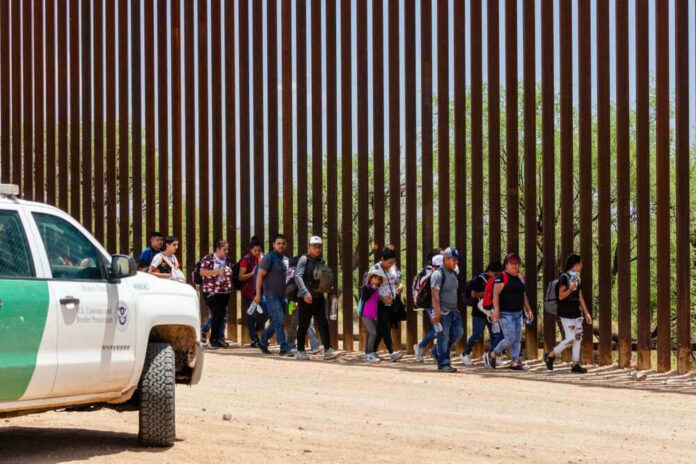
Border Patrol recorded just 8,288 southwest-border apprehensions in October, the lowest start to a fiscal year on record, while the zero-release streak reached 18 straight months, according to the government.
Story Snapshot
- Border Patrol logged 8,288 southwest-border apprehensions in October, a record-low fiscal-year kickoff.
- October was 7% lower than September, confirming a continued slide in encounters.
- The month’s level was 95% below the Biden-era monthly average and 97% under the December 2023 peak.
- DHS reports 18 straight months with zero releases at the border, reflecting strict custody policy.
What the numbers show and why they matter
Customs and Border Protection reported 8,288 southwest-border apprehensions by Border Patrol in October, the first month of the new fiscal year. That figure set a record low for a fiscal-year start, and it landed 7% below September. The agency also highlighted a sustained custody posture. October marked the 18th straight month of zero releases at the border, signaling a firm “no catch-and-release” standard. The agency framed the result as a clear break from the prior period’s surge.
Comparisons against the recent past add context to the drop. Customs and Border Protection said October’s total was 95% below the average monthly count during the Biden years and 97% below December 2023’s spike. Border Patrol figures for September, published on official tables, show 8,386 apprehensions, which aligns with the claimed 7% month-over-month decline into October. That alignment backs the direction and the scale of the shift using the government’s own series.
How DHS counts encounters and what is included
Encounter statistics cover distinct buckets. Border Patrol apprehensions capture people stopped between ports of entry. The Office of Field Operations counts “inadmissible” travelers at the ports. During the pandemic, Title 42 tracked expulsions as a separate channel. Customs and Border Protection publishes those lines so readers can see how the categories add up and move over time. The October headline centered on the Border Patrol apprehensions line, the core signal for between‑port activity.
Custody and transfer data provide another lens on policy. The Department of Homeland Security reports how people move through detention, returns, and removals. The “zero releases” language refers to keeping people in custody or transferring them for removal or return rather than releasing them into the interior to await proceedings. For many Americans, that standard reads as basic common sense: enforce the law, keep custody, and close the loop fast when the law allows it.
Why the drop likely reflects policy plus pressure
Policy changes under President Trump aimed to raise certainty and speed of consequences. That includes fast case handling, more returns, and tighter coordination with Mexico. Government series show that when enforcement gets clear and consistent, apprehensions tend to fall as attempts fall or routes shift. Research on border enforcement also finds that stronger on-the-ground tools reduce observed crossings and can shape behavior in near-real time, even if they do not capture every attempted entry.
Trump border crackdown drives encounters to record October low as zero-release streak hits 18 months, DHS sayshttps://t.co/uHrBjBqfrY
— Trump War Room (@TrumpWarRoom) November 17, 2026
Reasonable people will ask how much is policy and how much is outside forces. Customs and Border Protection’s data are the administrative record of what agents and officers encountered. They show what happened at the line. Many factors can play a part, but causation is not needed to state the basic facts: encounters fell to a record-low start, and releases at the border have not occurred for 18 months, according to the agency’s own reporting. Those results align with a deterrence-first approach that values order and clear rules.