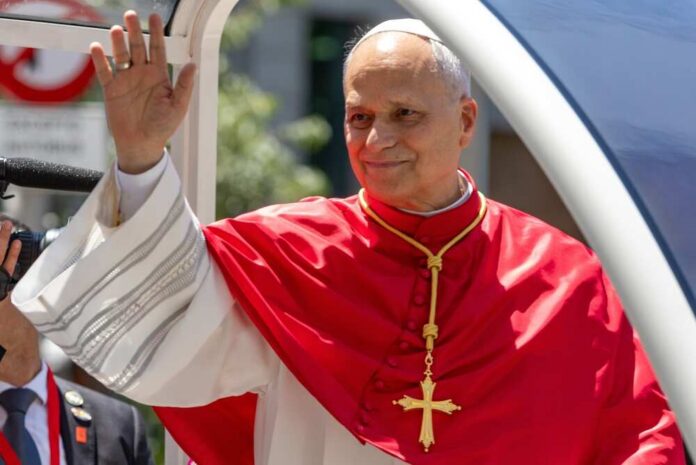
The pope told Argentina that people with disabilities are a blessing, and millions leaned in to hear it.
Story Snapshot
- Pope Leo XIV visited a disability care community in Claypole, Argentina, and praised residents as a blessing.
- He tied national progress to how a country welcomes people with disabilities and special needs.
- His first public Mass in Argentina drew about 2.5 million people, according to official estimates.
- The visit landed amid a debate over austerity and social services in Argentina.
A direct message delivered face-to-face
Pope Leo XIV met residents, staff, and volunteers at the Pequeno Cottolengo Argentino Don Orione in Claypole, south of Buenos Aires. He said people with disabilities are not a burden but a blessing. He offered blessings and greeted residents, turning a policy debate into a personal moment. The institution houses more than 400 people on its large campus. The words landed where they mattered most—inside a community that lives the daily grind of care and dignity.
He added a clear standard for leaders and voters. He said a nation’s progress is measured by how it welcomes people with disabilities and particular needs. That line reaches past charity into duty. It tells families they matter and tells officials they will be judged by the weakest door in the building. It pairs compassion with accountability. It also echoes a global shift from seeing disability as pity to seeing it as a rights issue and a barrier problem.
A megaphone moment in Buenos Aires
The message did not stay in one courtyard. It rode into the heart of Buenos Aires and reached a massive crowd. About 2.5 million people attended his first Mass in Argentina, based on estimates from church or local officials. The numbers vary slightly across outlets, but the scale is clear. The city became a listening room, and the theme did not change. Dignity is not a side note. It is the test of a serious country.
The timing added punch. Argentina is debating cuts in social services under an austerity push. Reports framed the pope’s remarks as a challenge to those cuts, especially where they would hit health care and disability supports. He did not name a line item. He focused on people and the moral math of a nation’s choices. That approach aligns with common sense: start with the person, then build policy that serves real lives.
From blessing to responsibility
The word blessing matters. It lifts people with disabilities above labels and pity. But it also risks sounding soft if it stays in the realm of inspiration. The stronger reading is this: blessing comes with duty. Families carry heavy loads. Communities must share them. Government must set fair rules and fund what it promises. Faith groups must open doors, not just offer words. That is how you turn moral talk into measurable help that lasts beyond a news cycle.
American conservatives should welcome that frame. It honors the person first. It asks families, churches, and civic groups to lead with service. It expects government to protect the vulnerable without building waste or dependency. It prizes local care, clear outcomes, and respect for life. When the pope says progress is measured by welcome, he is not selling bureaucracy. He is calling for ordered love and tested stewardship, from the parish to the parliament.
What endurance looks like on Monday morning
The Claypole residents will wake up to the same needs on Monday. Real leadership will be judged by ramps that work, doctors who show up, therapy that does not lapse, and jobs that fit real skills. That is where the blessing meets the budget and the calendar. Crowd size fades. Consistent care endures. A nation that meets that test builds loyalty at home and respect abroad. That is the long arc hinted at in Buenos Aires and set in motion in Claypole.
Before celebrating Mass with an estimated 2.5 million people, Pope Leo XIV makes time for a smaller gathering in Argentina, embracing residents at a care center for people with disabilities. The pope shares a message of compassion, telling residents their lives are a blessing,…
— Jason Scott (@jasonscott4510) November 10, 2026
Policy fights will continue. Yet the standard is now plain. Welcome is not a slogan. It is a scoreboard. Schools either enroll and adapt, or they do not. Hospitals either serve without delay, or they do not. Transit either connects people to work and worship, or it does not. Citizens can use that checklist. Leaders should expect to be graded by it. The blessing claim sounds lofty. The proof is not. It shows up in small, exact wins, counted one life at a time.
Sources:
abcnews.com, dw.com, cathstan.org, osvnews.com, rfi.fr, abc.net.au