While Trump declared Iran was “negotiating on fumes,” U.S. Central Command was simultaneously shooting down Iranian attack drones and blowing up the ground station that launched them — and the ceasefire was somehow still technically intact.
Quick Take
- U.S. forces intercepted four Iranian one-way attack drones near the Strait of Hormuz and struck the ground control station in Bandar Abbas preparing to launch a fifth.
- The Pentagon called the strikes defensive; Iran called them a ceasefire violation and retaliated against a U.S. base.
- Trump’s “negotiating on fumes” remark framed Iran as weakened, even as both sides traded live fire for the second time in three days.
- The broader context traces back to the June 22, 2025 U.S. strikes on Iranian nuclear sites that triggered what analysts are calling the Twelve-Day War.
Four Drones Down, One Station Destroyed, Ceasefire Somehow Still Breathing
U.S. Central Command forces intercepted four Iranian one-way attack drones that threatened the Strait of Hormuz, then struck an Iranian ground control station in Bandar Abbas that was actively preparing to launch a fifth. [1] A U.S. official confirmed the strike on the drone station to Air and Space Forces Magazine, while simultaneously insisting the broader ceasefire remained in place. [8] That is a remarkable diplomatic tightrope — destroying military infrastructure on Iranian soil while calling it a contained, defensive act.
NEW: CENTCOM says Iran carried out an “egregious ceasefire violation” overnight, launching a ballistic missile toward Kuwait and multiple attack drones near the Strait of Hormuz.
The missile was intercepted by Kuwaiti forces while the U.S. took out five drones and prevented a… pic.twitter.com/kvqb542Za7
— Fox News (@FoxNews) May 28, 2026
Iran’s response was immediate and predictable. Tehran disputed the “defensive” label entirely, framed the Bandar Abbas strike as a ceasefire violation, and reportedly launched missiles at a U.S. military airbase in retaliation. [2]
Iranian authorities also claimed the U.S. struck nothing more than a barren area outside the city, directly contradicting the Pentagon’s account of a destroyed drone launch facility. [8] Both sides cannot be right, and given Iran’s documented history of operating one-way attack drones in this region, the U.S. account carries considerably more credibility.
Trump’s “Negotiating on Fumes” Comment Was Calculated, Not Casual
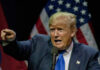
Trump’s choice of words — Iran “negotiating on fumes” — was not offhand commentary. It was a pressure signal broadcast in real time while U.S. forces were conducting kinetic operations. [3] The message to Tehran, to regional allies, and to domestic audiences was unified: Iran is militarily degraded, economically strangled, and has no leverage. Whether that framing accelerates a deal or hardens Iranian resolve is the central question that neither side can answer right now.
The June 22, 2025 U.S. Air Force and Navy strikes on three Iranian nuclear facilities set this entire sequence in motion. [4] Those strikes, conducted under the code name associated with what is now being called the Twelve-Day War, fundamentally altered the strategic landscape. What followed — including this latest exchange near Bandar Abbas — is best understood as the turbulent aftermath of that decisive action, not as a separate, isolated flare-up.
The Strait of Hormuz Is Not a Place Where Miscalculation Is Cheap
Roughly 20 percent of the world’s oil supply transits the Strait of Hormuz. Iran has understood for decades that threatening this chokepoint is its most potent form of asymmetric leverage. Deploying one-way attack drones toward that corridor was not a random provocation — it was a calculated signal that Iran still has the capacity and the will to threaten global energy markets even after taking significant military losses. [5]
The U.S. response, targeting the launch infrastructure rather than escalating to broader strikes, was measured and proportionate by any reasonable standard.
The US military executed a precision strike against an Iranian ground control station in Bandar Abbas.
CENTCOM forces intercepted four attack drones before striking the facility as it prepared a fifth launch.
Iranian state media downplayed the hit, claiming they only fired… pic.twitter.com/goSytHSJNj
— The UAE Times (@theuaetimes) May 28, 2026
Iran’s claim that the U.S. hit a barren field deserves the skepticism it has received. A military power with the precision strike capability the U.S. demonstrated on June 22 does not accidentally hit empty desert when targeting a known drone control station. [4] The more plausible read is that Iran needs to project resilience to a domestic audience that has watched its nuclear program get dismantled from the air.
Calling the strike ineffective is a face-saving move, not a factual rebuttal. The pattern of U.S.-Iran disputes over what constitutes a defensive action versus an unprovoked attack is as old as the 2019 Iranian shoot-down of a U.S. surveillance drone — each side frames the same event through an entirely different lens. [7] What is different now is that the scale of prior U.S. action has shifted the baseline dramatically, and Iran’s room to maneuver keeps shrinking.
Sources:
[1] Web – US military conducts another strike against Iran after Trump says Iran …
[2] YouTube – U.S. strikes Iranian military facility and four drones amid fragile …
[3] YouTube – U.S. launches fresh ‘defensive’ strikes against Iran, Tehran hits back
[4] YouTube – US military conducts another strike against Iran
[5] Web – 2025 United States strikes on Iranian nuclear sites – Wikipedia
[7] YouTube – US Bombs Iranian Drone Hub In Fresh Strikes
[8] Web – 2019 Iranian shoot-down of American drone – Wikipedia