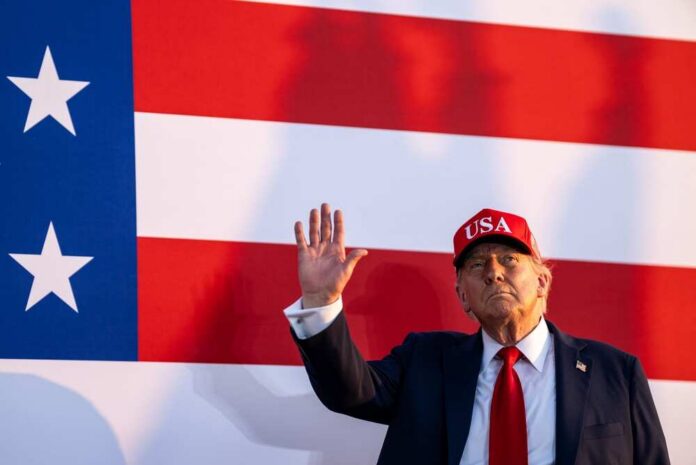
President Trump moved to unleash an “Economic D-Day” on Iran and warned nations backing Tehran to expect “tremendous” costs if they help the regime evade U.S. pressure.
Story Highlights
- Trump pivots from new strikes to escalated economic pressure on Iran.
- Treasury signals unprecedented sanctions and tighter financial choke points.
- U.S. aims to hit oil, shipping, and digital finance networks tied to Tehran.
- Sanctions escalate a long-standing playbook of maximum financial pressure.
Trump’s Strategy: Squeeze Tehran’s Wallet, Not Launch New Strikes
President Trump said the United States is “low-keying it” militarily while letting economic pain mount inside Iran, underscoring a clear shift toward financial warfare after months of conflict.
He framed the plan as long-haul pressure designed to sap Tehran’s resources and bargaining power. The goal is simple and tough: drain the regime’s access to cash, limit its tools for aggression, and force choices it has long avoided. The White House is signaling resolve without locking America into fresh combat.
Treasury Secretary Scott Bessent previewed actions “never seen” before, with measures expected to roll out in stages and target Iran’s lifelines to global markets. This next phase points at oil exports, shipping networks, insurers, and foreign banks that touch Iranian trade.
The message to companies and capitals is direct. If you finance or move Tehran’s goods, you risk losing access to the U.S. dollar and U.S. markets. That is the leverage that bites, fast and hard.
What “Economic D-Day” Likely Hits: Oil, Shipping, and Digital Finance
Past and current pressure campaigns show where this is headed. U.S. actions have long focused on Iran’s energy sales, maritime logistics, and sanctions evasion middlemen.
The State Department recently spotlighted networks using digital asset exchanges to keep Tehran connected to money flows, and sanctioned companies and a ringleader tied to those activities.
Cutting off these channels makes it harder for the regime to sell oil in the shadows, launder proceeds, or pay proxies that fuel violence across the region.
The United States has also used sweeping designations to isolate hundreds of people, vessels, and firms that move or insure Iranian oil. In 2018, the Department of the Treasury described a “maximum financial pressure” posture while re-imposing sanctions lifted under a prior nuclear deal.
Today’s push builds on that known playbook, but with tighter controls and fresh tools. The intention is to close the gaps, punish facilitators abroad, and keep pressure on until Tehran feels real constraints where it counts—cash and credit.
Why It Matters to Americans: Security, Prices, and Deterrence
Hitting Iran’s revenue can slow money to terror groups and reduce threats to U.S. troops, partners, and shipping lanes. That helps keep American families safer and trade routes open. Strong enforcement also deters foreign banks and shippers from testing U.S. lines.
The administration argues this approach shows strength without endless war. It protects our service members, clamps down on rogue behavior, and defends the global commons—all while guarding U.S. economic interests that rely on safe energy flows and honest markets.
Trump announces Economic D-Day against Iran, targeting oil, trade, shipping & financial networks.
Secondary sanctions could raise global pressure.
📊 Potential impact: Oil ↑ | Gold ↑ | USD ↑ | Risk Sentiment ↓ Key risk: supply disruptions or wider escalation.#trump pic.twitter.com/LotAMZAfav
— Carlos And Company (@carlosandcompny) August 20, 2026
Sanctions have a long history in U.S. Iran policy, and experts debate their power to change regimes or force big deals. Research shows they can cause sharp economic pain, cut exports, spike inflation, and strain growth, though political outcomes can be uneven over time.
The current campaign accepts that trade-off. It uses America’s unmatched financial reach to starve a hostile regime of resources. Success will be measured by fewer dollars for Tehran’s aggression and more pressure on those who would bankroll it.
Sources:
cnbc.com, fortune.com, finance.yahoo.com, state.gov