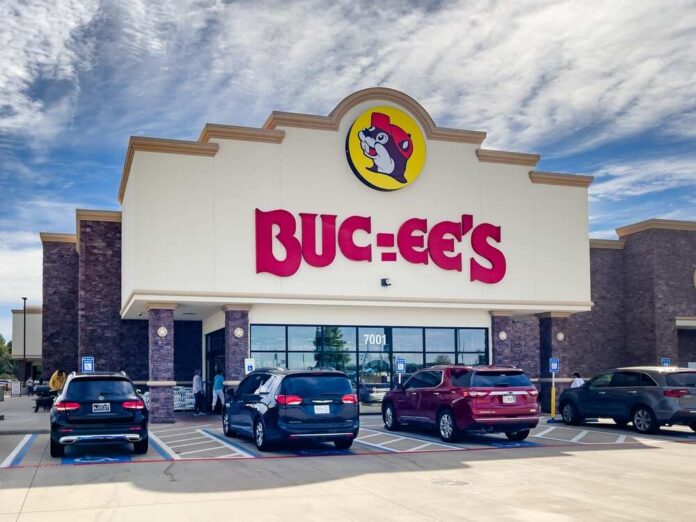
Oklahoma City just greenlit a $25 million road rebuild that points straight at Buc-ee’s, planting its first flag in the state.
Story Snapshot
- Mayor David Holt says talks with Buc-ee’s are “very active” and pegs the site at Interstate 40 and Cimarron Road in west Oklahoma City.
- The City Council approved a three-party infrastructure agreement tied to that interchange, signaling a real project path.
- Funding splits name Oklahoma City, the Oklahoma Department of Transportation, and a Buc-ee’s-linked developer.
- Final store approval is still separate from the road vote, but momentum is clear.
A concrete step: council vote backs the I-40 and Cimarron rebuild
Oklahoma City Council voted to rebuild the Interstate 40 and Cimarron Road interchange, creating the traffic capacity a Buc-ee’s would need on day one.
The deal involves Oklahoma City, the Oklahoma Department of Transportation, and CSMS Management LLC, a development company tied to Buc-ee’s leadership, with the total project estimated at $25 million. City officials described a scope that expands the bridge, adds turn lanes, and realigns ramps designed for heavy retail traffic.
Mayor David Holt cut through the rumors by saying the city is in “very active conversations” with Buc-ee’s. He also named the target location: I-40 and Cimarron Road in west Oklahoma City, near the Clarence E. Page Airport.
Multiple stations and outlets independently reported Holt’s statement and the same site that day, boosting confidence that this is the live site under discussion.
Who pays for what: a simple, shared funding map
Reporting shows a clean funding split: Oklahoma City will contribute $10 million, the Oklahoma Department of Transportation will fund up to $15 million, and CSMS Management LLC will pay up to $8 million toward the project, for a total estimated cost of about $25 million.
The structure follows a common pattern for major highway-adjacent retail projects. The public sector fixes the chokepoints. The private partner writes a check tied to its site needs. Both sides move faster because traffic is money.
Traffic engineering sits at the core of Buc-ee’s site math. These travel centers can attract thousands of cars per day. That volume will swamp a two-lane bridge. The approved design widens Cimarron from two to five lanes, adds protected turn options, and reworks ramps to sort traffic flow.
Local reporting also described “Texas turnaround” lanes, which let drivers reverse direction under the bridge without extra signals. These designs keep cars moving and cut backups that annoy neighbors.
I can now finally confirm that we are in very active conversations with Buc-ee’s about their first location in Oklahoma City (and the State of Oklahoma), which will be located at Interstate 40 and Cimarron Road in West OKC.
There will be new infrastructure necessary to… pic.twitter.com/LYcvwum6d5
— Mayor David Holt (@davidfholt) September 29, 2026
What the vote does—and what still remains
The council vote sets the road job in motion and locks in a credible path for Buc-ee’s to proceed. The mayor named the site. The agreement names the parties. The design matches Buc-ee’s scale. Those facts line up and support the narrative of an oncoming store.
One caveat remains in the record: local coverage stresses the vote is about the interchange, not the final store approval itself. That last check will run on its own track.
Timelines in big road jobs tend to stretch. One report floated construction starting as early as 2028, which shows the state’s measured pace on interstate work and the chain’s habit of long-run planning. That slow burn should not be read as drag.
It is the kind of patience that made Buc-ee’s a multi-state force. The chain prefers overbuilt access, wide pads, and room to breathe. That takes time and steel, not slogans.
Why this deal fits the Buc-ee’s playbook
Buc-ee’s looks for interstates that collect vacation traffic, regional commerce, and day-trip families. Western Oklahoma City offers a clean capture of I-40 flow and draws from Yukon, El Reno, and the metro’s west side.
The interchange sits close to open land and an airport buffer, which reduces immediate conflict with dense neighborhoods. That setting matches the chain’s pattern across states: get the highway, get the acreage, get the turns, then go big.
Several outlets framed this as the state’s first Buc-ee’s. Holt’s statement underpins that phrasing, and the road deal squarely supports it. The city did not offer tax breaks to the retailer itself, according to reporting, but invested in public roads that serve everyone who uses I-40. That is a fair trade for long-term sales tax growth.
What to watch next
Watch for formal land control at the northwest corner of I-40 and Cimarron Road. Look for planning and zoning filings that lay out the building footprint, access drives, and signal timing. Expect contractor bids for the bridge and ramp sequence.
And keep an eye on Buc-ee’s corporate communications for the moment they flip from “active conversations” to a dated opening. When the ramps go in, the rest tends to follow.
Sources:
foxbusiness.com, journalrecord.com, yahoo.com, rmb.reuters.com, kjrh.com, ktul.com, newson6.com, koco.com