
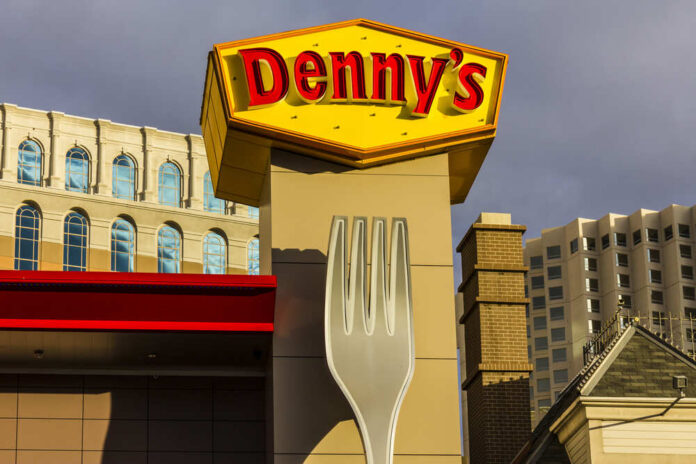
Denny’s put 500 restaurants in line for upgrades and tied the push to an AI-fueled turnaround plan.
Story Snapshot
- CEO Christopher Bode said 500 locations are queued for upgrades in 12–18 months.
- The effort is part of Project Grand Slam, a 24-month turnaround plan.
- Denny’s is adding artificial intelligence for scheduling, forecasting, and pricing.
- Remodels, new tablets, point-of-sale systems, and an upgraded app are in the mix.
What Denny’s Is Doing, And How Fast
Chief Executive Officer Christopher Bode said Denny’s has 500 restaurants in the queue for some form of asset upgrade over the next 12 to 18 months.
He framed the effort as building on more than 200 remodels completed since the pandemic. The company linked the upgrades to a named plan, Project Grand Slam.
That plan aims to push changes to the menu, facilities, catering, technology, and operations within two years. This is a scale-and-speed play, not a one-off test.
Company messaging laid out the program months earlier. Denny’s announced Bode’s role and the launch of Project Grand Slam as a 24-month roadmap to modernize the business through culinary innovation, digital transformation, and tighter operations.
The company listed America’s Diner 2.0 remodels and digital transformation as core pillars. That makes the current 500-restaurant queue look like a planned execution step, not a last-minute pivot.
Denny's targets 500 restaurant upgrades as diner chain invests in AI, new technology: 'Project Grand Slam' https://t.co/LtOgo4AL5f
— FOX Business (@FoxBusiness) September 30, 2026
Where Artificial Intelligence Fits In The Diner
Denny’s described practical uses for artificial intelligence that match industry norms. The company is applying artificial intelligence to study guest behavior, plan labor, predict food needs, speed internal messages, and fine-tune menu prices by local market.
Those targets align with how many restaurants first use artificial intelligence: managing margins behind the scenes, then building toward guest-facing perks like faster service or better menu relevance. The company paired this with new point-of-sale systems, table tablets, and a better app.
That mix of tools matters to regular diners, not just investors. Better labor plans should shorten waits. Smarter forecasting should reduce outages and waste. Local price tuning can protect value in budget-sensitive markets.
Fresh point-of-sale hardware and table tablets can cut errors and speed payments. The upgraded app can help with ordering and offers. These are the boring switches that, when flipped together, make a breakfast rush feel smooth instead of strained.
Remodels, Catering, And The Turnaround Lens
Project Grand Slam is not just wires and screens. It also pushes physical remodels and a larger bet on catering as new growth for franchisees. Denny’s flagged catering as its first major initiative under the turnaround plan and pitched it as a way to reach guests wherever they are.
USA Today reported the brand expects up to 350 remodels and as many as 20 new locations within the next year, which supports the push to modernize the base while adding selective growth.
The company’s framing matches a common casual-dining playbook: refresh stores, improve tech, streamline operations, widen sales channels, and reclaim traffic.
Offer more ways to buy. Then measure. One caveat applies here: the 500 figure reflects a queue, not completed work, so scope and timing can shift by site. Execution will tell the story.
What To Watch Next
Three signs will show if the plan is landing. First, visible store changes at pace: new point-of-sale systems, table tablets, and freshened dining rooms should show up across markets in months, not years.
Second, service speed and order accuracy: artificial intelligence-guided staffing and forecasting should shave minutes and reduce miss-fires.
Third, digital traction: more app users, more catering orders, and steadier check averages as local pricing tunes value. If those move, traffic usually follows.
Sources:
foxbusiness.com, globenewswire.com, linkedin.com, usatoday.com