The Supreme Court cleared President Trump’s mail-voting order to advance before the midterms, and that timing is the whole ballgame.
At a Glance
- The Court lifted a lower-court block, citing states’ lack of standing on key parts of the order.
- The order tasks federal agencies and the Postal Service with uniform mail-ballot standards.
- Earlier rulings said parts of the plan were unconstitutional, so more fights remain.
- The Supreme Court did not decide the final legality, only who can sue right now.
What the Supreme Court Actually Did
The Supreme Court issued an unsigned order that removed a lower-court injunction and let the administration move forward, for now, on core directives. The Court said the suing states lacked standing to challenge at least one section because it “does nothing to them.”
That may sound technical, but it decides who gets through the courthouse door before ballots go out. The ruling did not bless every detail of the policy. It settled urgency and posture, not the full merits.
The practical effect is speed. Election calendars wait for no one. When courts lift a block in late summer, agencies can move, and opponents must find new plaintiffs or new theories.
That is how pre-election cases are often won or lost: on timing, threshold questions, and what can be implemented before votes are cast. The Supreme Court’s message was clear enough for planners inside the federal government: proceed where the law allows, and do it fast.
What Trump’s Order Tries to Do
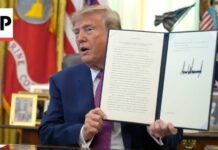
The executive order directs federal agencies to shore up mail-ballot handling and verification. It tells the United States Postal Service to propose uniform standards for ballot-by-mail services and aims to match state voter rolls against federal citizenship data maintained by agencies like the Department of Homeland Security, with help from the Social Security Administration.
Supporters call this common sense: guard the chain of custody, keep clean lists, and set clear national handling rules so ballots move fast and secure.
The White House’s case leans on federal interests that no state can claim alone. The mail is a federal system. Congress gave the executive branch duties to protect it. National elections ride through that system at crunch time.
The administration argues it can coordinate security and reliability end to end. That pitch matches conservative priorities: uniform rules for federal mail, tighter verification, and respect for lawful voters while stopping loopholes that bad actors could exploit.
The Supreme Court handed President Trump a victory, allowing his administration to enforce his "election integrity" executive order restricting mail-in voting ahead of the November midterms.
The ruling clears the way for the Trump administration to move forward with restrictions… pic.twitter.com/7dKrOV28i5
— Fox News (@FoxNews) August 24, 2026
Why Opponents Say It Goes Too Far
States and allied groups told lower courts the president cannot rewrite election rules by executive pen. They argued only state legislatures and Congress can set those rules, and that the United States Postal Service cannot issue binding regulations on who may vote or which ballots count.
A federal district judge agreed in June, calling key parts unconstitutional and outside the president’s authority. Another judge blocked a separate Postal Service plan tied to the order.
Supreme Court clears path for Trump's mail-in voting crackdown ahead of make-or-break midterms
Donald Trump scored a massive victory ahead of the midterms as the Supreme Court sided with the White House in a case that questioned the President's executive order over mail-in… pic.twitter.com/XSqRqQu2pf
— News News News (@NewsNew97351204) August 25, 2026
Reporters covering the Supreme Court’s stay stressed that the justices did not decide the final legality. They focused on standing and the limits of the earlier injunction.
That means more lawsuits can come from different plaintiffs, such as individuals or organizations that claim direct harm. It also means the United States Postal Service and agencies must thread the needle, honoring existing court limits while moving on what the Supreme Court just reopened.
How This Fits the Larger Election Fight
Mail voting has become the center of rapid-fire lawsuits before big elections. The federal courts often decide what happens in practice with early orders, not final rulings. This cycle is no different.
The administration has made a bet on federal stewardship of the mail and citizenship checks. Opponents have made a bet on constitutional lines that keep election rules closer to the states and Congress. The Supreme Court’s order shifted momentum to the former, at least for now.
What Common Sense Says to Watch Next
Three pressure points will tell the story. First, whether challengers find plaintiffs with concrete injury, which could bring the case back fast. Second, how the United States Postal Service implements any standards without colliding with prior injunctions and settlements that protect swift ballot handling.
Third, whether Congress weighs in with clear rules, which would settle doubts the right way: by statute, not emergency lawsuits. Stable election rules should come from elected lawmakers, not midnight court scrums.
The Bottom Line for Voters
The Supreme Court handed President Trump a runway. The administration can push ahead on parts of its plan to secure mail ballots and verify voter rolls.
That aligns with a basic view: tighten the process so every legal vote counts once, and illegal votes do not count at all. The legal fight is not over. But right now, the clock favors action. When the mail moves and ballots follow, process wins are as real as verdicts.
Sources:
apnews.com, axios.com, cnn.com, theguardian.com, whitehouse.gov