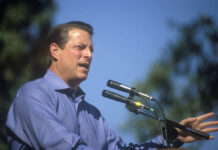

A grieving family is asking California prosecutors to seek the ultimate punishment for the singer accused of killing their 14-year-old daughter and leaving her body in his car.
Quick Take
- Celeste Rivas Hernandez’s family is publicly demanding the death penalty for singer D4vd, whose legal name is David Burke, in her killing.
- Burke faces first-degree murder charges with special circumstances, which make a death sentence legally possible if prosecutors prove their case.
- Los Angeles County’s District Attorney has called the charges the most serious his office can bring but has not decided whether to pursue death.
- Burke has pleaded not guilty, and his lawyers say evidence will show he did not kill Hernandez or cause her death.
A Body Found In A Tesla Trunk Started This Case
The case began when Celeste Rivas Hernandez’s decomposed remains turned up in the front trunk of a Tesla registered to Burke, sitting at a Hollywood Hills impound lot. Authorities say she died on April 23, 2025, inside his home.
A medical examiner ruled her death a homicide involving multiple penetrating injuries, giving investigators a formal forensic basis for the case, even though the ruling alone does not name who caused her death.
Burke was later arrested and charged with first-degree murder with special circumstances. He pleaded not guilty, and prosecutors moved the case toward trial.
The special-circumstances allegations are the legal mechanism that opens the door to capital punishment, separating this case from an ordinary murder charge that would cap out at life in prison.
Family Turns To Both Criminal Court And A Civil Lawsuit
Hernandez’s parents are not waiting quietly on the criminal process. They are publicly calling for Burke to face the death penalty, a demand that has echoed across news coverage since it was first made.
They have also filed a wrongful-death lawsuit, alleging in court papers that Burke “killed their 14-year-old daughter” and that his managers and mother enabled the situation that led to her death.
The family of Celeste Rivas Hernandez is calling for the singer D4vd to face the death penalty after a Los Angeles judge ordered him to stand trial in the killing of the 14-year-old, whose dismembered remains were found in the trunk of his Tesla last year. https://t.co/4kekWBRRvK
— NBC News (@NBCNews) September 8, 2026
A civil lawsuit like this uses a lower burden of proof than a criminal trial. It lets a family assert facts aggressively and seek accountability from more than just the accused killer, but it does not replace the criminal case or prove guilt beyond a reasonable doubt. The two tracks will move on separate timelines, with separate juries deciding separate questions.
What Special Circumstances Actually Means For This Case
California law does not allow death sentences for every murder conviction. Prosecutors must charge and prove at least one “special circumstance” listed under state law before a jury can even consider death instead of life without parole.
Burke’s charges include that added layer, which is why Associated Press reporting described him as eligible for a death sentence rather than automatically facing one.
Los Angeles County District Attorney Nathan Hochman publicly called the charges “the most severe that a District Attorney’s office can pursue,” noting the special-circumstances allegations make Burke eligible for either death or life without the possibility of parole.
That statement drew a hard line between legal eligibility and an actual decision to seek execution, a distinction that matters enormously to how this case will unfold.
Prosecutors Have Not Committed To Seeking Death
Hochman’s office has said it will decide later whether to formally pursue the death penalty. That means the family’s public demand and the prosecution’s eventual charging strategy are not yet aligned.
California’s death penalty process is also notoriously difficult to complete, with special-circumstance findings sometimes narrowed or challenged on appeal long after a trial ends.
Executions in California have effectively been on hold for years under a moratorium, even as courts continue to hand down capital sentences in eligible cases.
A prosecutor can seek death and win it at trial, yet the sentence can sit unresolved for decades. That reality shapes how seriously any death-penalty request should be weighed against the system’s slow mechanics.
Burke’s Defense Says The Evidence Will Clear Him
Burke has pleaded not guilty at every stage of this case. His attorneys have repeatedly said in public statements that the evidence will show he did not murder Hernandez and was not the cause of her death, language they have used consistently since his arrest. That denial is a legal defense, not proof, but it is a specific, sourced position rather than vague doubt, and it will shape how the trial proceeds.
🔴 Teen's parents file civil suit against D4vd; family calls for death penalty
Celeste Rivas Hernandez, 14, was found dismembered in a Tesla trunk on 8 September 2025. D4vd (David Anthony Burke) is charged with murder and has pleaded not guilty. California has a temporary death… pic.twitter.com/Ms0qVaYWVc
— NewsTongue (@NewsTongueX) September 9, 2026
A not-guilty plea, a homicide ruling, and a family’s public demand for death can all be true at once without resolving what a jury will ultimately decide.
The case now moves toward trial, where prosecutors must prove not just that Burke caused Hernandez’s death, but that the special circumstances required for a death sentence actually apply.
Sources:
nbcnews.com, abc7.com, nypost.com, cnn.com, en.wikipedia.org