President Trump says elite Air Force pilots told him a round object blew past their F-22 at three times its speed.
Story Snapshot
- Trump described Oval Office talks with “great” Air Force pilots about “very strange” sightings.
- He quoted them saying a round, non-aerodynamic object went by at triple their speed.
- The claim aired on a national interview and was echoed by follow-on reports.
- No pilots were named publicly in the transcript, and no incident details were given.
What Trump Said On National Television
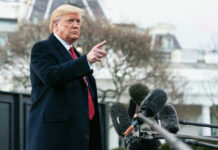
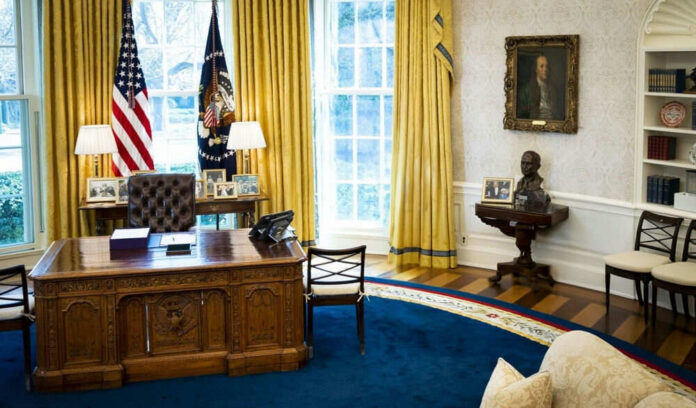
President Trump told CBS’s 60 Minutes that he met in the Oval Office with Air Force pilots during his first term and part of his second. He called them “great, great pilots” and “the real deal.” He said they described sightings that were “very strange.” He quoted one case where “something goes by them at three times their speed, and it’s round. It’s not aerodynamic, it’s round.” The broadcast and transcript captured that line, which later outlets also highlighted.
The remarks centered on trained military aviators, not hobbyists. Trump framed the pilots as credible professionals, stressing that they were not conspiracy theorists and that they spoke plainly about what they saw. The language was specific on two points: speed relative to an F-22 and a round shape lacking usual control surfaces. That pairing—extreme speed and a spherical form—made the account stand out from typical misidentifications or drone encounters reported by civilian flyers.
The Claim In The Context Of Military UAP Reporting
Military pilots have reported unidentified aerial events for decades. Recent government reviews emphasize a recurring problem: data is often incomplete or not designed for scientific analysis. The National Aeronautics and Space Administration (NASA) independent study noted weak sensor calibration, missing metadata, and limited multi-sensor corroboration in many cases. The Department of Defense’s All-domain Anomaly Resolution Office reported that historic investigations have not confirmed any unidentified anomalous phenomenon as extraterrestrial technology, while acknowledging some cases lack enough data for firm conclusions.
Those official findings do not challenge whether pilots sometimes see extraordinary things. They explain why turning a fast, vivid cockpit memory into a verified flight record is hard. The best path to resolution is multiple, synchronized measurements across radar, infrared, and aircraft telemetry. That lets analysts calculate closure rates and rule in or rule out parallax errors or sensor artifacts. Without those records, even skilled pilots can only report what they saw in real time, which may capture the truth but cannot prove it to others.
Specifics That Anchor, And Limits That Matter
Trump’s televised account carries weight because it names the setting, the witnesses’ roles, and a concrete speed comparison tied to a well-known fighter platform. The F-22 is a top-tier air superiority jet, so “three times their speed” grabs attention. Follow-up reporting repeated the core quote and added that Trump did not name the pilots or provide a date or location for the flight. One sentence of caution fits here: the aired transcript does not link this event to an official case file made public to date.
That boundary does not dismiss the claim; it defines what is known. Conservative common sense starts with the people closest to the event. Combat-trained pilots deserve a hearing when they report aerial hazards. National security also demands disciplined records so leaders can separate the rare breakthrough from the many mundane false alarms. Both instincts can coexist: respect the aviators, and insist on data strong enough to guide policy and spending.
What Would Settle It Next
Clear answers would come from basic steps that defense and aviation leaders know well. Identify the flight. Pull the mission debriefs, radar logs, and cockpit video. Check aircraft telemetry for time stamps, altitude, and airspeed to calculate the true closure rate. Compare those streams with ground radar tracks. This is how investigators turn a dramatic report into a timeline, then into a solvable technical problem or a confirmed mystery worth deeper study.
Trump told 60 Minutes that Air Force pilots saw something round pass their F-22 at 3x its speed. He also said "maybe it was a comet," and in October said 4x. No pilots, dates or places named. A secondhand story, not evidence.
Should the full reports be released? #UFO #UAP pic.twitter.com/aNqBqwzhWx
— ExplainedinSixty (@Explainedin60) November 10, 2026
Trump’s statement also brushed a bigger question: how leaders should treat unidentified aerial events that cross paths with front-line jets. The standard answer is simple and serious. Treat them first as air safety and sovereignty issues. If the object is foreign, learn and counter it. If the object is domestic, identify and regulate it. If the object cannot be matched to known systems, document it with rigor and keep looking. That framework keeps pilots safe while keeping taxpayers informed.
Sources:
foxnews.com, whmi.com, cbsnews.com, archive.org, brobible.com, metro.co.uk, war.gov