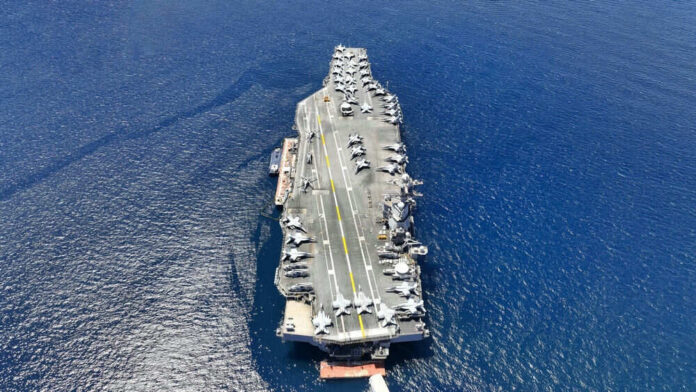
After more than nine months at sea, a U.S. carrier finally tied up to a pier in Thailand and let 5,000 tired Americans step ashore.
Story Snapshot
- USS Abraham Lincoln docked at Laem Chabang, Thailand, on Sept. 2 after months at sea.
- Officials called it a rest-and-recuperation stop, not a combat mission or drill.
- The strike group split across nearby ports to manage logistics and shore time.
- Navy statements cited the first full port stop after 286 days at sea.
A long deployment ends with steel on the pier
USS Abraham Lincoln arrived in Laem Chabang, the deep-water gateway east of Bangkok, on Sept. 2. Wire services on the pier counted this as the ship’s first full port stop after a grueling deployment tied to Middle East operations and tensions with Iran.
Navy messaging kept the focus simple: crew rest, replenishment, and a breather from high-tempo duty. That clarity mattered. Sailors and Marines needed liberty. Thailand offered safe harbors, reliable services, and a partner used to big-deck visits.
After nearly 10 months at sea, the USS Abraham Lincoln has arrived in Thailand for R&R, giving thousands of U.S. service members a long-awaited break. Click the link below to see all of the photos ⬇️
📸 ANTHONY WALLACE, AFP via Getty Images https://t.co/TFrrQ3DGrD pic.twitter.com/T2VJpfSKTR
— USA TODAY (@USATODAY) September 2, 2026
The United States Embassy in Thailand described a coordinated pull-in across several ports to ease traffic and support. The embassy said the carrier anchored at Laem Chabang, while guided-missile escorts moored at Sriracha and Map Ta Phut.
Splitting the group spread the economic burst and let liberty buses, hotels, shore patrols, and fuel trucks keep pace. That is sound seamanship and smart diplomacy in one move. It lowers risk, cuts crowding, and keeps the schedule tight.
Rest and recharge, not drills or saber-rattling
American and Thai officials framed the stop as a routine port call for rest and recuperation. Rear Admiral Robert E. Loughran said the aim was to let sailors and Marines “rest and recharge.”
Thai defense officials echoed that line, adding there would be no joint operations alongside the visit. That message shut down rumor mills before they could spin. It also kept the story grounded in what port calls often are: a pause for people and a tune-up for machines.
Stars and Stripes chronicled the grind behind this break. The paper cited more than 200 consecutive days under way and lengthy stretches in a combat zone before the ship pointed toward Southeast Asia.
That kind of tempo drains energy, tests maintenance plans, and challenges every department, from flight deck to galley. A full stop in a friendly port resets the clock. Crews cycle through rest. Stores come aboard. Chiefs and officers can catch small issues before they grow.
Why Thailand, and why now
Laem Chabang offers deep draft, modern cranes, reliable fuel, and quick access to Pattaya’s hotels and services. Thailand also understands the choreography of carrier visits. Local authorities manage traffic, nightlife rules, shore patrol links, and medical support.
The expected Sept. 2–6 window gave enough time to rest without dulling readiness. That balance matters. The Indo-Pacific demands speed and reach, but forces still need human recovery to stay sharp and safe on the next leg.
Chonburi Governor Leads First Thai Group Aboard USS Abraham Lincoln at Laem Chabang
LAEM CHABANG, Chonburi — Chonburi Governor Naris Niramaiwong on Thursday led the first group of Thai officials aboard the USS Abraham Lincoln (CVN-72), the U.S. Navy’s Nimitz-class… pic.twitter.com/PHd640Zz8R
— The Pattaya News Thailand (@The_PattayaNews) September 3, 2026
The broader context ties back to U.S. posture around Iran and the Middle East. Reporting linked Lincoln’s long at-sea period to support for operations and deterrence. That mission set keeps a carrier away from friendly ports longer than usual.
When a break finally comes, leaders must make it count. Shore time restores morale and retention. It also signals partners that the United States can sustain presence, pause to recover, and then get back on station without drama or drift.
What the numbers and the narrative mean
Different outlets used different day counts to size the deployment. Some cited 286 days at sea; others noted more than 200 consecutive days, or broadly “more than nine months.”
The core fact stands regardless of the tally: this was a long, grinding stretch before the first full port stop. On the facts in public view, the official “rest and recharge” line fits the mission’s needs and basic common sense. People are not machines. A refit for bodies and minds is not a luxury; it is readiness.
On the pier and beyond
Local coverage showed sailors stepping into Pattaya’s sun after months of steel, noise, and night watches. Shore rules and curfews kept order while letting crews relax. Thai hosts rolled out a careful welcome, pairing hospitality with law-and-order guardrails.
That mix respects the uniform and the community. When the gangways lift, sailors will return to a ship better stocked, better rested, and better primed for the transit home or the next tasking. That is what a good port call delivers.
Sources:
cbsnews.com, abcnews.com, apnews.com, theguardian.com, stripes.com