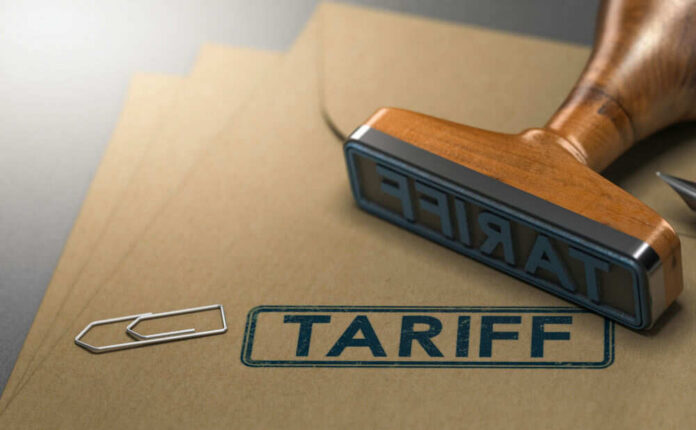
President Trump has now tied choking wildfire smoke to a 50 percent tariff punch on Canadian goods, turning dirty air into a new front in the U.S.–Canada trade war.
Story Snapshot
- Trump threatens to load the “cost of pollution” onto already steep tariffs on Canadian imports.
- He accuses Canada of “willful negligence” in forest management and blames it for dirty U.S. air.
- Canadian leaders answer with a $12 billion wildfire investment figure and call the claim “rubbish.”
- Courts and trade law experts say there is no clear legal path to tariff natural wildfire smoke.
Trump turns smoke and tariffs into one hard-edged message
President Trump did not just complain about hazy skies. He claimed Canada’s wildfire smoke is an “unnecessary invasion” of “filthy, polluted, and unhealthy air” and said its cost “must of necessity be added to the tariffs Canada is currently paying.”
That lands on top of earlier emergency tariffs of about 25 percent on most Canadian goods and 10 percent on energy products, imposed under national security powers in 2025. Now he is talking about taking those levels up to 50 percent on broad consumer goods like autos, alcohol, and cheese, tying your grocery bill and car payment to the next bad fire season.
Trump’s Truth Social post blasted Canada for “not properly maintaining their forests and brush” and branded Ottawa’s handling of fires as “willful negligence,” claiming it costs the United States “billions of dollars” in economic harm. He pointed to closed businesses and damaged tourism in states like Michigan that sat under weeks of smoke.
Four Republican lawmakers backed him with an open letter saying their “patience has run out” and warning they may push for direct United States involvement in cross‑border firefighting if Canada does not change course. For many, the message is simple: if Canadian policy choices hurt American workers, Canada should pay.
Canada answers with hard numbers and blunt language
Canada’s response did not try to soften the charge. Prime Minister Mark Carney answered with a detailed list of spending, saying Canada has invested about 12 billion Canadian dollars in forest sustainability and fire prevention since 2020.
He pointed to federal and provincial programs, new aerial tanker fleets, ground crew training, prescribed burns, and early detection systems as proof that Canada is not “refusing basic forest management.”
Ontario Premier Doug Ford went further on camera, calling Trump’s tariff idea “ridiculous” and “a bunch of rubbish,” and reminding viewers that Canadian crews have often flown south to help fight American fires.
From a common‑sense view, if a neighbor spends billions fighting the problem and sends help when you are in trouble, “willful negligence” does not fit the facts.
.@USTradeRep Ambassador Greer explains the tariffs on a set of Canadian imports: "They banned the sale of U.S. liquor and other booze on Canadian shelves. They capped and limited the amount of autos that could be shipped [from] the United States from companies who were reshoring… pic.twitter.com/cQrySGrv1L
— Rapid Response 47 (@RapidResponse47) July 21, 2026
Natural Resources Minister Tim Hodgson flatly rejected the idea of a smoke tariff and said Canada will “keep helping the United States” in cross‑border emergencies instead of “pointing fingers.” Canadian officials also raised basic geography.
Experts note the boreal forest covers about 552 million hectares, most of it remote and uninhabited. No government can groom and thin every acre of wilderness to prevent natural fires.
That matters for those who care about limited government and realistic expectations: asking Ottawa to micro‑manage millions of wild acres is not stewardship, it is fantasy. Wildfires in that vast region are shaped mainly by heat, drought, and wind, not by whether every stand of brush was trimmed last spring.
The legal wall Trump runs into over smoke tariffs
Trump’s team hints they can stack the “cost of pollution” onto existing tariffs by leaning again on national security laws, such as the International Emergency Economic Powers Act and Section 232 of the Trade Expansion Act, which he used before to hit Canadian steel, autos, and energy.
Trade and legal experts say there is a hard stop here. There is no clear legal mechanism in United States trade law to slap a neighbor with tariffs for air pollution from naturally occurring wildfires. Section 232 is built around specific goods and direct security threats, not drifting smoke from a natural disaster.
TRUMP ANNOUNCES 50% TARIFFS ON BROAD RANGE OF CANADIAN GOODS
President Trump is escalating a trade fight with Canada. WWNN's Stacy Lyn reports:: “President Trump announced new 50% tariffs on a broad range of Canadian goods including wine, hockey equipment, furniture, clothing,…
— Worldwide News Network (@WorldwideNNX) July 21, 2026
On top of that, a Supreme Court ruling in February 2026 narrowed Trump’s emergency tariff powers, forcing stricter review of any new national security tariff claims. Analysts warn that trying to stretch these laws to cover wildfire smoke would likely fail in court and could drag legal arguments through a weak test case.
Many also note the irony: media reports say Trump previously moved to weaken parts of the United States Forest Service, even as he now blasts Canada’s forest management. That undercuts his moral high ground. If Washington has cut its own forestry capacity, blaming every smoky sky on Ottawa looks more like political posturing than a serious plan.
What this fight tells us about the future of U.S.–Canada trade
This smoke‑and‑tariff clash fits a pattern. Since 2025 Trump has used emergency powers to raise average effective tariffs on Canadian goods to about 8.1 percent, pulling everyday products into a larger struggle over drugs, immigration, and now climate‑driven disasters.
Canada–United States trade is deeply woven together, and past tariff waves have hit American consumers hardest through higher prices and supply chain shocks. If Trump pushes a 50 percent rate on broad Canadian goods, middle‑class families will feel it at the car lot, the lumber yard, and the grocery store long before Ottawa changes its wildfire plan.
The deeper lesson is about choosing the right tools. Holding Canada accountable for real policy failures is one thing. Trying to use tariffs to punish a neighbor for natural smoke blowing over a shared border, while that neighbor is already spending billions and sending firefighters, looks weak on facts and shaky on law.
Strong borders and fair trade do matter. But they rest on clear evidence, sound legal footing, and respect for reality. Otherwise, the next time the wind shifts, you may find that the real damage is not in the sky over Michigan but in the price tag on everything you buy.
Sources:
apnews.com, bbc.com, easternherald.com, youtube.com, en.thairath.co.th, inkl.com, facebook.com, congress.gov