President Donald Trump has turned a supposedly bipartisan 250th-birthday concert series into a referendum on what patriotism looks and sounds like in 2026.
Story Snapshot
- Trump publicly floated canceling America’s 250th-anniversary concerts and replacing them with a massive Make America Great Again rally after artists backed out.
- Performers dropped from the lineup over concerns that the event was becoming too political, feeding Trump’s argument that elites sneer at his base.
- The proposed swap from concerts to a rally exposes a deeper fight over who “owns” patriotic celebration: cultural institutions or a populist movement.[1][3]
- Trump’s wider “Freedom 250” vision blends prayer events, “Patriot Games,” and spectacle, raising hard questions about whether national milestones are turning into personality cult stages.[3]
How a Birthday Concert Turned Into a Political Loyalty Test
Donald Trump did not just lose a few musicians; he gained a narrative device. When artists like Martina McBride and Bret Michaels pulled out of the “Great American State Fair” concerts tied to America’s 250th celebration, citing concerns about the event’s political nature, Trump seized the withdrawal as proof that cultural elites looked down on his supporters. Rather than quietly patch the lineup, he suggested canceling the concerts altogether and holding a Make America Great Again rally in their place.[1][3]
President Trump floats scrapping America's 250th anniversary concert for a massive MAGA rally after multiple artists pull out of the Great American State Fair lineup. Freedom 250 organizers later confirmed the president will personally kick off the celebration with an opening… pic.twitter.com/omudkAINvl
— Fox News (@FoxNews) May 31, 2026
That move turns entertainment programming into a loyalty test: choose pop acts that want distance from Trump, or choose a political rally built around him. According to coverage of his social media posts, Trump mocked the withdrawn performers as “highly paid, Third Rate ‘Artists’” and “overpriced singers” with “boring” music.[1] To his base, that plays as a familiar, almost comic script: Hollywood and Nashville walk away, but the crowd shows up anyway, bigger, louder, more “real.”[1][2]
Freedom 250: National Commemoration or Leader-Centered Spectacle?
The controversy lands inside a larger architecture Trump has built for the semiquincentennial. In his “Freedom 250” address, he casts 2026 as “the greatest birthday celebration our country has ever seen” and lays out a sprawling slate of events: a Great American State Fair, televised “Patriot Games,” prayer gatherings, even a mixed martial arts fight night at the White House lawn.[3] The stated goal is patriotic renewal, but the visual language looks a lot like a mega-brand launch starring one man.
Supporters can reasonably argue that nothing is inherently wrong with a president giving big speeches and anchoring national ceremonies; presidents have always used milestone anniversaries to tell their version of the American story. The question is scale and proportion.
When the same figure is the political candidate, the primary storyteller, and the main live attraction, the line between civic commemoration and campaign rally blurs. That is where common sense should kick in: love of country should not depend on devotion to any single officeholder.
Why Artists Backed Out—and What That Says About the Culture Clash
The artists did not vanish in a vacuum. Reporting from mainstream outlets says several acts withdrew because they believed the fair and concerts were turning too political. They signed up for a national birthday party and suddenly found themselves billed under Freedom 250, a Trump-aligned entity that had effectively taken over what many assumed would be a nonpartisan America250 effort.[2] That shift changed the meaning of their appearance from celebratory gig to implied endorsement, and they walked.
From a vantage point, their exit can look like another case of virtue signaling. Performers enjoy the freedoms born of 1776 but balk at sharing a stage with a president unpopular in their industry. Yet personal conscience runs both ways. No one should be compelled to sanctify a political project they do not support. The deeper problem is structural: when a national anniversary is effectively branded as Trump’s Freedom 250, every participant is drafted into someone else’s narrative about America.
Who Owns Patriotism: Concert Crowds or Rally Faithful?
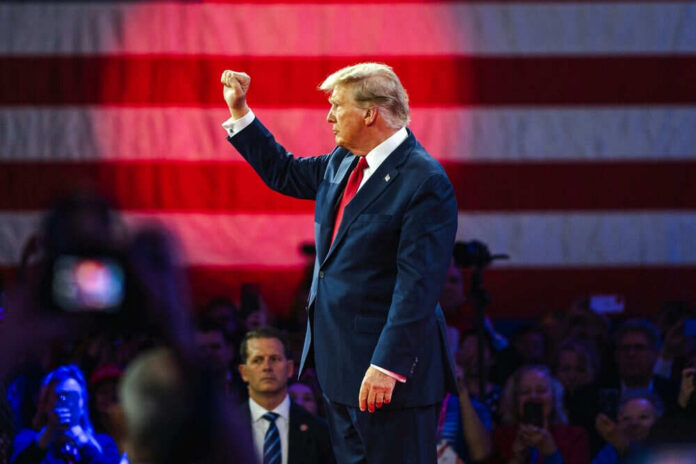
Trump’s proposal to swap concerts for a giant Make America Great Again rally forces the real question: whose version of patriotism gets the main stage on the National Mall? A diverse concert lineup would symbolically say the culture is bigger than any single party or politician. A rally centered on Trump says the country’s 250th story runs primarily through his movement, his grievances, his victories. His own comments bragging that he draws “bigger crowds” than the artists make that comparison explicit.
Americans should be especially alert to this temptation. Limited government and constitutional conservatism insist that the nation’s legitimacy rests in enduring principles, not the charisma of one man. Replacing pluralistic concerts with a personality-driven rally may energize a base but erodes the shared civic space that makes ordered liberty possible. Even those who like Trump’s policies should ask whether a milestone born of the Declaration of Independence is best honored by narrowing the audience to one political tribe.
What This Fight Reveals About 2026—and About Us
The battle over the concerts is not really about set lists or stage lights; it is about narrative power. Media critics warn that Freedom 250 is saturated with Christian nationalist symbolism and donor-class access, framing July 4, 2026 less as a humble remembrance than as a spectacle of dominance.[1] Trump’s allies counter that they are rescuing patriotism from bland bureaucrats and professional scolds. Both see the same anniversary as a weapon in a broader culture war over who gets to define “real America.”
That is why this seemingly petty argument deserves attention from adults who care about the country’s civic health. If a 250th-birthday celebration becomes just another campaign stop, we lose a rare chance to stand together under something larger than our current fights. Common sense says a serious nation can host both robust political debate and shared, nonpartisan rituals. The risk in Trump’s concert-to-rally gambit is that the space for anything truly shared keeps shrinking—and once gone, it is very hard to rebuild.
Sources:
[1] Web – Trump calls for replacing US 250th concerts with MAGA rally
[2] Web – A Very Authoritarian Semiquincentennial Celebration
[3] Web – The Great American State Fair Meltdown, Explained – Washingtonian