A cargo ship’s four minutes of darkness have turned into a multi‑billion‑dollar test of what corporate accountability really means on the water.
Story Snapshot
- Federal prosecutors indicted the Dali’s operator and a senior employee over the Francis Scott Key Bridge collapse, which killed six workers and crippled the Port of Baltimore.[2]
- The case hinges on an allegedly improper fuel‑pump workaround and two blackouts in four minutes before impact.[2]
- Prosecutors claim the tragedy was “preventable” and that safety records were falsified and regulators misled.
- The indictments raise hard questions about foreign operators, U.S. oversight, and whether this was bad luck or a slow‑motion corporate failure.
From Ordinary Departure To Catastrophic Blackout
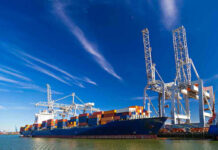
The Dali looked like any other massive container ship leaving the Port of Baltimore in the early hours of March 26, 2024, outbound for Sri Lanka with the Francis Scott Key Bridge looming ahead as a routine obstacle.[2]
Federal investigators now say that inside the steel hull, the ship carried a hidden defect: a jury‑rigged fuel system relying on a flushing pump instead of the manufacturer’s approved arrangement for two of its four generators.[2]
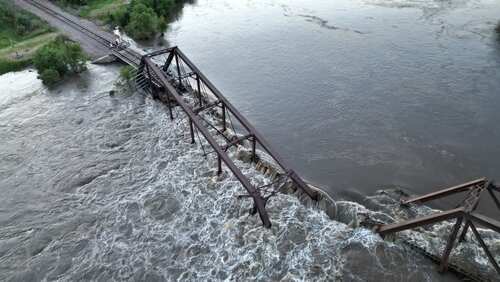
When the lights went out twice in under four minutes, steering vanished, and 50 years of bridge engineering lost to the Patapsco River took six road workers with it.[2]
BREAKING: Newly unsealed indictment reveals foreign crew members of the container ship Dali have been charged in connection with the deadly collision that caused the collapse of the Francis Scott Key Bridge. pic.twitter.com/9jVS94sb37
— Breaking911 (@Breaking911) May 12, 2026
Federal prosecutors describe those four minutes as the predictable end of a much longer story. The indictment of Synergy Marine Pte Ltd, Synergy Maritime Pte Ltd, and technical superintendent Radhakrishnan Karthik Nair alleges that the ship had experienced serious power problems before, including blackouts the day before the crash that were never properly reported or investigated.
Fortune’s coverage quotes prosecutors saying Synergy and Nair knew the Dali had “critical power failures” before it even left port, yet the vessel still sailed under a major American bridge.
The Fuel Pump Workaround At The Heart Of The Case
Prosecutors do not blame a freak wave or sudden storm; they blame a choice. According to multiple reports summarizing the indictment, the Dali’s operator allegedly altered the fuel supply so that a flushing pump, rather than the approved system, supplied fuel to two generators that powered essential systems.[2]
Federal authorities claim that the unconventional setup could not automatically restart after a blackout, leaving the ship more vulnerable when the first fault hit.[2]
Media summaries say the indictment goes further, asserting that with proper pumps in place, the Dali would likely have regained power in time to pass safely under the bridge.[1][2]
This is where common sense and engineering meet politics. On one side, federal prosecutors argue that using an unapproved pump to feed critical generators is the maritime equivalent of replacing factory‑designed brake lines with hardware‑store tubing.[2]
On the other, defense lawyers will almost certainly stress that the indictment remains an accusation, not proof, and that complex systems can fail in ways no pump choice can fully explain.[2]
Reports already note that investigators believe a loose wire in a switchboard triggered the first blackout, complicating any simplistic “one bad pump” story.[2]
Alleged Cover‑Ups, Falsified Records, And A “Preventable” Tragedy
The most explosive allegations arrive after the bridge is already in the water. News accounts of the indictment say Synergy officials repeatedly failed to document and report significant hazards aboard the Dali, forged safety inspections and certifications, and then misled investigators about what had been done and who knew about the flushing pump setup.
One report notes that Nair allegedly told the National Transportation Safety Board that he was unaware of the flushing pump’s use, even though prosecutors claim internal records and practice show otherwise.
NEW: Prosecutors announced criminal charges Tuesday in the deadly 2024 collapse of Baltimore's Francis Scott Key Bridge, accusing a Singapore-based ship operator of intentionally relying on an improper fuel pump that contributed to the ruinous crash and then lying about it to… pic.twitter.com/gE86vqY7Hh
— Scott Thuman (@ScottThuman) May 12, 2026
Acting officials at the United States Department of Justice reportedly called the bridge collapse a “preventable tragedy of enormous consequence,” tying those alleged omissions and falsehoods directly to six deaths, at least five billion dollars in economic losses, and weeks of disruption at one of America’s key ports.[1]
Separate coverage describes misdemeanor environmental charges for pollutants released into the Patapsco River when containers and cargo spilled from the wreck.[2]
Federal investigators emphasize the scale of their probe, citing nearly 200 interviews, more than 2 dozen search warrants, and terabytes of seized data.
Presumption Of Innocence, Public Anger, And Conservative Concerns
Every article on these charges reminds readers that an indictment is not a conviction and that Synergy and Nair are presumed innocent until proven guilty in court.[2]
That procedural reminder matters, but six dead workers and a collapsed bridge make patience a tough sell. For many Americans, this case resonates far beyond Baltimore: a foreign‑operated ship, alleged corner‑cutting, and a critical U.S. artery destroyed trigger gut questions about borders, sovereignty, and whether our government enforces its own safety laws with enough backbone.
From a perspective, two instincts collide here. One says government must stop turning every accident into a criminal crusade; not every bad outcome proves a crime.
The other insists that when companies allegedly bypass safety standards, falsify paperwork, and then rely on American infrastructure and emergency response when things go wrong, there must be real personal accountability, not just another insurance payout.
The two‑point‑two‑five‑billion‑dollar civil settlement with Maryland’s government may rebuild concrete, but it does not answer whether anyone goes to prison.
What This Case Signals For Future Infrastructure Risk
Transportation disasters often follow a grim pattern: a mechanical fault triggers the event, but investigators trace the real causes back through years of maintenance shortcuts, workarounds, and shrugged‑off warning signs.[1][2]
The Dali case fits that mold. Reports describe uninvestigated blackouts, a nonstandard fuel arrangement, and alleged efforts to keep all of that off the books.[2]
The bridge strike becomes the final domino in a chain that started in an engineering office or on a maintenance form, not in the channel beneath the Key Bridge.
For readers who will drive over thousands of bridges and through countless tunnels in the coming decade, the unresolved question is simple: will this prosecution make foreign and domestic operators think twice before they treat safety rules as suggestions? If the evidence holds up, a conviction would send a chilling message through the shipping world.
If the case collapses because prosecutors stretched too far beyond what they can prove, it will be another lesson in why criminal law is a blunt tool for fixing deep engineering and regulatory problems. Either way, the next time a massive ship slips under an American bridge at night, those four blackout minutes in Baltimore will haunt the watch.
Sources:
[1] Web – US prosecutors charge Singapore ship operator, key employee in …
[2] Web – Baltimore bridge collapse: Ship operator, employee face criminal …