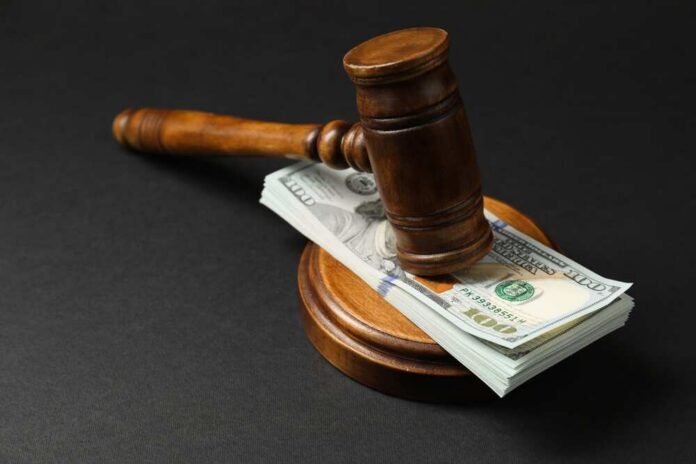
A proposed $1.8 billion Justice Department compensation fund born from a secretive settlement deal is now in court crosshairs for potentially funneling taxpayer money to January 6 participants with minimal oversight.
Story Snapshot
- Two injured Capitol officers filed a suit to block a reported $1.7–$1.8 billion “lawfare” fund tied to a settlement of President Donald Trump’s separate tax-records case [1][4][7][9][10].
- A former Justice Department ethics official warned the settlement could be “sham litigation” absent genuine adversarial posture [1].
- Vice President J.D. Vance said eligibility would be reviewed case-by-case and did not categorically exclude January 6 defendants [7][8].
- Key legal documents, funding authority, and oversight rules have not been publicly produced, leaving major gaps in verification [4][5][7][10].
What the officers are asking the court to do
Attorneys for two District of Columbia officers who were injured defending the Capitol on January 6 filed a federal lawsuit seeking to halt creation of a roughly $1.776 billion fund they allege could pay participants in the attack and other allies under a vague “anti-weaponization” banner [9][10]. Their complaint argues the arrangement circumvents Congress by using a Department of Justice settlement to stand up a quasi-compensation program outside the normal appropriations process described in news coverage [4][7][9][10].
The filing highlights reporting that the fund would be administered by a commission with executive influence and limited external oversight, increasing the risk of partisan distribution of public dollars [1][4]. The officers contend that the potential inclusion of some individuals convicted in the Capitol attack—some later pardoned—would invert accountability by rewarding those who injured police and undermining rule-of-law norms that both parties claim to defend [4][5][7][10].
How the government and Trump world describe the fund
Administration defenders describe the proposal as part of a negotiated settlement to end Trump’s separate multibillion-dollar lawsuit over leaked Internal Revenue Service tax records, framing the fund as relief for Americans harmed by politicized prosecutions or investigations [4][5][7]. Vice President J.D. Vance said applications would be reviewed case-by-case and insisted the fund was not intended to pay violent offenders, though he declined to categorically exclude January 6 defendants from eligibility, leaving criteria unresolved [7][8].
Two police officers who defended the U.S. Capitol in 2021 during the Jan. 6 attack are suing to stop the creation of President Trump's $1.7 billion "Anti-Weaponization Fund," calling it the "most brazen act of presidential corruption this century." https://t.co/vQidGHoLso
— ABC News (@ABC) May 20, 2026
This settlement framing aligns with how civil cases sometimes resolve complex disputes, but it does not answer the threshold questions the officers and outside experts raise: where the money would come from, what statute authorizes the spending, and what guardrails would prevent the executive branch from using a litigation deal to direct large sums without congressional approval [1][4][7][10]. Without the written agreement or budget documents, the defense rests on assertions rather than verifiable authority [4][7][10].
The oversight and legality concerns cutting across partisan lines
Former Department of Justice ethics official Joseph Terrell called the matter “entirely unique” and warned it could amount to “sham litigation” if the parties are not genuinely adverse, a question a federal judge in Florida reportedly flagged for briefing [1]. That concern resonates beyond left-right frames: conservatives skeptical of executive slush funds and liberals wary of politicized payouts both see risk in a powerful department creating a large compensation mechanism with limited transparency or congressional input [1][4][7][10].
Broader context shows recurring fights over whether executive settlements can effectively reallocate public money without clear appropriations, a separation-of-powers friction that surfaces whenever administrations use legal deals to create or expand compensation programs [9][2].
The present dispute sits squarely in that pattern: critics say the fund bypasses Congress and could pay January 6 claimants; defenders say settlement authority permits a remedial process for people harmed by “lawfare.” Both narratives remain unproven until the underlying documents are public [4][7][9][10].
What we still do not know—and why it matters
Key facts remain opaque. Reported coverage does not include the settlement text, the funding source, Office of Management and Budget approvals, Department of the Treasury transfers, or the commission’s charter and eligibility rules [4][5][7][10]. Absent those, the lawsuit may pivot on threshold issues like standing and ripeness rather than the core legality of the fund, risking a procedural outcome that leaves the country without answers while deepening public suspicion that government power is being used to serve insiders, not citizens [1][4][7][10].
Sources:
[1] Web – Patrick Malone Firm Sues Trump On Behalf Of Injured Police Officers …
[2] Web – Members of Jan. 6 mob sue police who fended off Capitol attack
[4] YouTube – 2 officers who clashed with rioters on January 6 sue to block DOJ …
[5] YouTube – Jan. 6 rioters sue federal govt. for millions, alleging police …
[7] YouTube – Senators weigh in on if Jan. 6 rioters should get money from $1.7B …
[8] Web – 2 D.C. officers who defended Capitol during Jan. 6 sue to block $1.8 …
[9] Web – Jan. 6 officers sue over Trump’s $1.8B fund they call a “corrupt sham”