President Trump just pulled the legal pin that empowered Washington bureaucrats to regulate carbon across the entire economy—without Congress ever voting on it.
Quick Take
- On Feb. 12, 2026, the Trump administration formally rescinded the EPA’s 2009 “endangerment finding” on greenhouse gases, the foundational trigger for major climate regulations.
- The White House and EPA Administrator Lee Zeldin framed the reversal as a legal correction that ends years of costly mandates, including estimated vehicle cost impacts cited by the EPA.
- Environmental groups and Democrat-led states signaled lawsuits, setting up a high-stakes court fight over agency authority and Clean Air Act climate policy.
- The move leans on recent Supreme Court limits on agency power, while critics argue the underlying climate science is stronger today than in 2009.
What the EPA Rescinded—and Why It Mattered
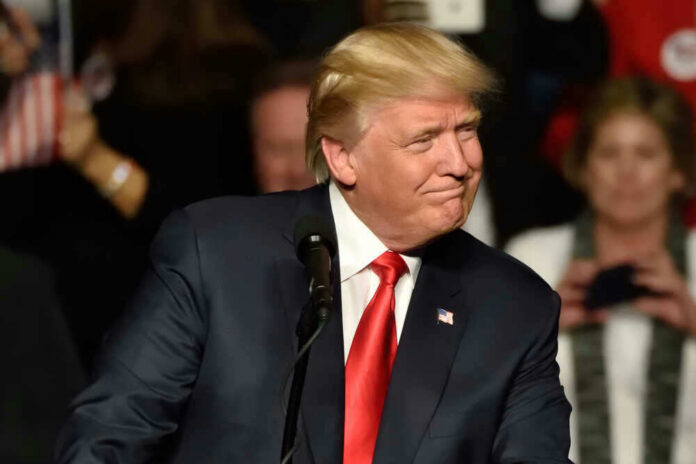
President Trump announced at the White House that the EPA has revoked the 2009 endangerment finding, an Obama-era determination that greenhouse gases threaten public health and welfare under the Clean Air Act. That finding became the central legal foundation for federal greenhouse-gas rules on vehicles, power plants, and industry. The Trump team described the finding as lacking a proper legal basis and said the rollback ends a long-running regulatory regime tied to consumer costs.
The Trump administration revoked the EPA’s 2009 endangerment finding, which has served as the legal foundation for regulating greenhouse gas emissions under the Clean Air Act. https://t.co/QN4DPZjjwR
— FOX 5 NY (@fox5ny) February 13, 2026
Unlike narrower rollbacks from Trump’s first term, rescinding the endangerment finding aims at the root rather than the branches. The administration’s case, as described in reporting, emphasizes that the finding enabled broad federal control over energy and manufacturing through rules that often functioned like indirect taxes—costs that get baked into prices for cars, electricity, and goods. Supporters see this as restoring constitutional balance by forcing big policy choices back to elected lawmakers.
The Timeline: From Obama’s EPA to Trump’s 2026 Reversal
The original endangerment finding followed the Supreme Court’s Massachusetts v. EPA decision, which required the agency to decide whether greenhouse gases endanger the public under the Clean Air Act. In December 2009, the EPA issued that finding, and later administrations used it to justify wide-ranging emissions rules. On Jan. 20, 2025, Trump signed an executive order directing an EPA review, with the agency later proposing rescission in July 2025 before finalizing it in February 2026.
Reporting also notes the administration pointed to more recent Supreme Court decisions, including West Virginia v. EPA, which limited how agencies can reshape major sectors without clear congressional authorization. That legal backdrop matters because the endangerment finding effectively served as the “on switch” for many climate rules. If the courts accept the administration’s rationale, future presidents may face steeper hurdles trying to reimpose greenhouse-gas mandates through the same Clean Air Act pathway.
Economic Claims vs. Legal Risk: What Changes for Consumers
The Trump administration argued the reversal will reduce regulatory costs and cited estimates including $1.3 trillion in savings and about $2,400 per vehicle tied to lighter regulation. Those numbers come from the administration’s framing of compliance burdens, particularly in the auto sector where rules can influence vehicle pricing and features. While exact real-world savings will depend on market behavior and any remaining state or federal policies, the intent is clear: reduce federal pressure on energy and manufacturing.
At the same time, legal analysts quoted in coverage described the move as a major gamble because the endangerment finding has been the core justification for federal greenhouse-gas regulation for years. Even some observers who expect courts to limit agency power caution that rescinding the finding is a “Regulatory Everest” because it invites intense judicial scrutiny. In plain terms, the administration is betting that the courts will prioritize statutory limits and separation of powers over agency-driven climate governance.
The Coming Court Fight—and the Bigger Constitutional Question
Environmental groups and some Democrat-led states indicated they will sue, calling the reversal an attack on science and public health. Reporting also cites scientific and academic voices arguing the evidence of greenhouse-gas harm is stronger now than it was in 2009. The administration and allies, however, have leaned heavily on a legal argument: even if climate concerns are real, Congress—not unelected regulators—must clearly authorize economy-wide restructuring under the Clean Air Act.
I VOTED FOR THIS👊🇺🇸
Trump revokes EPA finding on greenhouse gas threat in huge blow to climate change regulations https://t.co/vEt9tNPu3J— TheWarriorKing AKA "MAGA SURGEON WARRIOR" (@MAGASURGEON) February 13, 2026
The practical outcome now depends on what courts do with two competing realities highlighted in coverage: the long-standing scientific debate over impacts versus the legal question of who gets to decide. If judges rule that the Clean Air Act cannot be used as a catch-all climate statute without explicit congressional direction, the decision becomes a brake on future administrative overreach. If challengers succeed, the endangerment finding could return, reopening the door to sweeping regulation.
Sources:
EPA Rescinds Landmark 2009 ‘Endangerment Finding’ on Greenhouse Gases
As the Trump EPA Prepares to Revoke Key Legal Finding on Climate Change, What Happens Next?