
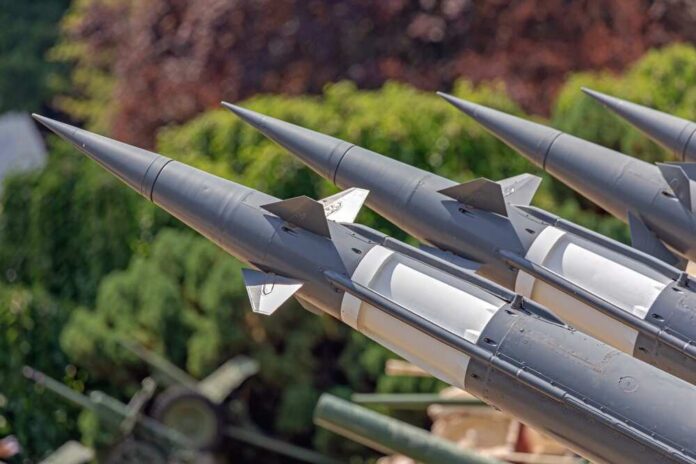
The Pentagon’s watchdog says $22.3 billion in wartime munitions spending left America with “strategic inventory shortfalls” — and that is the sentence every adversary will read twice.
Story Snapshot
- Pentagon inspector general links Iran war spending to munitions shortfalls.
- $22.3 billion of $33.4 billion total costs went to expended munitions.
- Analysts say Patriot and THAAD missile stocks plunged by about two-thirds.
- Officials deny a shortage and say production can meet needs.
The watchdog’s bottom line: shortfalls and bottlenecks
The Pentagon inspector general’s first report to Congress on the Iran war says extensive munitions use created “strategic inventory shortfalls” and exposed “industrial base bottlenecks.”
The report pegs total costs at $33.4 billion as of June 29, with $22.3 billion tied to expended munitions, $3.7 billion to equipment losses, and $7.4 billion to other obligations.
That accounting frames a clear readiness question: how fast can the United States replace what it fired, and at what risk if another crisis breaks out before then.
The report also lists wartime losses and casualties, which shows this is more than a budget story. Seven service members were killed in action, and 417 were wounded by June 30, according to summaries of the watchdog’s findings.
When a conflict absorbs stockpiles and damages gear at the same time, strain compounds. Shortfalls force choices. Commanders must decide where to station the best interceptors, which allies get help, and which regions accept higher risk while factories catch up.
Missile inventories fell fast while industry lagged
Independent analyses back up the depletion claim with estimates most readers can grasp in a glance. The Center for Strategic and International Studies, cited widely, estimates Patriot interceptor stocks fell from about 2,300 before the war to fewer than 827, roughly a two-thirds drop. Terminal High Altitude Area Defense stocks also fell, from about 452 to under 278.
The Los Angeles Times reported that almost 60 percent of advanced defensive missiles were used in the first five months alone. Those numbers are classified in detail, so open-source figures carry ranges. The trend line, however, runs one way.
Replenishment will not be quick. Reporting based on the same analysis says prewar defensive missile levels will not return until mid-2029. Tomahawk cruise missiles could take until 2030 or 2031 to rebound.
The Pentagon asked Congress for emergency funds, including billions to replace Patriot, Terminal High Altitude Area Defense, and Tomahawk rounds, which aligns with a real gap on the ground.
That is what an industrial bottleneck looks like in practice: long-lead parts, solid rocket motor limits, trained labor shortages, and test-range queues all slowing the climb back to steady stocks.
Denials, assurances, and what they actually mean
Defense Secretary Pete Hegseth said there is “no shortage” and called claims “manufactured,” while still noting some munitions take “months and years” to replace.
The White House echoed that the military has “more than enough” for President Trump’s goals. These statements address present capacity to fight, not the question of margin. A force can meet today’s task list and still face thinner buffers and tougher tradeoffs tomorrow.
Policy should separate three things. First, wartime burn rates that drain magazines. Second, production rates that refill them. Third, how many separate missions the country expects to cover at once. If production lags and missions stack up, risk spreads.
The inspector general’s language about “strategic inventory shortfalls” signals that planners had to juggle coverage or delay some tasks, even if the frontline never ran dry. Americans expect straight talk on that, not word games about definitions.
What Congress should demand next
Congress should force clarity without helping adversaries. The full inspector general report, with methods and tables, should go to relevant committees.
Lawmakers should see prewar, wartime, and current inventory snapshots for key systems in classified sessions, plus delivery schedules from prime contractors.
They should also ask for a realistic surge plan for solid rocket motors and the specialty parts that keep Patriot, Terminal High Altitude Area Defense, and Tomahawk lines moving. The goal is simple: cut the lag between firing a missile and replacing it.
Iranian strikes have damaged hundreds of structures at U.S. bases, watchdog says⁰The report by the Pentagon's inspector general also detailed the extent of munitions shortfalls in the first comprehensive public accounting of the cost and military impact of the war with Iran.…
— Linda Hill (@bulldoghill) September 15, 2026
Taxpayers deserve a cost curve that bends down as volume rises. If a missile takes two years to build and arrives at twice the price, the math breaks.
The Pentagon’s supplemental request hints that even it sees the gap. Tie any new funding to output targets, monthly delivery reports, and penalties for missed milestones.
Reward early deliveries. Pre-buy long-lead materials. Expand testing slots. That is not partisan. That is how you turn checks into stockpiles instead of headlines.
Sources:
cbsnews.com, cnn.com, militarytimes.com, abcnews.com, foxnews.com, iranintl.com, europesays.com, usatoday.com, washingtonexaminer.com, theguardian.com