Washington is preparing the largest visa clean-up in U.S. history, and it targets people who came as visitors, then claimed asylum.
Story Snapshot
- State Department planning rolling revocations of up to 200,000 B1/B2 visas tied to asylum filings.
- Officials cite misuse of short-stay visas and confirm numbers will shift as reviews proceed.
- The Department has already revoked more than 175,000 visas this month for violations and security concerns.
- Federal law gives the Secretary of State broad authority to revoke visas at any time.
What the government plans and why it matters
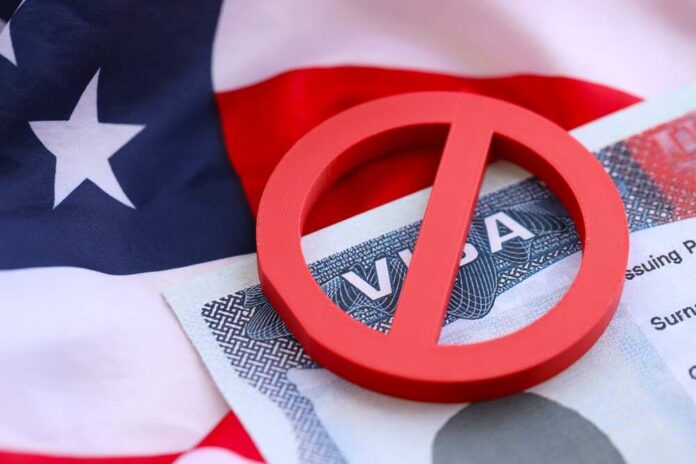
State Department officials say they are preparing to revoke up to 200,000 business and tourism visas held by people who applied for or are seeking asylum after entering on short-stay visas.
The plan will roll out in waves as officers verify records and decide each case, with numbers changing as reviews conclude. The logic is simple: a visitor visa is for a brief stay. Filing for asylum after entry can signal a different intent than the visa allowed.
Trump admin to target 200,000 foreigners in largest mass visa revocation ever: report https://t.co/rOXCrkHDg3 pic.twitter.com/xf8G8B5PSW
— New York Post (@nypost) August 25, 2026
The government has already shown the scale of its enforcement muscle. On August 10, the Department announced more than 175,000 visa revocations for people who violated terms, defrauded Americans, called for violence, or posed national security risks.
That public action set a baseline: large revocation campaigns are not theory. They are policy in motion. This new effort focuses the lens on visitor visas linked to asylum claims, which officials frame as category misuse.
The legal ground under the sweep
Federal law grants the Secretary of State the power to revoke a visa at any time and at their discretion, and instructs consular officers to refuse or revoke visas if individuals are ineligible. Government audits describe revocation as a routine tool that can be initiated by the Secretary, a consular officer, or an immigration officer.
Secretary Marco Rubio has stated a clear rule of thumb: if the United States would not have issued the visa had it known the facts, then revoke it. That aligns with statutory text.
Critics will ask about due process, and they should. Revocation authority is broad, but process still matters. Oversight reports have flagged past gaps in notice and coordination, which the Department says it has worked to fix.
The present plan’s stated “rolling” design suggests case-by-case checks rather than a one-click purge. The real test will be whether each decision rests on the person’s record and the visa’s limits, not just on broad category membership.
The pushback and how much it changes the core facts
Advocacy groups point to earlier mass actions against students and argue that revocations based on database matches lacked individual review, which they say violated the Fifth Amendment’s Due Process Clause and the Administrative Procedure Act. Those claims target past student cases, not this visitor-visa effort.
Still, they preview likely lawsuits. Courts have shown a willingness to scrutinize broad policies, as seen when a judge vacated Secretary Rubio’s suspension that affected 75 countries. That ruling does not erase revocation powers, but it warns against overreach.
BREAKING: Trump administration to revoke up to 200,000 B1/B2 visas of asylum seekers.
Targets visitors who “came as tourists but filed for asylum.”
Nigerians and other nationals could be affected.
Largest mass visa revocation in US history if implemented.#US #Nigeria #Visa— Negritude Edge (@IdumonzaI) August 25, 2026
Americans should weigh two anchors. First, the United States sets visa terms for a reason. A visitor visa is not a backdoor to permanent stay. Enforcing clear lines protects the system and the millions who follow the rules. Second, fairness sustains enforcement.
The Department should provide notice, cite the specific ground, and allow correction of errors. Strong borders and sane process are not rivals; they are partners. Get both right, and the policy holds in court and in public opinion.
What to watch next: execution, not headlines
Focus now shifts from plan to practice. Watch how the Department selects cases, not just how many. Look for clear notices explaining the basis for revocation, such as overstays, false statements, or actions that show immigrant intent while on a visitor visa.
Monitor whether people outside the United States lose visas before travel, and how the government handles those already here. Expect legal tests that probe the line between smart targeting and blanket treatment. Policy lives or dies in these details.
Sources:
redstate.com, thehill.com, tass.com, theguardian.com, state.gov, congress.gov, myattorneyusa.com, gao.gov, community.lawschool.cornell.edu