
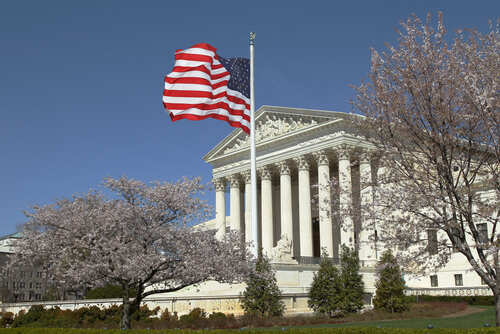
The fight over a $400 million White House ballroom has landed at the Supreme Court, and the clock is ticking.
Story Snapshot
- Trump’s administration asked the Supreme Court to let construction continue during appeal.
- Lower courts halted work, saying Congress must approve a project of this scale.
- The legal clash centers on who controls major changes to federal property.
- The outcome could reset the balance between the branches for decades.
What the Supreme Court Has Been Asked To Do
The Solicitor General filed an emergency request that seeks permission to keep building while the case moves forward. The filing asks the justices to pause a lower-court halt so crews can continue above-ground work tied to the East Wing site.
The administration frames delay as wasteful and risky to the project’s schedule and budget. The ask mirrors past emergency bids where the government argued that stopping now would cause costly harm that cannot be undone.
The request lands after months of seesawing orders in the lower courts. A federal judge first blocked construction, finding no clear law that let the president demolish a wing and start a new hall without Congress.
An appeals court later agreed and ordered the work to stop, stressing that the White House is federal property, not a personal estate, and that Congress holds the keys for massive changes and spending on that ground.
How We Got Here: The Lower-Court Rulings
A trial judge ruled that the administration lacked statutory authority to proceed. The court said no law “comes close” to giving the president the power claimed for the project.
The appeals court affirmed the core point and emphasized a simple rule: the Constitution gives Congress control over federal property, and a project this big needs Congress to sign off first. That path tracks long practice for major federal buildings and historic sites.
The rulings also flagged a basic appropriations guardrail. Major construction on federal grounds usually requires Congress to authorize and fund the work.
The plaintiffs argued that the demolition of the East Wing and the start of a new structure skipped that step. The courts, so far, have treated that argument as likely to prevail on the merits, which is why they froze the project while the case proceeds.
The Administration’s Case for Urgency
The government argues the project is already underway and that pausing now will cause severe harm. It says the site faces exposure and that critical infrastructure is in flux. It also points to sunk costs and contractor timelines.
Those claims aim to meet the high bar for emergency relief: strong merits, real and immediate harm, and the public interest. The administration wants the Court to let work continue while the legal fight plays out.
The president is so upset by the lawsuit against the ballroom that it gives military secrets away. https://t.co/dic8eAalCM
— Bonewitz🇺🇸🇺🇸MAGA🇺🇸🇺🇸SAVE America🇺🇸🇺🇸 (@bonewitz_SPBG) August 15, 2026
The merits matter more than sunk costs. Process protects taxpayers. If Congress did not authorize a $400 million hall on the people’s property, then the right fix is to ask Congress, not to press on and hope courts bless it later.
Emergencies should not become a shortcut around the purse power. The government can make a national security case to lawmakers if it has one, and secure a clear mandate.
What This Case Really Tests: Separation of Powers
The dispute is less about taste and more about the lines in the Constitution. Congress holds the purse and controls federal property. The Executive executes the law. Courts enforce the boundary. The appeals court’s message was blunt: presidents are stewards, not owners.
That view echoes a century of practice and a federal statute that bars new federal structures in the District of Columbia without express congressional authority.
The Supreme Court’s answer on the emergency request will signal how it weighs institutional costs. Granting a stay would let work continue but could set a soft precedent for building first and justifying later.
Denying a stay would hold the line on congressional control and avoid fait accompli pressure on the judiciary. Either way, the Court will soon decide which risk to bear during the appeal.
What To Watch Next
Watch for an administrative stay from a single Justice to give the Court time to review. Look for questions about statutory hooks the administration claims and whether any prior White House projects match this scale without Congress.
Expect sharp focus on irreparable harm: is delay worse than an unlawful build? The cleanest path, as always, is clarity from Congress. If lawmakers authorize and fund the project, the legal clouds clear fast.
Common sense says follow the blueprint our system provides. Ask Congress, state the case, secure the vote, and then build. That approach respects the taxpayer, protects the landmark, and keeps the branches in their lanes. A ballroom can wait. The Constitution should not.
Sources:
washingtonpost.com, apnews.com, reuters.com, abcnews.com