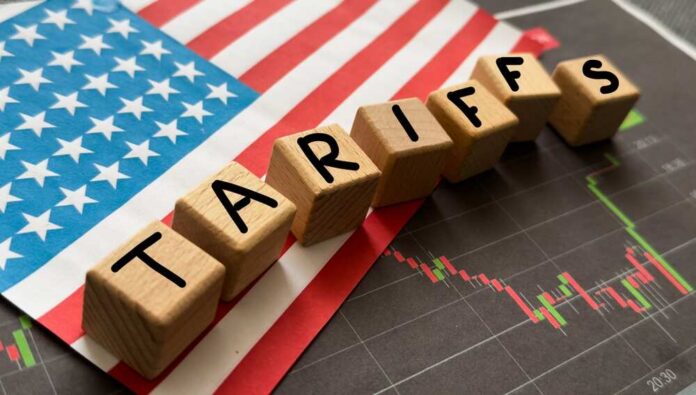
President Trump’s 100% tariff threat against Canada over its potential trade deal with China signals a significant shift in U.S. trade policy, alarming conservatives who value national economic strength.
Story Highlights
- Trump threatens 100% tariff on Canadian goods if Canada proceeds with the China trade deal.
- Canadian PM Mark Carney urges a “buy Canadian” response to bolster the domestic economy.
- Tensions rise as Trump’s stance contrasts with his earlier supportive comments.
Trump’s Tariff Threat Against Canada
On January 25, 2026, President Trump announced a 100% tariff threat on all Canadian goods entering the United States if Canada finalizes a trade agreement with China. This dramatic escalation follows Canada’s decision to reduce tariffs on Chinese electric vehicles in exchange for lower tariffs on agricultural products.
Trump’s reversal from support to threat highlights his administration’s focus on curbing China’s influence in North America, aligning with his broader protectionist trade philosophy.
Trump threatens to impose 100% tariff if Canada makes deal with China https://t.co/08AGDNbGGK
— CNBC (@CNBC) January 24, 2026
Canadian Prime Minister Mark Carney responded by emphasizing Canada’s sovereignty. He urged Canadians to participate in a “buy Canadian” campaign to protect the economy.
This move signals a strategic shift toward economic nationalism, aiming to reinforce domestic industries amidst growing external pressures. Carney’s statement that Canada thrives independently of the U.S. underscores a push for stronger national resilience.
Diplomatic and Economic Implications
The tariff threat raises diplomatic tensions, bringing U.S.-Canada relations to new heights of strain. Should the tariffs be enacted, Canadian exports to the U.S. would face severe disruption, impacting both economies. U.S. consumers could see price hikes on Canadian imports, while Canadian businesses might suffer market access losses.
The move could also trigger a realignment of Canada’s trade relationships, potentially strengthening ties with China and other global partners.
Trump’s strategy of using economic leverage reflects a broader geopolitical agenda aimed at asserting U.S. economic dominance. His administration’s approach, however, risks long-term ramifications, such as supply chain restructuring and potential isolation from key allies. The threat sets a precedent for using tariffs as political tools against allied nations, challenging traditional trade relationships and economic partnerships.
Responses and Future Outlook
In the face of Trump’s ultimatum, Canadian Trade Minister Dominic Leblanc denied any pursuit of a free trade agreement with China. Despite this, the existing tariff reduction agreement with China suggests Canada is seeking diversified trade paths.
As both countries brace for potential economic fallout, the situation remains fluid. The U.S. and Canada must navigate this complex landscape, balancing economic interests with diplomatic relations.
The ongoing developments signal a critical juncture for North American trade. With Trump’s policy reversal and Canada’s resilient stance, the outcome of this trade tension will shape future economic dynamics. Observers are keenly watching how both nations will address these challenges, emphasizing the importance of strategic diplomacy and robust economic policies.
Sources:
Trump threatens 100% tariff on Canada if it makes a deal with China