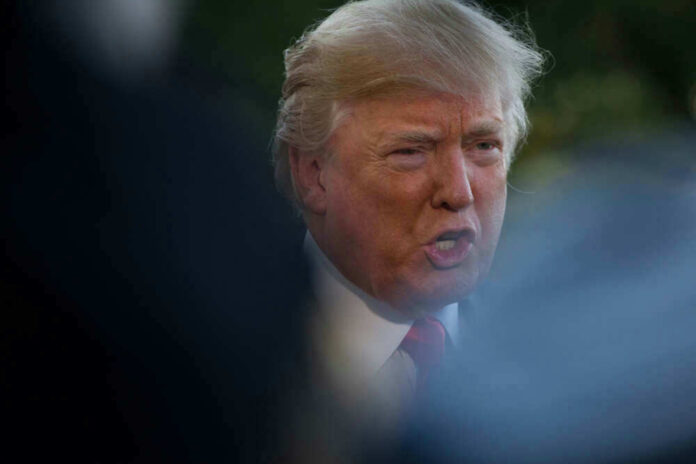
Unlike the passive justice system who did not clear up the mystery, President Donald Trump has called for answers and questioned the motives behind a horrifying murder case.
At a Glance
- Four University of Idaho students were murdered in 2022, drawing national attention.
- Bryan Kohberger, a criminology student, pleaded guilty to avoid the death penalty.
- The motive for the murders remains a mystery, frustrating victims’ families.
- President Trump demands clarity and transparency in the case.
The Murders That Shocked a Nation
On November 13, 2022, a brutal crime unfolded in Moscow, Idaho, when four University of Idaho students were fatally stabbed in their off-campus residence.
The victims, Kaylee Goncalves, Madison Mogen, Xana Kernodle, and Ethan Chapin, were murdered in a manner that left the small college town reeling. The seemingly senseless act of violence drew widespread media attention and instilled fear in the community.
The investigation, which lasted nearly seven weeks, led authorities to Bryan Kohberger, a criminology Ph.D. student at Washington State University.
He was arrested at his parents’ home in Pennsylvania on December 30, 2022, and charged with four counts of first-degree murder and one count of felony burglary. Kohberger’s academic background in criminology and his proximity to the victims’ university only added to the case’s notoriety.
The Plea Deal and Unanswered Questions
In a move that left many bewildered, Kohberger pleaded guilty to all charges on July 2, 2025, effectively removing the death penalty from consideration.
This decision, while legally significant, has done little to quell the public’s thirst for understanding the motive behind the murders. The plea deal has been met with mixed reactions, particularly from the victims’ families, some of whom feel denied of justice and answers.
Adding fuel to the fire of public frustration, a sweeping gag order that limited information about the case was only lifted in July 2025, just before Kohberger’s sentencing.
With the gag order now removed, law enforcement officials, including former Pullman Police Chief Gary Jenkins, have begun speaking publicly about the case. However, the core question—why Kohberger committed such a heinous act—remains unanswered.
Trump’s Call for Accountability
President Trump has entered the fray, using his platform to demand greater transparency and accountability. His recent posts on Truth Social highlight the frustrations of many who feel that the plea deal has robbed them of justice.
Trump’s question is simple yet piercing: Why did Kohberger do it? This call for clarity resonates with those who view the case as another instance where the system has failed.
Trump’s demand underscores a broader discourse on criminal justice policies, plea deals, and the need for transparency in high-profile cases. The case has become a focal point for discussions on the effectiveness of the legal system and the justice it purports to serve.
With sentencing scheduled for July 23, 2025, victims’ families are expected to deliver impact statements, potentially shedding light on the personal toll of the crimes.
Broader Implications and Future Considerations
The Kohberger case has far-reaching implications, not only for the families involved but also for the broader community and criminal justice system. Short-term relief at the resolution of the case is tempered by lingering trauma and unanswered questions.
The plea deal’s acceptance raises concerns about the balance between legal expediency and the public’s right to know.
In the long term, this case could influence discussions on the death penalty, plea bargaining, and transparency in legal proceedings. It brings to the forefront the need for a deeper examination of how individuals with academic backgrounds in criminology could perpetrate such crimes.
As the University of Idaho and the community of Moscow work towards healing, the case serves as a chilling reminder of the complexities and challenges facing modern criminal justice.