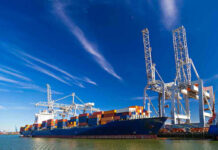

US Central Command boldly claims zero ships pierced their ironclad blockade of Iranian ports in the first 24 hours—but ship trackers spot shadowy transits that scream evasion.
Story Snapshot
- CENTCOM reports perfect enforcement: six merchant vessels turned back, hundreds queued amid Iranian mine threats.
- Independent trackers like Kpler and Windward reveal possible breaches by ships like Christianna and Elpis from Iranian ports.
- President Trump imposed the blockade after the failed Pakistan talks, deploying over 10,000 US troops and warships for economic pressure.
- Iran deploys sea mines and threats; it considers pausing shipments as the ceasefire ticks down in seven days.
- Global ripples: curtailed Hormuz traffic spikes oil risks, strains US-China ties, tests conservative resolve on strength abroad.
Blockade Origins Trace to Failed Diplomacy
President Trump ordered the US military blockade of Iran’s southern ports after negotiations collapsed in Islamabad. Pakistani mediators failed to bridge gaps over Iran’s nuclear ambitions. Vice President JD Vance led the US team, returning empty-handed as a fragile ceasefire loomed with seven days left.
Iran responded by seeding the Strait of Hormuz with sea mines and issuing attack warnings against US forces. This setup targeted only vessels bound to or from Iranian ports on the Arabian Gulf and Gulf of Oman, sparing neutral traffic.
US military says no ships made it past blockade in first dayhttps://t.co/nI8zidg6WP
— The Hill (@thehill) April 14, 2026
CENTCOM Enforces with Warships and Precision
US Central Command deployed over 10,000 personnel, a dozen warships, and aircraft to seal the Strait of Hormuz approaches. USS Abraham Lincoln carrier strike group, destroyers like USS Frank E. Peterson, and USS Tripoli amphibious unit patrolled key zones.
CENTCOM logged six merchant vessels complying by reversing course back to Iranian harbors. Hundreds more vessels idled, deterred by minefields and Iranian threats. Non-Iranian transits flowed freely, underscoring impartial enforcement.
Ship Trackers Challenge Official Narrative
Ship-tracking data from Kpler, BBC, CNN, and Windward Maritime Intelligence painted a murkier picture. Christianna departed empty from Bandar Imam Khomeini; Elpis sailed from Bushehr. Sanctioned tankers Rich Starry from UAE and Murlikishan from China appeared to slip through.
Experts debate if these fell under grace period exceptions, permissions, or sly evasions like route deviations and false flagging. Windward termed responses “fragmented,” with delays and reversals dominating.
Common sense aligns with CENTCOM’s success claim: trackers highlight minor, possibly compliant moves by empty or sanctioned hulls, not major breaches undermining US resolve. Facts support strong enforcement over speculative leaks, echoing conservative values of projecting unyielding strength against aggressors like Iran.
Stakeholders Navigate High-Stakes Power Plays
Trump initiated a policy for economic leverage; CENTCOM leadership executed operations prioritizing navigation freedom. Iranian commanders mulled shipment pauses to bolster Pakistan talks.
Shipping operators weighed sanctions risks against compliance. China’s Guo Jiakun slammed the blockade as “dangerous and irresponsible,” endangering ceasefire. Global firms like Christianna and Elpis operators dodged via compliance or cunning, while crews faced turnaround perils.
Impacts Ripple from Hormuz to Markets
Short-term, shipping plummeted to handfuls of tankers and bulkers; US stocks climbed 1% amid volatility. Long-term, oil flows through Hormuz—20% of global supply—face disruption, hiking energy prices. Iranian economy buckles under pressure; coastal communities dodge mine threats.
Political strains hit US-China relations and alliances. Maritime sector adapts with evasions, but broader trade grinds amid escalation risks or diplomatic breakthroughs.