A second man named Dan Sullivan showed up on Alaska’s Senate ballot this fall, and federal investigators now want to know who put him there.
Quick Take
- A little-known candidate named Daniel J. Sullivan appeared alongside incumbent Senator Dan S. Sullivan on Alaska’s ranked-choice ballot.
- The Justice Department sent at least three dozen subpoenas to Democrat Mary Peltola’s campaign and to Daniel J. Sullivan’s campaign.
- Peltola, her campaign, the Democratic Senatorial Campaign Committee, and the second Sullivan all deny any coordination.
- Alaska Governor Mike Dunleavy ordered his own state investigation into whether election laws were broken.
Two Candidates, One Confusing Last Name
Four names appeared on Alaska’s Senate ballot this year. Two of them were nearly identical. Republican incumbent Dan S. Sullivan faced Democrat Mary Peltola, plus an unaffiliated candidate named Daniel J. Sullivan Jr. The second Sullivan had first registered as a Republican, then switched his middle initial and launched a campaign website that closely resembled the incumbent’s own site.
DECOY DAN: The DOJ sent more than 20 target and preservation letters as part of its expanding probe into the Alaska U.S. Senate race, where a retired schoolteacher named Daniel J. Sullivan was allegedly recruited as a spoiler candidate to siphon votes from Sen. Dan Sullivan.… pic.twitter.com/1QRyRtdB3G
— Fox News Politics (@foxnewspolitics) November 4, 2026
Election Officials Flagged the Pattern First
Alaska’s Division of Elections initially pulled Daniel J. Sullivan off the ballot, citing conduct that looked designed to confuse voters. The Alaska Supreme Court later restored his candidacy, though the court’s full reasoning on the underlying confusion claim has not been made public. In the primary, the lesser-known Sullivan still pulled in 2.5% of the vote, proof the name mix-up reached real voters.
That percentage matters under ranked-choice voting, where every fraction of a point can shift which candidate climbs past 50%. A race this close turns a seemingly small distraction into a potential deciding factor, which is exactly why Republicans cried foul the moment the pattern became public.
Justice Department Escalates With Subpoenas
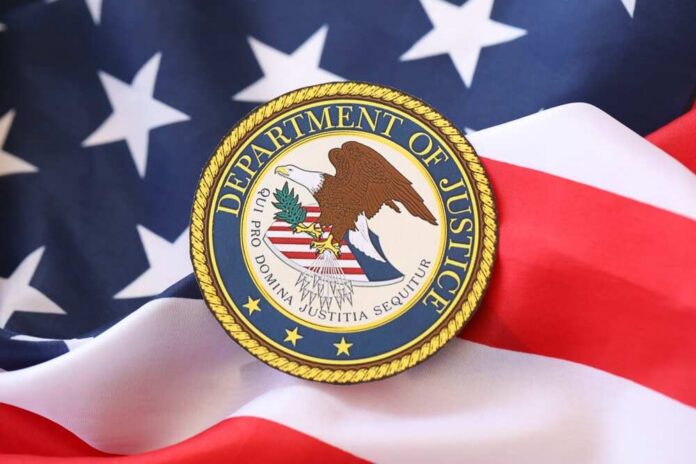
The Justice Department did not treat this as a local curiosity. NBC News reported investigators issued more than three dozen subpoenas and document-preservation demands to both the Peltola campaign and Daniel J. Sullivan’s operation. Governor Dunleavy ordered a parallel state probe into whether Alaska election law was violated, telling reporters the situation looked like just the beginning of what investigators might uncover.
President Trump publicly framed the episode as an attempted fraud on Alaska voters, pushing the story into national headlines and turning a local ballot dispute into a flashpoint over Senate control. Given how tight the ranked-choice math runs, that reaction tracks with basic common sense. Voters deserve to know if a ballot was engineered to trick them, not just whether a technical violation occurred.
Everyone Named Says They Had No Part In It
Every person connected to the alleged scheme has denied it under their own name. Peltola said she knew nothing about other candidates besides herself and the incumbent and called the controversy a distraction from her campaign’s economic message. The Democratic Senatorial Campaign Committee denied involvement with the second Sullivan. Daniel J. Sullivan himself insists he entered the race on his own, without help from Democratic strategists.
This Isn’t the First Rodeo for Name Tricks
Same-name ballot confusion is an old trick in American politics. In 1930, Nebraska Senator George Norris found a grocery clerk sharing his exact name on the primary ballot, a maneuver that fizzled only on a filing technicality. Alaska’s own Supreme Court has previously ruled that minor name variations should not automatically disqualify a candidate, a precedent now shaping how this case gets argued.
A federal judge has since dismissed a Trump-backed lawsuit that sought to delay certifying Alaska’s results, meaning the election outcome stands for now even as the criminal and civil investigations continue. That dismissal does not close the underlying question of who recruited the second Sullivan or why. It simply means Alaska’s Senate seat gets decided on schedule while investigators keep digging through subpoenaed records behind closed doors.
Alaskans are left with a ballot result and a mystery running on separate tracks. The Justice Department holds documents nobody outside the investigation has seen. Denials from every named party stand unchallenged by hard evidence so far. Until subpoenaed records surface or a court rules on the merits, this remains an open case, not a settled scandal, however loud the accusations on both sides have gotten.
Sources:
zerohedge.com, brisbanetimes.com.au, washingtonexaminer.com, wol.com, nytimes.com, jonathanturley.org, cbc.ca, captimes.com