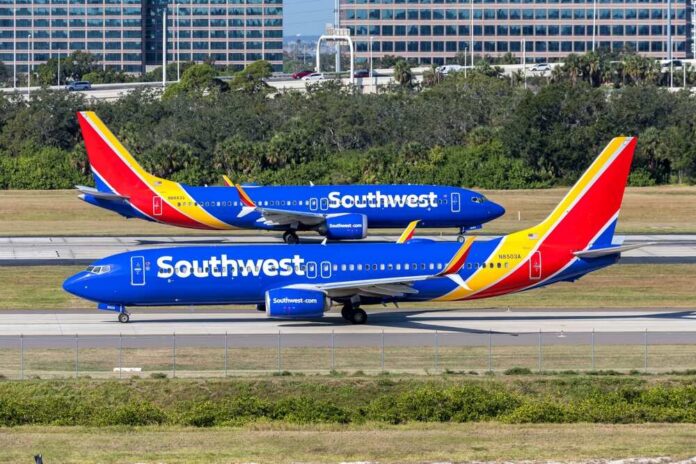
Southwest Airlines is abandoning two of America’s busiest airports this summer, leaving travelers in Chicago and Washington, D.C., scrambling as the carrier retreats from congested hubs dominated by legacy airlines to pursue leisure routes instead.
Story Snapshot
Southwest Airlines will completely cease operations at Chicago O’Hare and Washington Dulles airports on June 4, 2026, ending 20 years of service at Dulles and just five years at O’Hare.
The move eliminates low-cost competition at two major hubs, handing market dominance back to United and American Airlines while forcing passengers to alternative airports.
Affected travelers receive a 14-day window for refunds or free rebooking to nearby airports like Midway, BWI, or Reagan National as Southwest pursues its “Southwest 2.0” transformation.
The airline plans to deploy freed-up aircraft on 31 new leisure routes to Alaska and the Caribbean, abandoning efforts to compete at congested metropolitan hubs.
Strategic Retreat from Major Hubs
Southwest Airlines announced its complete withdrawal from Chicago O’Hare International Airport and Washington Dulles International Airport effective June 4, 2026.
The Dallas-based carrier’s exit from two of the nation’s busiest aviation hubs marks a significant strategic reversal, particularly at O’Hare, where Southwest attempted to compete directly with United and American Airlines on their home turf starting in 2021.
The airline cited operational challenges, including new flight caps and chronic congestion at O’Hare, as reasons for the pullout, framing the decision as part of ongoing network refinement efforts.
The departure eliminates a budget carrier option for travelers in two major metropolitan markets, potentially reducing competitive pressure on airfares at these hubs.
Southwest is offering affected passengers full refunds through its website or mobile app, or free rebooking to nearby airports within 14 days of their original travel dates, with no fare difference.
Chicago travelers must shift to Midway, a secondary airport with different connectivity, while Washington D.C. passengers face relocation to Baltimore-Washington International or Reagan National.
This consolidation gives legacy carriers United and American greater market control, raising concerns about reduced consumer choice and pricing power.
Southwest 2.0 Transformation Drives Exit
The airport exits coincide with Southwest’s broader operational overhaul dubbed “Southwest 2.0,” which introduces assigned seating and baggage fees—radical departures from the airline’s traditional business model.
This transformation appears designed to boost profitability by reallocating aircraft from congested, capacity-constrained major hubs toward secondary markets and leisure destinations where operational efficiency may be higher.
The airline is launching 31 new routes focusing on Alaska and Caribbean destinations, including Denver to Anchorage, Orlando to St. Maarten, and Las Vegas to San Jose, Costa Rica. This pivot suggests Southwest is betting on leisure travel demand over competing for business travelers at major metropolitan hubs.
Market Consolidation Concerns
Southwest’s withdrawal from O’Hare and Dulles reflects a troubling trend toward market consolidation in the aviation industry, where dominant legacy carriers face diminishing competition at their fortress hubs. The airline previously exited Bellingham, Syracuse, Houston-Bush, and Cozumel, as part of similar network refinement efforts.
While Southwest maintains it will continue to offer robust service at Chicago Midway, Baltimore-Washington International, and Reagan National, these alternative airports may not serve passengers who prefer the connectivity and convenience of O’Hare or Dulles.
Affected Southwest employees at both airports will bid for positions across the carrier’s network, though specific workforce-impact details remain undisclosed.
The June 4 effective date provides travelers with a three-month transition window, but the timing falls during the summer travel season, when demand peaks. All flights booked after June 3 will be canceled automatically, requiring passengers to rebook or request refunds proactively.
The airline’s focus on secondary hubs and leisure routes prioritizes operational convenience over serving passengers in America’s largest business centers, raising questions about whether corporate efficiency has overtaken customer service priorities in the airline’s strategic calculus.