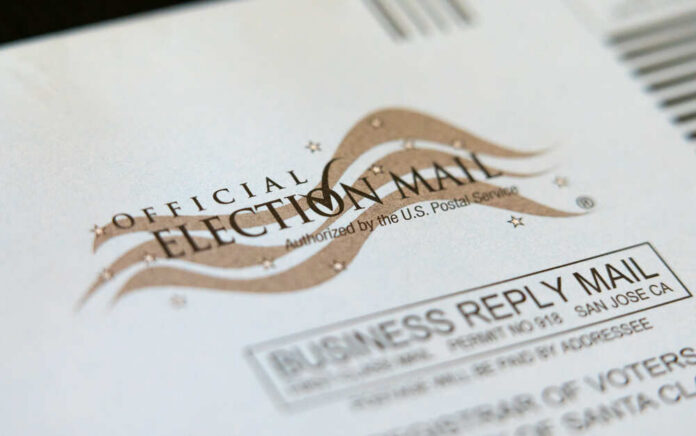
Hundreds of Utah primary ballots never reached voters because a mail carrier allegedly dumped them in a church dumpster, prosecutors say.
Story Snapshot
- A federal grand jury indicted a former Utah mail carrier over about 300 discarded primary ballots.
- Prosecutors say the ballots were trashed in a church parking lot during the June 2026 primary.
- The defendant pleaded not guilty and said there was no political motive, officials noted.
- Cases like this are rare but hit public trust hard; policy fallout often follows.
What Prosecutors Say Happened In Eagle Mountain
Federal prosecutors say former United States Postal Service letter carrier Damon Matai Seei threw away hundreds of pieces of mail, including about 300 mail-in ballots meant for Eagle Mountain voters ahead of Utah’s June 2026 primary.
The indictment states he was entrusted with that delivery and instead put the ballots in a dumpster at a church parking lot. The Department of Justice announcement frames it as unlawful secretion, destruction, and delay of mail under federal law.
🚨Acting Deputy Attorney General @PADAGMcCotter announces the unsealing of an indictment charging a former USPS Postal Worker for allegedly disposing of HUNDREDS of Mail-In Ballots in Utah ⬇️ pic.twitter.com/QPv0E6o3GC
— U.S. Department of Justice (@TheJusticeDept) September 22, 2026
Officials described a fast timeline. They said Seei separated election mail from other items early in his shift and discarded it within a short window.
That account, delivered by senior Justice Department leaders, presents a simple but serious breach of duty. It does not allege a scheme to change votes, but it does allege interference with voters’ access to their ballots during an active election period.
What The Defense And Officials Say About Motive
Seei pleaded not guilty. Officials said he told investigators he did not intend to toss ballots and that he was trying to throw away advertisements to lighten his workload. The United States Attorney for Utah said he indicated there was no political agenda.
These statements do not change the charge, but they do matter for motive and sentencing if a jury convicts. They also show why prosecutors stuck to the mail crime, not an election fraud count.
One key detail from a detention filing, echoed in coverage, is the claim that he acted out of laziness, not ideology. That claim, if true, lines up with a broader pattern seen in mail cases where shortcuts, not plots, drive bad decisions.
That does not excuse it. It does shape how to fix it: tighter supervision, better route audits, and clear consequences for shirking a federal duty that protects voters.
Does This Case Prove Mail Voting Is Broken?
Scale matters. Research from the Massachusetts Institute of Technology’s Election Data and Science Lab and the Brookings Institution finds mail ballot fraud is extremely rare across many years and millions of votes.
One review pegged fraudulent mail ballots at a tiny fraction of one percent of total votes. These studies support a simple idea: the system works well most of the time, but targeted failures can still cause real harm and real anger.
Common sense says hold two truths at once. First, rare does not mean impossible. Second, one worker’s misconduct should not smear millions of law-abiding voters and thousands of honest postal workers.
Accountability, Prevention, And The Policy Fight Ahead
The Department of Justice used this indictment to stress enforcement during election season. That message is right. Voters need to know the government will act fast when ballots go missing.
Civil servants who handle election mail must expect strict checks and tough follow-through. That expectation protects honest workers and voters alike, and it reduces the space for rumors to grow into panic during close races.
Mail voting depends on a simple promise: the ballot sent to a voter will actually reach the voter.
Federal prosecutors say former Utah postal worker Damon Matai Seei threw away mail assigned for delivery on June 3, including about 300 ballots for Eagle Mountain residents before… pic.twitter.com/fMPD58nZJF
— Dan Holbrook (@DanHolbrook) September 23, 2026
Policy will now heat up. Some will cite Eagle Mountain to argue for tighter vote-by-mail limits or more in-person voting. Others will argue for stronger mail safeguards without shrinking access.
The smartest path blends access with verification: ballot tracking that pings the voter at each handoff, route-level audits that flag unusual undelivered volumes within hours, and swift criminal action when tampering occurs. Freedom and fairness both demand it.
Sources:
spectrumlocalnews.com, rawstory.com, justice.gov, nbcnews.com, local10.com, about.usps.com