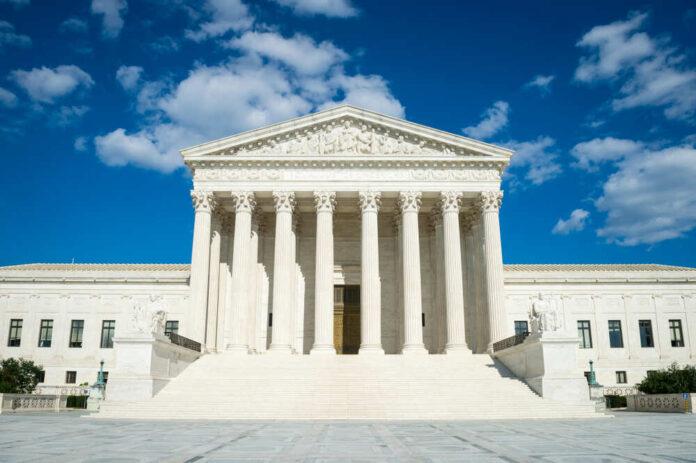
The Supreme Court kept the brakes on new mail-ballot rules, and the Trump administration says it will follow that order.
Story Snapshot
- The Supreme Court left a block on new U.S. Postal Service mail-ballot rules in place.
- Attorney General Todd Blanche said the administration will comply.
- The order keeps November’s midterm mail voting under current rules.
- The case highlights the Court’s habit of avoiding late election changes.
What The Court Decided And Why It Matters Right Now
The Supreme Court rejected the government’s emergency bid to use new mail-ballot rules before the 2026 midterms. The justices left a nationwide injunction in place from a lower court. That means the U.S. Postal Service cannot enforce the new requirements for this election cycle.
The unsigned order said the government was unlikely to win on the merits. Voters, campaigns, and local officials can plan around the same mail-ballot practices used in recent cycles.
US Attorney General Todd Blanche said that the Trump administration would comply with the Supreme Court's decision to not let the US Postal Service enforce a rule targeting mail-in ballots https://t.co/CnZUDvR3gv pic.twitter.com/yOxLiY4jP8
— Reuters (@Reuters) September 15, 2026
Attorney General Todd Blanche made the administration’s posture plain. He said, “Of course, we’re going to comply with the Supreme Court’s decision, as we always do.”
Compliance is not optional when the High Court speaks. It is also smart politics near an election. The public needs clear rules, not mixed signals. The statement sets a tone for agencies to follow through without delay.
What The Blocked Postal Rule Tried To Do
The Postal Service rule aimed to tighten how ballot mail is packaged and addressed. Supporters called the steps modest and focused on clean handling. Critics said the agency overstepped into state election turf.
A federal judge found the challengers were likely to prove the rule unlawful and froze it nationwide. The appeals court kept that freeze while the case moves forward. The Supreme Court then declined to lift it for November.
States run elections. The federal role is limited unless Congress says otherwise. Court filings against the rule argued the Postal Service cannot refuse or reshape ballot delivery without clear laws from Congress.
That argument carried weight in the lower courts and in the Supreme Court’s emergency review. The practical result is simple. Ballots travel under the same system that voters and officials already know this year.
The Late-Stage Election Rule Playbook
High-stakes election fights often land at the Supreme Court as emergency requests. The Court tends to avoid changes close to an election because last-minute shifts can confuse voters and strain local offices. Scholars call this the Purcell principle.
The Court’s emergency orders are brief, but they still set the rules that matter in the moment. The order here fits that pattern. It holds the line until fuller review after the midterms.
The message to administrators is clear. Do not tinker with core voting processes as ballots go out. Even rules that seem minor can create fear of tossed votes or slow counts.
The Court has signaled many times that stability beats speed on the eve of an election. That guidance protects confidence, which is the backbone of every close race.
What Conservatives Should Watch Next
Election integrity work does not end with one rule. Blanche said the Justice Department will keep pressing criminal cases for unlawful voting and other fraud.
Conservatives should study the Court’s signal. Build security reforms early in the cycle. Ground them in laws that respect state control. Test them with election officials and the public.
Then defend them on a record of facts, not on emergency pleas at the last minute. The path to durable rules is patient and lawful. The Supreme Court’s order did not close that path. It pointed to it.
Sources:
cbsnews.com, npr.org, cnbc.com, reuters.com, aljazeera.com, nebraska.tv, lawcommentary.com, supremecourt.gov