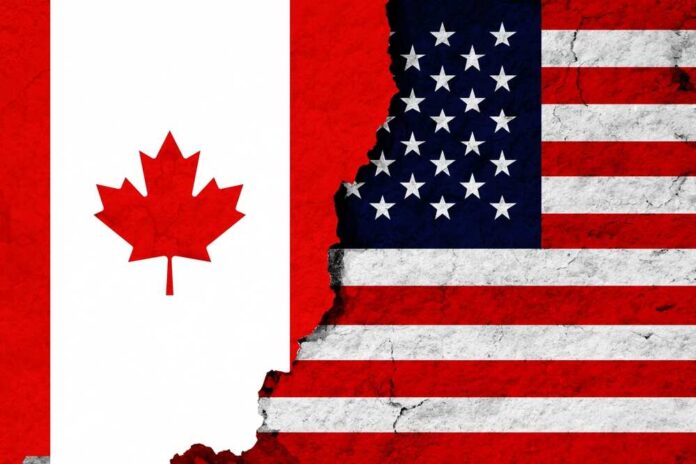
Seeking to mend trade ties with the United States, Canada reversed its plan to implement a digital services tax on U.S. tech giants just before it was set to take effect.
After President Trump terminated trade talks and called the tax a “blatant attack” on U.S. companies, Canadian Prime Minister Mark Carney quickly reversed course to avoid potential economic retaliation from America’s most powerful leader.
The 3% tax would have affected giants like Amazon, Meta, Google, and Apple on revenues generated from Canadian users above $20 million.
It was abruptly rescinded as Canadian officials scrambled to restart crucial trade negotiations.
The tax had been retroactive to 2022, adding to American frustrations over what many viewed as an overreach by Canadian authorities into U.S. business interests.
President Trump’s strong stance against the tax demonstrated once again his commitment to protecting American businesses from foreign taxation schemes.
Trump had shut down trade talks with Canada, America’s second-largest trading partner, and threatened new tariffs on Canadian goods if the tax were to proceed.
Finance Minister Francois-Philippe Champagne acknowledged that removing the tax was necessary to preserve Canada’s economic relationship with the United States.
“Rescinding the DST will allow the negotiations to make vital progress and reinforce our work to create jobs and build prosperity for all Canadians,” Minister Champagne stated. }
The decision came after U.S. Treasury Secretary Scott Bessent explicitly criticized the tax as discriminatory against American companies.
The Canadian government initially claimed that the tax was designed to ensure large tech companies paid their fair share on revenue generated in Canada.
Nevertheless, President Trump saw through this justification, labeling it a “blatant attack” on American tech companies and standing firm against what many conservatives view as government overreach and anti-business taxation.
With approximately $762 billion in annual trade between the two nations, Canada could not afford to maintain its aggressive tax position.
The United States is Canada’s largest trading partner and the biggest buyer of Canadian exports, giving Trump significant leverage in forcing the policy reversal.
The Biden administration had previously requested trade dispute consultations over the tax but failed to resolve the issue.
It took President Trump’s direct intervention and willingness to use America’s economic power to force Canada to abandon the controversial tax measure completely.
With trade talks now set to resume, Trump and Carney will attempt to reach a new agreement by July 21.
The swift capitulation by Canadian leadership underscores the effectiveness of Trump’s America-first approach to international trade negotiations and his commitment to safeguarding American businesses from unfair foreign taxation.