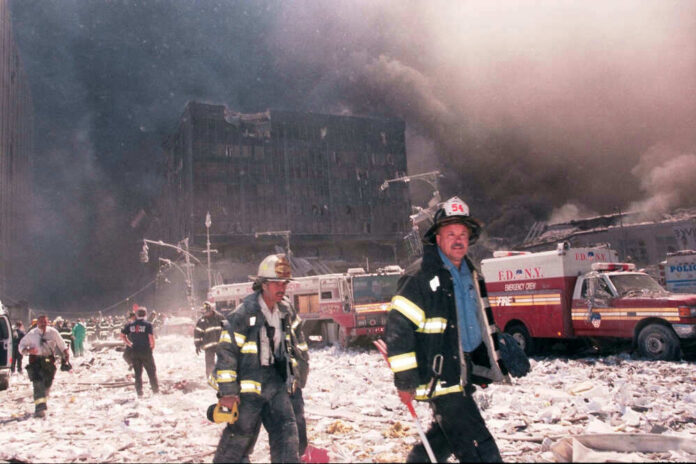
A federal judge’s decision to let 9/11 families’ lawsuits against Saudi Arabia move forward signals a watershed moment for accountability—finally confronting decades of stonewalling and prioritizing American justice over diplomatic appeasement.
Story Snapshot
- For the first time, a U.S. court will put Saudi Arabia on trial over alleged support for the September 11 hijackers.
- Decades of legal barriers and diplomatic pressure failed to silence survivors and families demanding the truth.
- New evidence, along with the Justice Against Sponsors of Terrorism Act (JASTA), helped overcome Saudi immunity claims.
- The ruling has major implications for national security, foreign policy, and the principle that no foreign nation is above American law.
Historic Ruling Breaks Diplomatic Gridlock
In August 2025, Judge George B. Daniels of the Southern District of New York denied Saudi Arabia’s motion to dismiss a multi-billion-dollar civil lawsuit filed by 9/11 survivors and families. The suit accuses Saudi government employees and affiliated charities of providing material support to al-Qaida and the hijackers, opening the door to a trial that could finally bring answers and accountability.
For years, legal attempts to hold the Kingdom responsible were routinely blocked under the guise of “sovereign immunity”—a shield too often used to protect foreign interests over American victims. This ruling finds the claims legally sufficient to proceed, marking a long-overdue victory for those who lost loved ones on September 11, 2001.
Families first sought justice shortly after the attacks, but faced repeated dismissal as politicians and bureaucrats prioritized diplomatic relations over truth. Congress took a bipartisan stand in 2016 by passing the Justice Against Sponsors of Terrorism Act (JASTA), which finally allowed lawsuits against foreign governments for terror attacks on U.S. soil. This law, achieved despite intense lobbying from the Saudi government and globalist interests, was a rare assertion of American sovereignty and the primacy of victims’ rights. Now, with new evidence reportedly linking Saudi government employees directly to the hijackers, the court’s ruling signals that the era of endless cover-ups may be ending.
Persistence of 9/11 Families and Legal Teams
The plaintiffs—survivors, relatives of victims, insurance companies, and affected businesses—have fought a nearly 25-year legal battle. They contend that Saudi officials, including Omar al-Bayoumi and Fahad al-Thumairy, assisted hijackers Khalid al-Mihdhar and Nawaf al-Hazmi with logistics and funding. While the 9/11 Commission and FBI initially found no conclusive link between the Saudi government and the attacks, new evidence uncovered during expanded discovery has challenged these findings.
The persistence of the families, backed by determined legal representation, has forced the issue back into court, despite Saudi Arabia’s ongoing denials and diplomatic maneuvering. The court’s decision now provides a platform for a transparent examination of the facts—something the American public has demanded for decades.
Saudi Arabia remains a key U.S. ally, complicating the legal and diplomatic dynamics. The government continues to deny involvement, aiming to protect its reputation and economic interests. However, the court’s refusal to dismiss the case has heightened scrutiny. Many analysts believe Saudi officials may consider a settlement to avoid a public trial, further discovery, and reputational harm. The lawsuit’s progression is also a testament to the impact of congressional action—JASTA—empowering Americans to challenge foreign governments in U.S. courts when our own are attacked.
Implications for Justice, Security, and U.S. Policy
The short-term effect of this ruling is to give survivors and families new avenues for discovery and the possibility of financial compensation. Long-term, the case sets a powerful precedent: foreign governments may no longer hide behind diplomatic immunity if they are credibly accused of supporting terrorism against Americans.
The stakes are immense—not just for the victims’ families, but for the integrity of U.S. legal institutions, national security, and future counterterrorism policy. Billions of dollars are on the line, as are the reputations of both Saudi Arabia and the U.S. government’s willingness to pursue justice regardless of political or economic ties.
This case also raises critical questions about government transparency and past failures. Official investigations repeatedly fell short of delivering closure or accountability, leaving Americans to wonder whether foreign interests were prioritized over their own. As the case heads to trial, it will test the resolve of U.S. courts, the reach of JASTA, and the principle that American lives—and the Constitution—cannot be compromised for international convenience.
Expert Perspectives and Next Steps
Legal experts have called this case unprecedented, with the potential to rewrite the historical understanding of the 9/11 attacks. Attorneys for the plaintiffs highlight the significance of new evidence and the expanded scope of discovery. While some analysts suggest that Saudi Arabia will seek a settlement to avoid damaging revelations, others warn that a legal victory does not guarantee a diplomatic or financial resolution. The trial will also force a renewed examination of past investigations and official narratives, as the American people demand answers that have been delayed for far too long.
Judge rejects Saudi Arabia's bid to dismiss claims it supported 9/11 hijackers | Click on the image to read the full story https://t.co/G9QEcIAS4K
— WESH 2 News (@WESH) August 29, 2025
For 9/11 survivors and families, this is a hard-won step toward closure and justice. For the nation, it’s a reminder that constitutional values, not globalist priorities, must come first. The coming months will reveal whether America’s courts can deliver on that promise, holding even the most powerful foreign interests accountable when American lives and liberty are at stake.
Sources:
Victory for 9/11 Families Against Saudi Arabia
Saudi Arabia Faces Historic 9/11 Lawsuit: ProPublica Explains
Judge allows 9/11 victims’ families to sue Saudi Arabia over hijackers
Federal judge allows 9/11 lawsuit against Saudi Arabia to proceed