
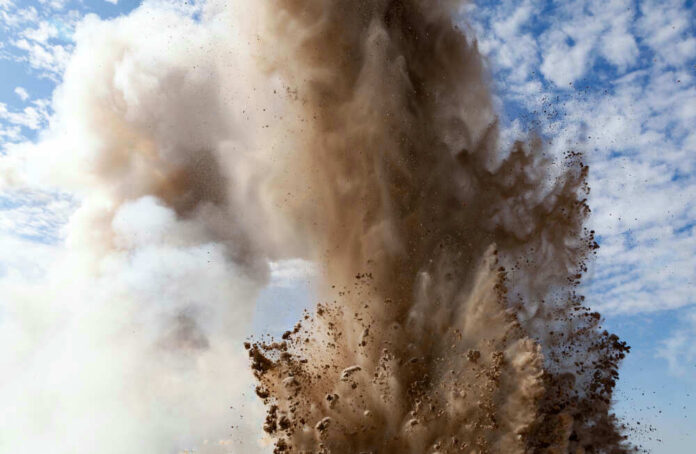
A massive volcanic eruption in Ethiopia has unleashed chaos across international air travel routes, with ash clouds reaching 49,000 feet and threatening flight disruptions as far as India while devastating local communities dependent on livestock grazing.
Story Highlights
- Hayli Gubbi volcano erupts for the first time in over 12,000 years, sending ash across the Red Sea.
- Volcanic ash reaches a dangerous altitude of 49,000 feet, prompting international flight advisories.
- Local Ethiopian communities face economic hardship as ash blankets grazing lands.
- Air traffic controllers across multiple countries brace for potential travel disruptions.
Historic Eruption Catches World Off Guard
The Hayli Gubbi volcano in northern Ethiopia’s Afar Region shattered 12,000 years of dormancy early Sunday morning, November 23, 2025, marking the first eruption in recorded human history.
Located near the Eritrean-Ethiopian border, this broad, dome-shaped volcano with gentle slopes rises over 1,700 feet and features a symmetrical scoria cone with a 650-foot-wide crater. The eruption occurred in the volatile Danakil Depression, where three tectonic plates converge, making it one of Earth’s most geologically active regions.
🇪🇹🌋 Hayli Gubbi volcano erupts for the first time in 10,000 years
The eruption sent a massive ash plume rising 10-15 kilometers into the sky.
📍 Northeastern Ethiopia pic.twitter.com/gHaDkA6XKz
— Sputnik Africa (@sputnik_africa) November 24, 2025
International Aviation Crisis Unfolds
The eruption’s massive ash plumes have created a regional aviation emergency, with volcanic debris reaching altitudes of 49,000 feet according to France’s Volcanic Ash Advisory Center in Toulouse.
Satellite imagery reveals enormous ash clouds drifting across the Red Sea toward the Arabian Peninsula, carrying dangerous concentrations of sulfur dioxide. Air traffic controllers from Ethiopia to India are implementing emergency protocols to manage potential flight disruptions, as volcanic ash poses severe risks to aircraft engines and navigation systems.
The scale of this disruption demonstrates how natural disasters can instantly cripple international commerce and travel, affecting millions of passengers and billions in economic activity.
Unlike man-made crises that government intervention often worsens, this natural phenomenon requires a swift, coordinated response from private aviation companies and international agencies working together efficiently.
Local Communities Bear Economic Burden
While no casualties occurred from the eruption itself, the economic impact on local livestock herding communities has been devastating. Thick layers of volcanic ash have blanketed villages throughout the region, destroying grazing lands essential to cattle, goats, and sheep, which represent these families’ primary source of income.
These hardworking rural communities, which depend on traditional livestock practices passed down through generations, now face uncertain futures as their animals struggle to find suitable pasture.
The situation highlights how natural disasters disproportionately affect self-reliant rural populations who ask little from government but depend on their land and livestock for survival.
These Ethiopian herders embody the kind of independence and hard work that built strong communities. Yet, they now face challenges no amount of personal responsibility could have prevented or prepared for.
Geological Significance and Future Monitoring
Hayli Gubbi is the southernmost volcano in Ethiopia’s Erta Ale range, a volcanic chain known for persistent lava lakes and shield volcanoes. The Smithsonian Institution previously classified the volcano’s last eruption as “unknown,” but credible geological evidence suggests it occurred more than 12,000 years ago at the end of the last Ice Age. The volcano continued erupting through Monday evening local time before finally subsiding, according to international monitoring stations.
This eruption serves as a stark reminder that despite humanity’s technological advances, we remain subject to powerful natural forces beyond our control.
The event underscores the importance of robust monitoring systems and international cooperation in tracking geological threats, rather than wasting resources on manufactured climate hysteria while ignoring real, immediate natural hazards that actually impact people’s lives and livelihoods.
#WATCH | A sleeping giant awakens after 10,000+ years
Ethiopia’s Hayli Gubbi volcano erupts, sending ash 15 km high and disrupting global air routes all the way to India#Volcano #Ethiopia #HayliGubbi #Aviation #Geology #EthiopiaVolcano pic.twitter.com/WCEXePXzZb
— ET NOW (@ETNOWlive) November 25, 2025