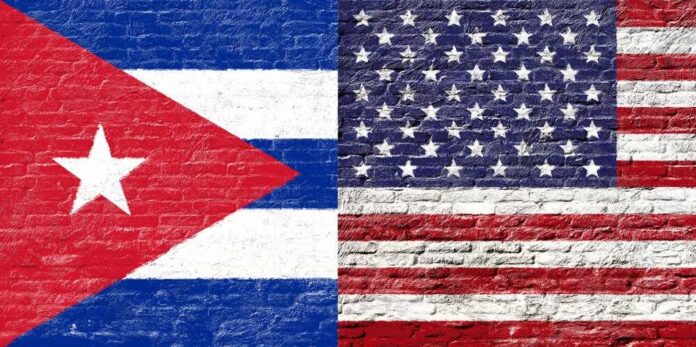
President Trump’s “friendly takeover” line is forcing a long-avoided question back onto the table: what happens when a collapsing communist regime finally has to talk terms.
Story Snapshot
- President Trump said the U.S. is in talks with Havana and that a “friendly takeover” of Cuba could be possible as the island’s fuel crisis worsens.
- The pressure campaign accelerated after Venezuela’s Nicolás Maduro was ousted, cutting a key oil lifeline Cuba relied on for years.
- A January 29 executive order declared Cuba a national security threat and threatened tariffs on countries providing oil to Cuba, prompting Mexico to halt shipments.
- Officials have released few details about what “takeover” means, leaving the public with rhetoric but limited specifics on end goals and guardrails.
Trump’s Remark Puts Cuba Talks Front and Center
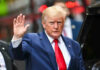
President Donald Trump told reporters outside the White House in late February 2026 that Cuba is “in big trouble” and that U.S. officials are talking with the Cuban government.
Trump said the situation “could very well” lead to a “friendly takeover,” framing it as potentially positive for Cubans and for exiles in the United States. The White House has not publicly defined the phrase, and no formal agreement has been disclosed.
Secretary of State Marco Rubio is described as leading high-level contacts, a notable detail because Rubio has long argued the U.S. should seek a post-communist transition in Cuba without a direct military intervention.
That approach—using leverage and negotiations instead of an invasion—matches the administration’s public posture so far. What remains unresolved is whether “friendly takeover” is meant as diplomatic shorthand for political transition, economic trusteeship, or something else.
Trump reiterates threat of a 'friendly takeover' of Cuba as fuel crisis deepens https://t.co/gpkLeUA7kZ
— CNBC Politics (@CNBCPolitics) March 10, 2026
How the Fuel Crisis Became Washington’s Leverage
Cuba’s current vulnerability traces back to the regional shock that followed the U.S. ousting of Venezuelan leader Nicolás Maduro in late January 2026, which halted Venezuelan oil shipments to the island.
With that supply disrupted, the Trump administration widened pressure with a January 29 executive order declaring Cuba’s government an “unusual and extraordinary threat” to U.S. national security. The order also set the stage for tariffs aimed at discouraging third countries from supplying oil.
Within days, the policy produced measurable effects in the region: Mexico halted oil shipments to Cuba after U.S. tariff threats, according to reporting cited across multiple outlets. By late February, Cuba had reportedly gone more than a month without new oil deliveries, intensifying blackouts and compounding shortages in an already strained economy.
A U.N. official warned the disruption was deepening humanitarian consequences, underscoring that energy scarcity quickly cascades into food, transport, and medical supply problems.
Flashpoints Raise the Stakes—and the Risks
Tensions have also been sharpened by a mid-February incident involving a Florida-registered speedboat and the Cuban Coast Guard. Cuban authorities said the boat carried armed individuals, and they reported four people were killed and six injured during the confrontation.
U.S. agencies, including Homeland Security and the Coast Guard, have been involved in reviewing the episode, but independent confirmation of Cuba’s claims has been limited in public reporting to date. The incident adds volatility to an already high-pressure environment.
Against that backdrop, Cuban officials have publicly criticized U.S. policy as “collective punishment.” Cuba’s deputy foreign minister, Carlos Fernández de Cossío, posted and later deleted comments pointing to the longstanding embargo and arguing that U.S. pressure remains “unwavering.”
Reporting also indicates the U.S. has allowed limited Venezuelan oil sales to Cuba’s private sector, a detail that complicates the narrative of a total cutoff while still leaving the state-run system under heavy strain.
What Conservatives Should Watch: Sovereignty, Security, and Limits
For Americans skeptical of endless foreign entanglements, the key test will be whether the administration’s approach stays anchored in U.S. security interests and constitutional boundaries while avoiding open-ended nation-building.
The public record so far supports two facts at once: the administration is applying strong economic leverage, and it is also signaling it prefers negotiations over a military invasion. With the White House offering few specifics, the strongest available conclusion is that the policy is coercive diplomacy, not a disclosed annexation plan.
The next developments to watch are concrete, not rhetorical: whether talks produce verifiable commitments from Havana; whether humanitarian warnings change the tempo of pressure; and whether tariffs on third-country energy trade expand.
Trade partners such as Mexico and Spain have been mentioned as exposed to U.S. tariff tools, which could widen the dispute beyond Cuba itself. If a political transition is the aim, transparency about endpoints and enforcement will matter—especially after years of globalist “process” without results.
For Cuban-Americans and other anti-communist voters, the administration’s language will be judged by outcomes: freer political conditions, reduced security threats, and a clearer path away from a failed economic model.
For everyone else, the bottom line is simpler: Cuba’s fuel collapse has created a rare moment where Havana is talking under pressure, and Washington is testing how far economic leverage can go without firing a shot. The facts available today show movement—but not yet a defined destination.
Sources:
Trump says US could ‘very well’ see a ‘friendly takeover of Cuba’
Trump raises the possibility of a ‘friendly takeover’ of Cuba coming out of talks with Havana
President Donald Trump floats “friendly takeover” of Cuba
Trump floats potential ‘friendly takeover’ of Cuba
Addressing Threats to the United States by the Government of Cuba