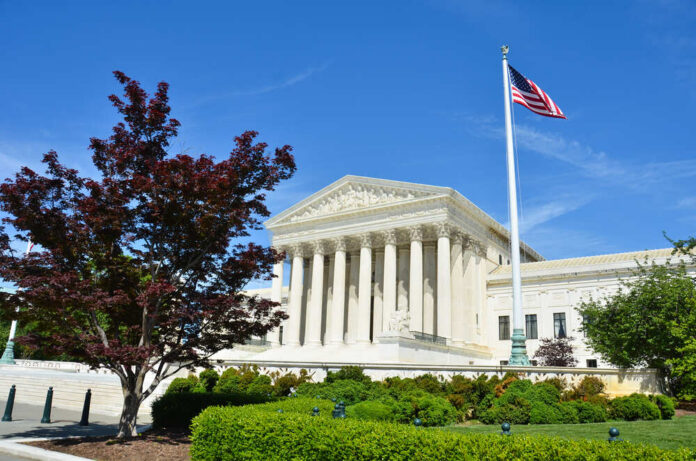
The Supreme Court let President Trump keep building the White House ballroom while the legal fight continues, signaling the challengers likely cannot sue.
Story Highlights
- Supreme Court allowed construction to continue during litigation
- Majority focused on standing, not on the project’s legality
- Chief Justice Roberts dissented and called the project “likely unlawful”
- Lower courts had tied the project to congressional approval
High Court Keeps Construction Moving, Centers on Standing
The Supreme Court allowed President Trump’s team to keep building the White House ballroom while the case proceeds. The order emphasized that the historic preservation challengers likely lack standing, meaning they may not be the right parties to bring the suit.
The Court did not decide whether the project is lawful. This move pauses lower-court orders that had threatened to halt the work and gives the administration space to continue construction as arguments play out.
Reporting described the Supreme Court’s action as a narrow, procedural step. It focused on who can sue, not on whether the President may build the facility.
Outlets covering the decision noted the ruling lets construction move forward now, while the legal merits wait for a later day. The framing underscores a common pattern in separation-of-powers fights. Emergency orders can shape real-world outcomes even when the core legal question remains open.
Roberts’s Dissent Warns About Congress’s Powers
Chief Justice John Roberts dissented with the Court’s three liberal justices. He argued the project is “likely unlawful” because Congress has not expressly approved it.
He warned that letting construction continue risks eroding Congress’s power of the purse and its control over federal property in the capital. His statement stressed that the order is “no victory for the separation of powers.” That view highlights the stakes as future merits briefing approaches.
Roberts’s dissent tracks earlier rulings from lower courts, which said Congress must sign off before a massive new structure goes up on White House grounds. A federal appeals court had ordered a halt, pointing to the need for explicit congressional approval.
That court stressed that the question of building a new ballroom belongs to lawmakers, not to executive “self-help.” The Supreme Court’s stay leaves those rulings on hold while the justices consider the case more fully.
What Comes Next in Court and on Capitol Hill
The administration has argued that existing law and executive authority allow the project. Supporters point to national security, continuity of government, and the need for modern space to host state functions.
Critics counter that large changes to the White House structure need clear legislative approval, especially where public access, history, and property rules are involved. The Court’s focus on standing hints the case could end without a final ruling on those bigger questions.
Congress still holds a card. Lawmakers could pass a bill that approves, refines, or rejects the ballroom plan. A measure was introduced to authorize construction, though it is not yet law. If Congress acts, it could settle the dispute quickly.
If not, the Supreme Court may decide the case on either standing or statutory grounds. Until then, the work continues under the Court’s order, and the legal clash over who decides what happens at the People’s House deepens.
Why This Matters
The fight is about more than one room. It is about who controls federal property and spending. Many will welcome that the Supreme Court rejected a lawsuit from a private group that failed to show a real legal injury.
That checks activist litigation that tries to stop elected leaders from governing. At the same time, the warning about Congress’s powers reminds everyone that guarding the purse strings is vital to our system.
SCOTUSblog said the Supreme Court “allowed” Trump to keep building a White House ballroom. Sit with that verb. A president already tore down the East Wing, hired the crews, and started the work. Then nine people in black robes get described as the ones who let him continue.…
— Flopping Aces (@FloppingAces) September 1, 2026
For readers tired of unelected boards and courts blocking policy at every turn, the ruling is a relief. The President can continue a project aimed at hosting official events and strengthening security planning while the case proceeds.
But the separation-of-powers debate is not over. The cleanest path is for Congress to speak clearly. Until then, the Court’s narrow order keeps hammers swinging, and the Constitution’s checks and balances remain the center of the story.
Sources:
nytimes.com, newsmax.com, rollcall.com, thehill.com, congress.gov