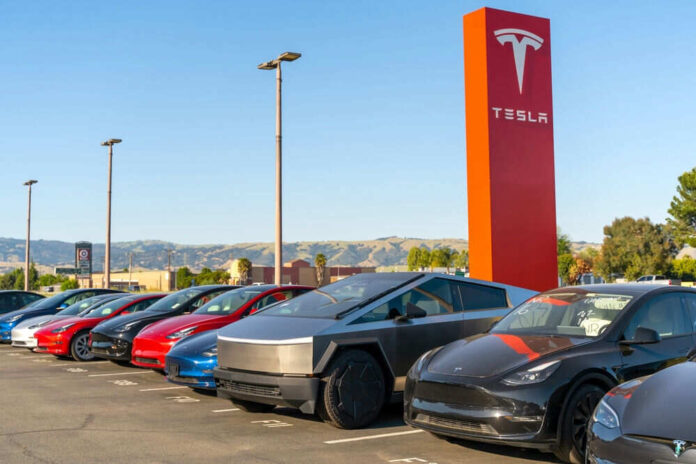
Tesla has lost its crown as the world’s largest electric vehicle manufacturer to China’s BYD, marking a historic shift that exposes how Biden-era policies and Chinese government subsidies have undermined American automotive dominance.
Story Highlights
- Tesla’s global EV sales dropped 8.6% to 1.636 million units in 2025, losing top spot to China’s BYD
- Biden administration’s EV tax credit expiration in September 2025 accelerated Tesla’s decline
- BYD sold 2.257 million EVs globally, up 27.86%, benefiting from the Chinese government’s backing
- Tesla maintains 45% U.S. market share despite global setback, positioning for domestic recovery
Tesla Loses Global Leadership After Two-Year Decline
Tesla delivered 1.636 million vehicles globally in 2025, marking an 8.6% decline from 1.789 million in 2024 and representing the company’s second consecutive year of declining sales.
Chinese automaker BYD surpassed Tesla with 2.257 million EV deliveries, achieving a 27.86% year-over-year increase. This milestone represents the first time Tesla has been overtaken annually by a competitor since establishing EV market dominance in the 2010s.
Tesla is no longer the world's biggest EV maker after its sales drop for second year in a row. https://t.co/QDrT2IWbj1
— CBS News (@CBSNews) January 2, 2026
Biden Administration Policies Hamper American EV Success
The expiration of federal EV tax credits in September 2025 dealt a significant blow to Tesla’s sales momentum, contributing to a 16% decline in fourth-quarter deliveries. This policy failure occurred despite the global EV market growing 21% year-over-year, demonstrating how government mismanagement can handicap American companies.
Tesla’s European sales plummeted 40% while Chinese sales dropped 6%, highlighting the impact of inconsistent policy support compared to China’s sustained backing of domestic manufacturers.
Chinese Government Subsidies Fuel BYD’s Market Domination
BYD’s rise to global leadership reflects Beijing’s strategic investment in electric vehicle technology and manufacturing capabilities, creating an uneven playing field for American competitors. The Chinese company leveraged government-backed affordable models and battery technology to expand beyond domestic markets into Europe, Asia, and Latin America.
This success demonstrates how coordinated industrial policy can challenge free-market competitors, raising concerns about fair competition in the global automotive sector.
Tesla Retains U.S. Stronghold Despite Global Setbacks
Tesla maintains approximately 45% of the U.S. EV market, with analysts projecting the company will retain domestic leadership through 2026 despite increased competition from GM, Ford, and Stellantis.
Bank of America forecasts Tesla’s U.S. market share at 18% by 2026, while domestic rivals are expected to capture 14% each. The company’s planned low-price model and refreshed Model Y position Tesla for recovery, particularly as American consumers prioritize domestic manufacturing and energy independence.
Trump administration policies supporting American manufacturing and fair trade practices could help level the playing field against subsidized Chinese competitors.
Tesla’s resilience in the U.S. market demonstrates the importance of domestic energy production and manufacturing capabilities that align with conservative principles of economic independence and national security.