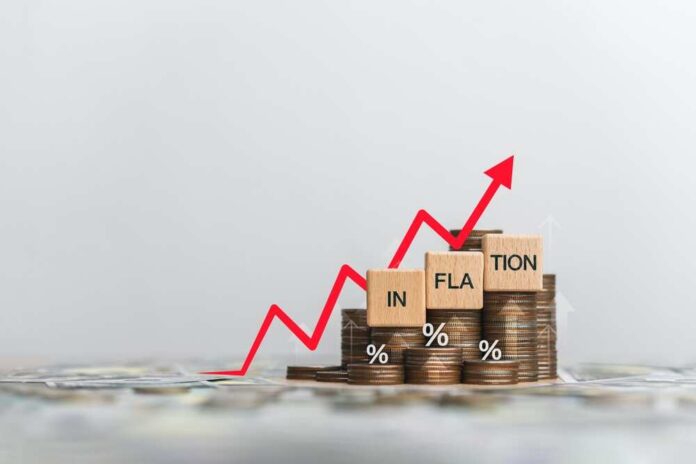
A ten-week war in the Middle East just reignited America’s inflation nightmare, pushing consumer prices to their highest levels in three years and threatening to unravel months of economic progress.
Story Snapshot
- Consumer Price Index jumped 3.8% year-over-year in April 2026, the highest since May 2023, driven primarily by war-induced energy shocks
- Energy prices surged 3.8% monthly and gasoline spiked 5.4%, with prices at the pump reaching $4.50 per gallon—up 44% from a year earlier
- The conflict between U.S.-Israeli forces and Iran closed the Strait of Hormuz in March, choking off 20% of global oil and LNG supplies
- Core inflation reached 2.8% annually, remaining stubbornly above the Federal Reserve’s 2% target and complicating monetary policy decisions
- Political stakes escalated as the inflation surge threatened GOP prospects heading into midterm elections under President Trump’s administration
When War Comes Home to Your Wallet
The Bureau of Labor Statistics delivered unwelcome news on May 12, 2026: consumer prices climbed 0.6% in April alone, marking a sharp reversal from the steady cooling trend Americans had enjoyed through early 2026. Energy costs accounted for more than 40% of the monthly increase, a concentration not seen since the Ukraine crisis of 2022.
But this time, the culprit wasn’t a distant European conflict—it was a war the United States helped launch. When American and Israeli forces struck Iranian targets on February 28, few anticipated Tehran’s response would strangle global energy markets with such efficiency.
The Hormuz Chokepoint Strategy
Iran’s retaliation proved devastatingly simple: shut down the Strait of Hormuz. This narrow waterway, barely 21 miles wide at its narrowest point, carries one-fifth of the world’s oil and liquefied natural gas. By early March, Tehran had effectively blockaded the strait, sending crude prices rocketing past $100 per barrel—a threshold not breached since the early days of Russia’s Ukraine invasion.
The March Consumer Price Index reflected the immediate shock, surging 0.9% in a single month. Although a ceasefire took hold in early April, the damage persisted. Supply chains remained disrupted, strategic reserves depleted, and refineries struggled to normalize operations.
Inflation is running hotter than expected as the Iran war's effects continue to shake energy markets and ripple through the broader economy.
Consumer prices jumped 0.6% in April, with the CPI now up 3.8% from a year ago, putting the one-year pace at its highest since May 2023.… pic.twitter.com/sKBz95Am9v
— FOX Business (@FoxBusiness) May 12, 2026
Beyond the Gas Pump
Gasoline wasn’t the only casualty. Food prices climbed between 0.5% and 0.7% monthly as transportation costs rippled through supply chains. Grocery stores, restaurants, and food distributors absorbed higher diesel and shipping expenses, inevitably passing them to consumers already stretched thin.
Core inflation, which strips out volatile food and energy prices, rose 0.4% monthly and 2.8% annually—modest compared to energy’s explosion, but troubling nonetheless.
Economists warned of “second-round effects,” where temporary energy shocks embed themselves in wages and service prices, transforming a short-term spike into sustained inflation. Airlines, trucking firms, and manufacturers faced margin pressures, with some contemplating layoffs or price hikes to survive.
The Federal Reserve’s Dilemma
The inflation report landed on the Federal Reserve’s desk like a ticking bomb. For months, the central bank had maintained rates steady, banking on inflation’s gradual descent toward the 2% target. The April data shattered that assumption. Inflation at 3.8% wasn’t just above target—it was accelerating.
Yet raising rates risked choking off economic growth precisely when geopolitical instability threatened global markets. Lowering rates would fuel inflation further.
The Fed found itself paralyzed, caught between containing price pressures and avoiding a recession. Wage growth, meanwhile, lagged far behind inflation, eroding purchasing power for millions of working families who watched their paychecks shrink in real terms despite nominal gains.
Political Fallout and Midterm Jitters
President Trump and congressional Republicans faced a political minefield. Inflation consistently ranks among voters’ top concerns, and a 3.8% rate—higher than any point since mid-2023—offered Democrats potent campaign ammunition heading into midterm elections. The administration attempted to frame the surge as an unavoidable byproduct of defending Israel and confronting Iranian aggression.
Critics countered that the decision to launch strikes without adequately preparing for energy market disruption represented reckless policy.
Polling data suggested voters blamed the administration for both the war and its economic consequences, a dangerous combination for GOP candidates in swing districts. Whether the ceasefire and gradually stabilizing oil prices would provide political relief remained uncertain, but the damage to household budgets had already been done.
Inflation continued to rise in April as Iran war impacted energy prices https://t.co/sYSe6pd978
— FOX Business (@FoxBusiness) May 12, 2026
The April inflation spike underscored an uncomfortable truth: America’s economic stability remains hostage to Middle Eastern geopolitics. The 1979 Iranian Revolution, the 1990 Gulf War, and the 2022 Ukraine invasion all demonstrated how quickly energy shocks can derail economic progress.
This latest episode added a troubling twist—direct U.S. military involvement amplifying rather than mitigating the crisis. As gas prices hovered around $4.50 per gallon and grocery bills climbed, ordinary Americans bore the cost of decisions made in Washington and Tehran.
The ceasefire offered hope, but with core inflation still elevated and energy supplies fragile, the road back to the Fed’s 2% target looked longer and steeper than anyone had anticipated just months earlier.
Sources:
Fox Business – CPI Inflation April 2026
CBS News – CPI Report Today April 2026 Inflation Iran War Trump
Finance Commerce – US Inflation Iran War Energy Food Prices
Global News – US Inflation April Iran War
Daily Sabah – US Inflation Rises 3.8% in April as Iran War Drives Up Energy Prices
KSHB – Iran War Drives Energy Price Spike Wages Struggle to Keep Up with Inflation
Fortune – April Inflation Shoots 3.8% Higher on Surging Prices from War in Iran