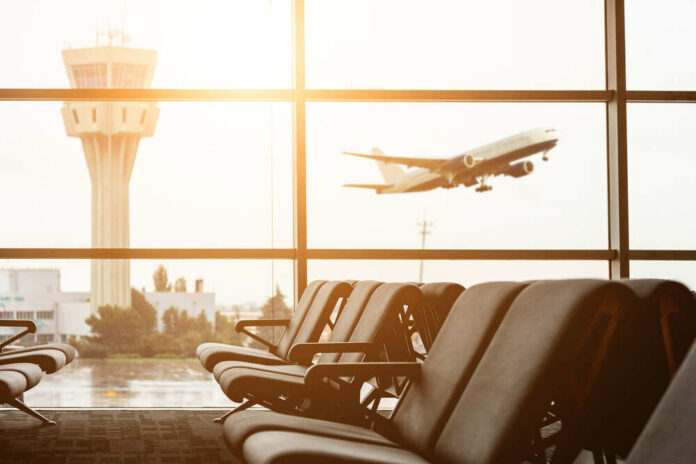
Washington’s DHS funding stalemate is forcing about 61,000 TSA screeners to protect America’s airports without a paycheck—right as spring travel ramps up.
Quick Take
- A partial shutdown of the Department of Homeland Security began at midnight Feb. 14, leaving roughly 95% of TSA’s workforce working unpaid.
- The rest of the federal government is funded through Sept. 30, 2026, so the disruption is concentrated at DHS agencies, not the FAA’s air traffic control system.
- Early airport impacts surfaced fast, including reported delays and cancellations at Boston’s Logan Airport.
- Democrats are blocking DHS funding while demanding new restrictions on federal immigration operations after a fatal Minneapolis incident involving immigration agents.
- Travel industry groups warn that unpaid staffing increases “call outs,” longer lines, and missed or delayed flights during peak season.
DHS Shutdown Begins, TSA Ordered to Keep Working Unpaid
The Department of Homeland Security entered a partial shutdown at midnight on Feb. 14, 2026, and Transportation Security Administration screeners were classified as essential personnel required to report to work without compensation. Reporting indicates about 61,000 TSA employees—roughly 95% of the workforce—are affected.
Because other federal departments are already funded through the end of the fiscal year, this shutdown is narrower than a full government closure, but it still hits airport security where staffing levels are unforgiving.
The practical problem is simple: checkpoints do not run on press releases. Security lanes need trained screeners on-site every day, and even small increases in absences can cascade into missed flights, crowded terminals, and delayed departures.
Analysts have warned that smaller airports with a single checkpoint are especially vulnerable, because losing only a few employees can bottleneck the entire passenger flow. Airlines can keep aircraft ready, but passengers cannot board if they cannot clear screening.
Travel Disruptions Are Already Showing Up at Major Airports
Within the first day, reports from Boston’s Logan Airport showed delays and cancellations appearing after the shutdown took effect, including dozens of delays early in the day compared with none shortly before midnight.
That kind of immediate signal matters because past shutdown disruptions often built slowly—first with longer lines, then with checkpoint adjustments, and only later with broader scheduling changes. The travel industry is watching closely because February vacation week and the spring break surge traditionally test staffing and throughput even under normal conditions.
A coalition of major travel trade groups—including U.S. Travel, Airlines for America, and the American Hotel & Lodging Association—warned that the country and the economy “cannot afford” essential TSA personnel working without pay.
Their concern is not only fairness to workers; it is the predictable risk of unscheduled absences and “call outs,” which can lengthen security lines and ripple into delayed or missed flights. The longer the shutdown lasts, the more pressure builds on staffing, schedules, and traveler patience.
No clear path to ending the partial government shutdown as lawmakers dig in over DHS oversighthttps://t.co/rGtPT8s6B1 pic.twitter.com/lsLpS6UB9l
— The Washington Times (@WashTimes) February 15, 2026
The Political Impasse Centers on Immigration Enforcement Restrictions
The current funding fight is tied to a policy dispute, not a broad failure to fund the entire government. Democrats are blocking Homeland Security appropriations while seeking new restrictions on federal immigration operations following a fatal Minneapolis incident involving immigration agents and the deaths of Alex Pretti and Renee Good.
Their proposals include mandatory body camera use, adherence to standard warrant procedures, and limits on mask-wearing by immigration agents. Republicans have not agreed to all of those terms, leaving DHS funding stuck.
President Trump has said talks are continuing, and public reporting indicates the White House is negotiating with Democratic lawmakers. Lawmakers are also on a 10-day recess, though they have been told they may be called back if an agreement is reached.
For travelers, the timing is the worst part: DHS operations that directly touch the public—like TSA screening—are where shutdown politics becomes immediate, visible inconvenience. For a country trying to project competence and security, unpaid screeners at crowded terminals is a self-inflicted wound.
Shutdown Fatigue After 2025 Raises Morale and Retention Risks
This is not the first time TSA employees have been put in this position recently. The shutdown follows a historic 43-day funding lapse from October into November 2025, a stretch that created real financial strain for screeners even as they kept reporting to work.
After that episode, DHS issued $10,000 bonuses to TSA screeners who demonstrated “exemplary service” during the lapse. Even with such steps, repeated unpaid periods can grind down morale and raise retention concerns in a job that demands vigilance.
TSA agents are working without pay at U.S. airports due to another partial government shutdown https://t.co/UcXll57OMj
— CNBC International (@CNBCi) February 14, 2026
Experts have also cautioned that even if air traffic controllers remain funded—reducing the risk of widespread flight cancellations—TSA staffing shortages can still slow checked-bag screening and passenger throughput.
During previous shutdown dynamics, significant operational changes sometimes took weeks to emerge, including checkpoint closures at major airports and pressure on airlines to adjust schedules.
The conservative takeaway is straightforward: using DHS funding as leverage in a policy fight may score points in Washington, but it turns working Americans into collateral damage and stresses public-facing security functions.
Sources:
https://www.politico.com/news/2026/02/10/dhs-shutdown-impact-furloughs-00775499